
Most mid-tower cases in the roughly $100 to $140 street bracket make one of two trades: aesthetics with compromised airflow, or mesh with softer build quality. The MSI MPG VIXTA 300R (now shipping, and $104.99 at Newegg as of October 2026) is genuinely trying to do both, and the design decisions MSI made to get there are worth understanding before you decide if it’s the right case for your build.
This isn’t a SpecClear hands-on, and independent thermal benches are still sparse relative to older staples like the Lancool 216. What follows is based on MSI’s confirmed specifications, Computex coverage, early retail listings, and context from the VELOX 300R this case replaces.
Two versions, two different priorities
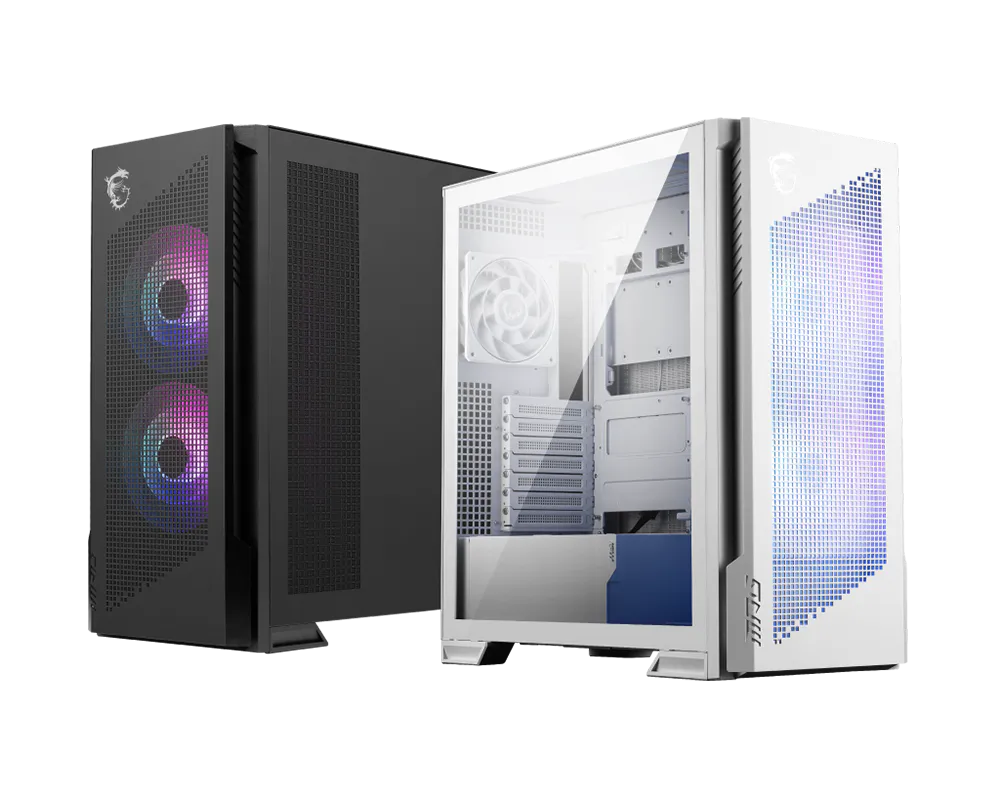
The VIXTA 300R ships in two distinct configurations. The MPG VIXTA 300R PZ ($104.99 at Newegg) uses a single-piece curved tempered glass front panel with MSI’s side-rail system for tool-free removal. The front fans (two 140mm units) move to the side of the case rather than the front, which is the aesthetics-first layout: clean glass with no mesh breaks, at the cost of side intakes instead of a direct front path.
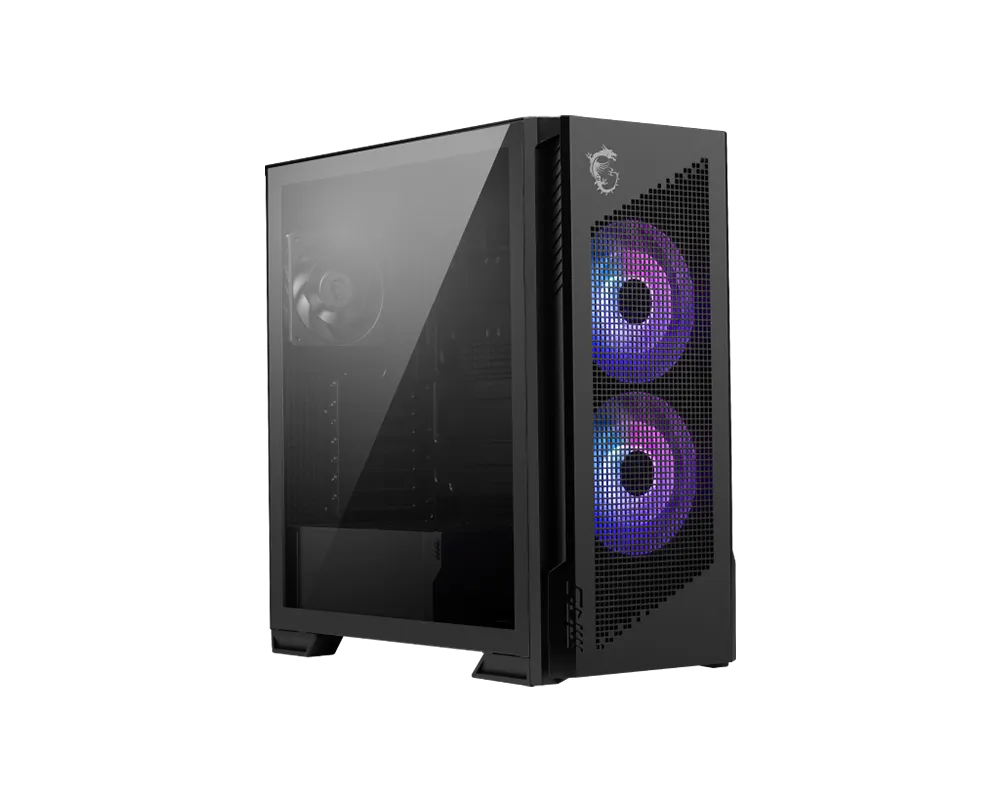
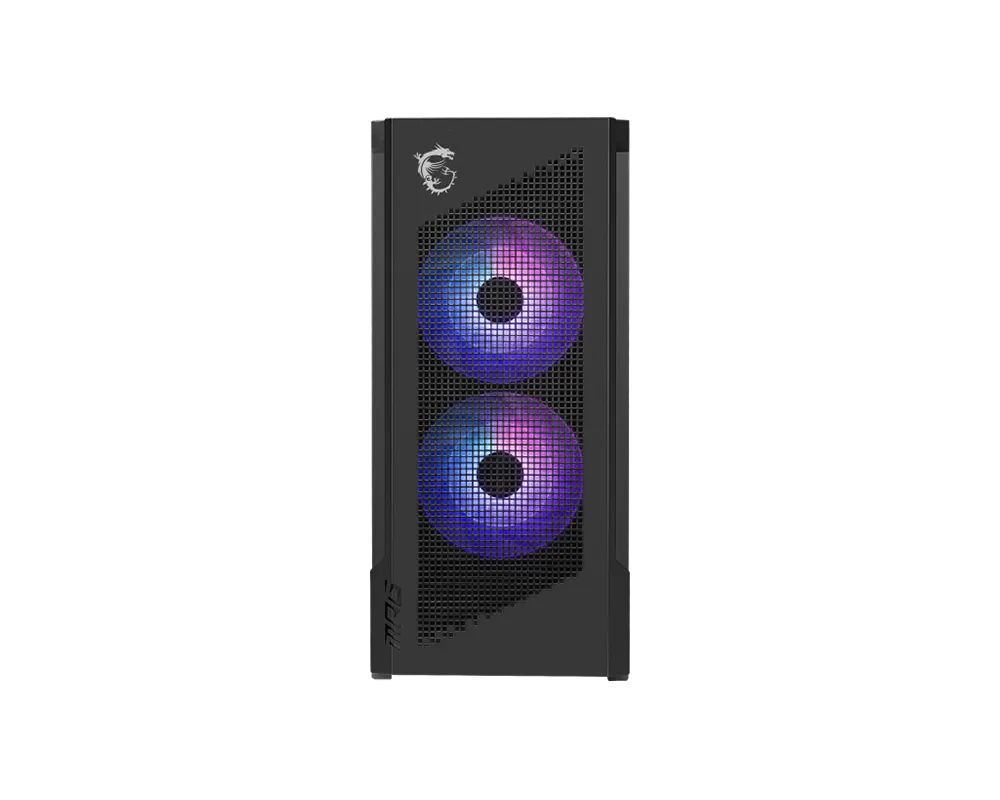
The MPG VIXTA 300R AIRFLOW PZ (also $104.99 at Newegg) swaps the glass front for a mesh panel and puts the fans back on the front where they belong. Two 160mm fans (larger than the 140mm units in the glass version) pull air straight through the mesh toward the GPU and CPU. At the same price, you get meaningfully better airflow and a slightly larger fan diameter, and if temperatures matter to you, the Airflow variant is the correct choice without hesitation.
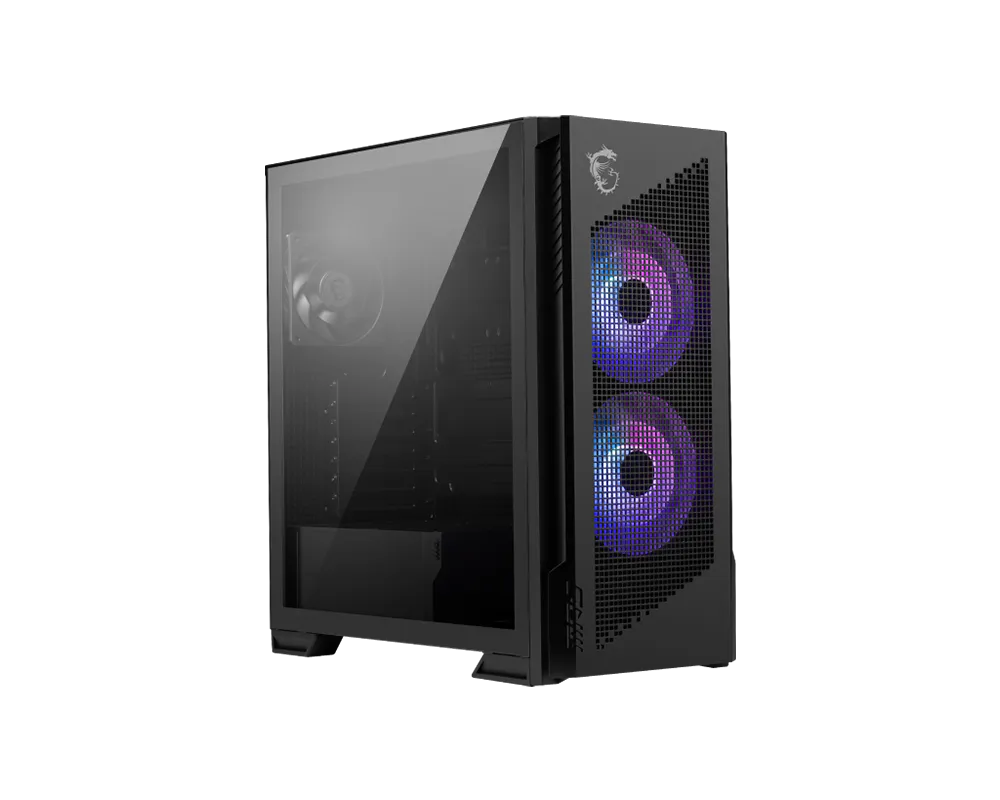
Both ship in black and white colourways, back-connect motherboard compatibility via MSI’s Project Zero standard is supported on both. For cheaper alternatives, see our best PC cases for airflow.
The floating base: what it actually does
The defining design element of the VIXTA 300R is its floating base. The case sits elevated on a platform that creates an open gap beneath the chassis floor, allowing air to enter from below. This is a second intake path that most cases don’t offer. The base acts as a passive fresh air supply directly below the GPU, which sits at the bottom of the case interior.
In theory this is smart: GPUs typically exhaust heat downward and intake from below, and a case floor that’s closed off creates a restriction for that intake. The VIXTA 300R’s open base removes that restriction. The floating platform also doubles as a display shelf: you can park small items or USB drives there, or leave it empty for the elevated look.
Whether this delivers meaningful thermal benefit over a conventional case with good mesh front intake depends on the specific GPU and the airflow configuration inside something independent testing will confirm once the case has been in hands for a few weeks.
Build quality and installation features
MSI has invested heavily in tool-free assembly across the VIXTA 300R series. The PSU bracket is detachable and paired with a magnetic side panel for power supply installation without removing adjacent components first. The expanded cable management area at the rear of the case (MSI specifically notes this was enlarged for the VIXTA) is a practical improvement that matters for builds where cable routing affects airflow.
The Pogo-pin front panel connector on the Airflow version eliminates the loose header cables that front-panel fans have required for decades. Fans connect through spring-loaded metal contacts when the front panel is attached, which means swapping or cleaning the front mesh takes seconds without unplugging anything. This feature alone justifies the Airflow variant over the standard model for builders who clean their systems regularly.
360mm radiator support in the top position covers AIO cooling for any current CPU, vertical GPU mounting is supported, and the case takes standard ATX, Micro-ATX, and Mini-ITX boards, so it stays useful across build tiers.
Who this case is for
At $104.99 the VIXTA 300R sits in competitive territory. The Lian Li Lancool 216 at ~$113 still delivers excellent airflow for a few dollars more. The Fractal Design Meshify 2 Compact at ~$203 is a proven performer with strong cable management. The Corsair 4000D Airflow is the established benchmark in this price range.
What the VIXTA 300R offers that most competitors don’t: the floating base design, Project Zero back-connect support, the Pogo-pin front panel, and 160mm fans in the Airflow variant. These are genuinely differentiating features rather than spec sheet padding. Builders specifically using MSI Project Zero motherboards where all connectors exit through the back of the board for a completely cable-free front view will find this case designed specifically around that ecosystem.
For builders not on Project Zero, the VIXTA 300R is still a well-built mid-tower with strong airflow credentials in its Airflow configuration. With both versions at the same price right now, the Airflow variant is the easiest pick in PC cases: buy the mesh version.
The one concern worth monitoring
The non-Airflow version’s side-mounted front fans are an aesthetic choice that costs thermal performance. Cases where front fans pull from the side rather than directly through a front intake typically show temperature penalties compared to front-mesh equivalents. How significant that penalty is in the VIXTA 300R’s specific implementation still needs more independent benches to settle. If temperatures matter more to you than the clean glass front (and for a PC build they should), the Airflow variant removes the question entirely.
Independent benchmarks from Hardware Unboxed, Gamers Nexus, and similar sites will be the definitive reference once review units have shipped. Watch for those before making a final decision if you’re between this and an established case like the Lian Li Lancool 216 or Fractal Meshify 2.