The sub-$300 GPU market in May 2026 looks straightforward from the outside. Three cards, similar prices, pick the fastest one. The reality is messier and more interesting than that — and making the wrong call here affects your gaming experience for the next three to four years.
This guide covers every relevant option at this price point right now, tells you what the benchmarks actually show, and gives you a straight recommendation based on what kind of buyer you are.
The Market Reality Before We Start
Something important has happened to GPU pricing in 2026 that most comparison articles are not acknowledging clearly.
The ongoing memory shortage driven by AI data centre demand has pushed GPU prices roughly 13-15% above launch MSRPs across the board. Both the RTX 5060 and RX 9060 XT 8GB launched at $299 MSRP and are now selling in the $359-$560 range.
The specific current prices as of late May 2026:
- RTX 5060 — $300-$390 on Amazon. MSRP was $299.
- RX 9060 XT 8GB — $359-$560 on Amazon. MSRP was $299.
- RX 9060 XT 16GB — $500-$580 on Amazon. MSRP was $349.
- Intel Arc B580 12GB — approximately $400-$445. MSRP was $249.
None of these cards are available at their stated launch prices right now. Factor the real costs into your decision, not the headlines.
The Contenders
RTX 5060 — Nvidia’s Entry Blackwell
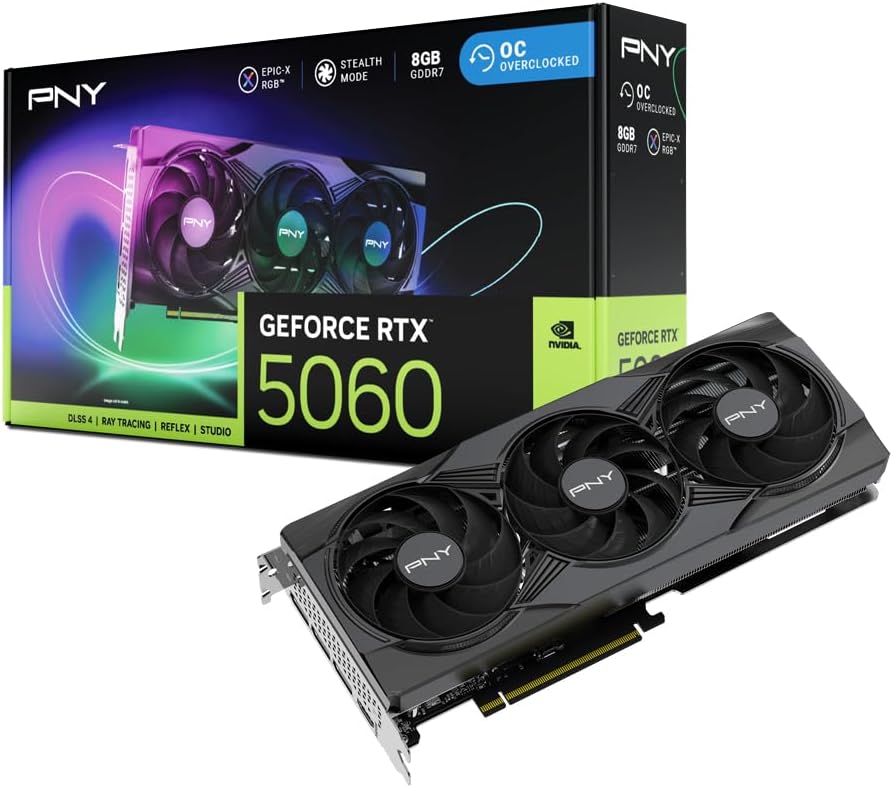
The RTX 5060 brings Nvidia’s Blackwell architecture to the sub-$350 tier. GDDR7 memory delivering 448 GB/s bandwidth, DLSS 4 with Multi Frame Generation exclusive to 50-series hardware, and solid 1080p performance in the 82-89 FPS average range across demanding titles.
The limitation that follows it everywhere: 8GB of VRAM on a 128-bit bus. At $390 you are buying a current-generation card with a memory configuration that is already showing limits in some 2026 titles at 1440p.
Ray tracing is the RTX 5060’s strongest suit relative to its competition — roughly 29% ahead of the RX 9060 XT in ray-traced workloads.
RX 9060 XT 8GB — AMD’s Raw Performance Option
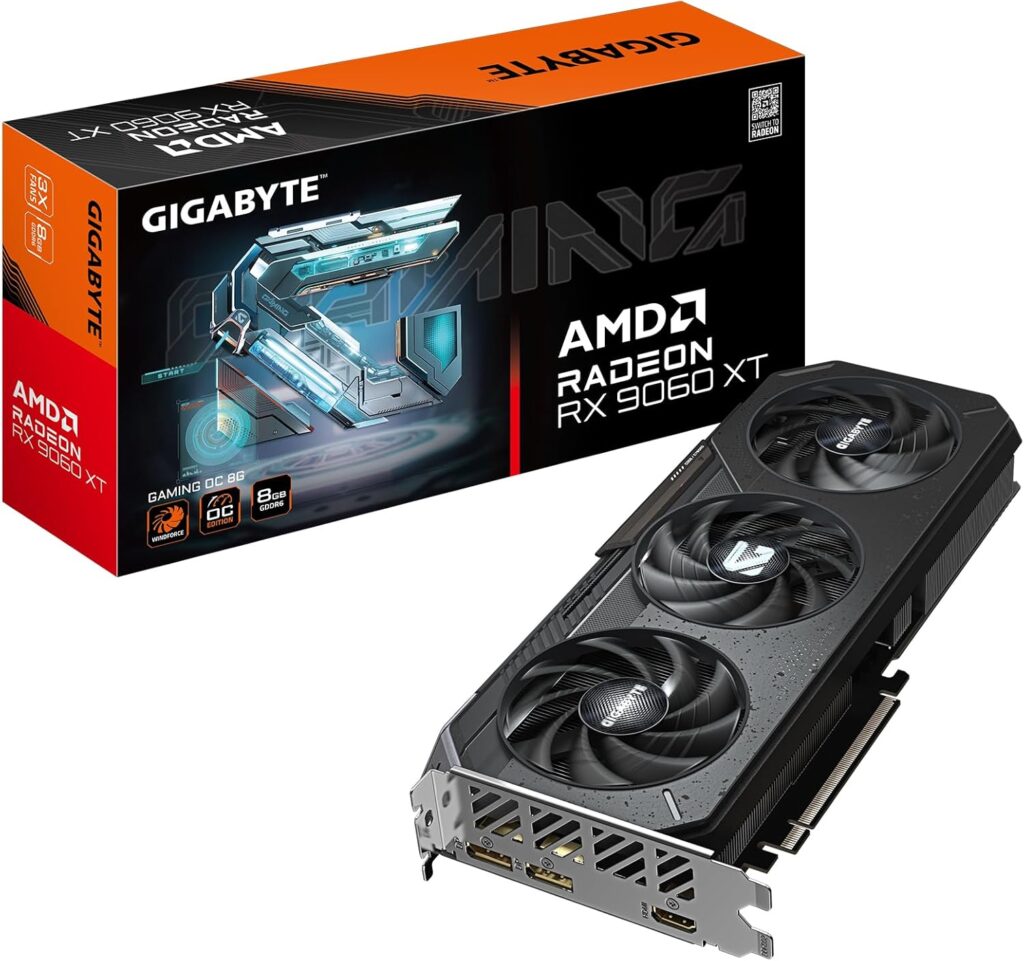
The RX 9060 XT launched on the same RDNA 4 architecture as the RX 9070 series — it is literally half the RX 9070 XT in compute units, with 32 CUs, 2,048 shader cores, and a boost clock of 3.13 GHz making it one of the highest-clocked GPUs at this price point.
The RX 9060 XT 8GB is probably the best sub-$560 value in raw rasterisation performance. It delivers roughly 15-20% more native performance than the RTX 5060 in standard gaming workloads.
The catch: also 8GB of VRAM. Both the RTX 5060 and RX 9060 XT 8GB share the same fundamental memory limitation. The RX 9060 XT runs into VRAM pressure at the same resolution and settings thresholds as the 5060.
AMD’s FSR 4 upscaling on RDNA 4 is meaningfully better than FSR 3 — approaching DLSS 4 Super Resolution quality in supported titles. It does not have Multi Frame Generation equivalent performance to Nvidia’s implementation, but the gap is narrower than it was a generation ago.
Where the RX 9060 XT loses ground is ray tracing — roughly 29% behind the RTX 5060 in ray-traced workloads. If ray tracing is a priority, the AMD card is not the right choice.
Current price on 9060 XT 8GB: $560 on Amazon — $20 more than the RTX 5060.
RX 9060 XT 16GB — The Card That Changes the Conversation
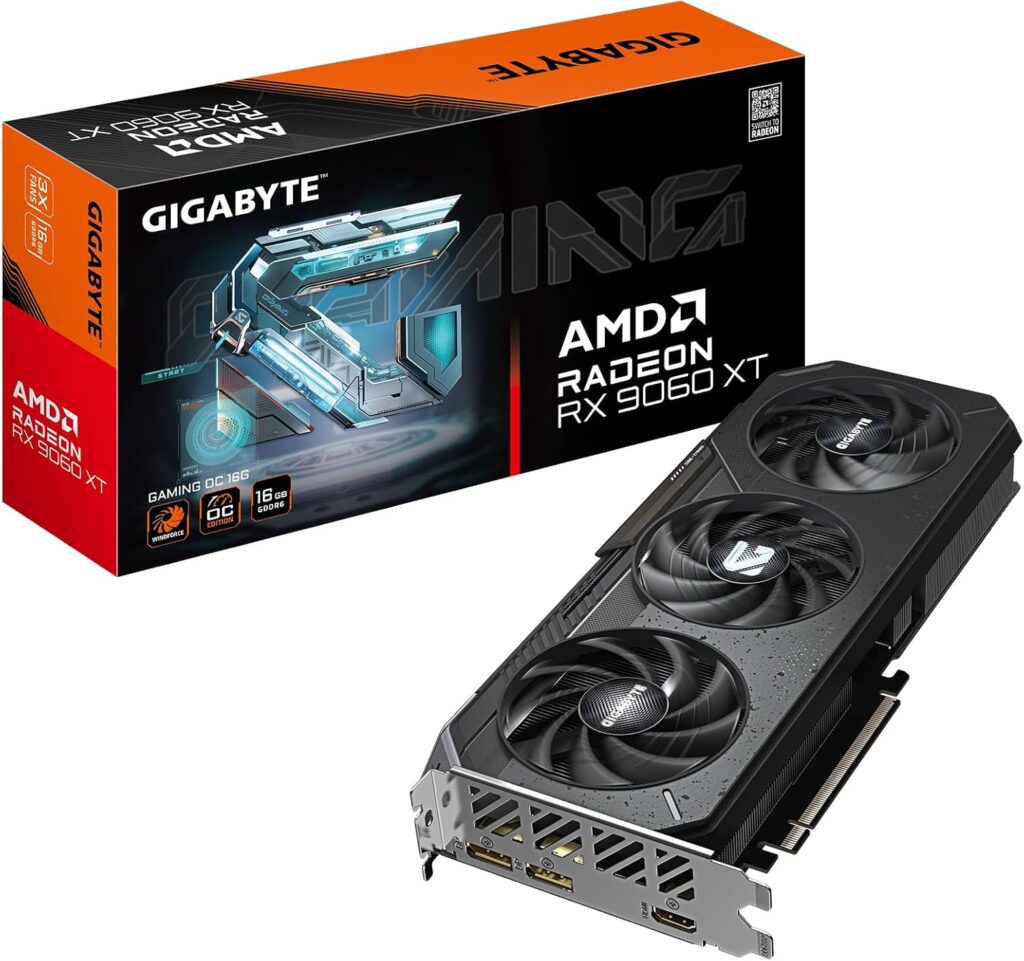
This is the card most buyers at this price point should be looking at seriously, and it requires an honest budget conversation.
At $580 on Amazon right now it is above the stated $300 budget of this article. But hear the reasoning before dismissing it.
The 16GB variant of the RX 9060 XT uses the same GPU die as the 8GB version — same performance in undemanding scenarios — but doubles the VRAM. In titles where the 8GB version hits its memory limit and stutters, the 16GB version continues performing. In 2026 where AAA titles are regularly exceeding 8GB at 1440p, that is not a future-proofing argument. It is a present-tense capability argument.
In the $500-580 price range, the RX 9060 XT 16GB is the recommended pick — delivering comparable cost per frame to the RTX 5060 Ti with similar upscaling quality when FSR 4 is supported.
At $580 versus $390for the RTX 5060, the question is whether $109 of additional spend is worth it to avoid the 8GB VRAM ceiling. Given that GPU upgrades at this tier happen every three to four years, that $109 spread across four years is $27 per year. For most buyers who game at 1440p or want the card to stay capable into 2028, it is worth it.
Intel Arc B580 12GB — The Overlooked Option
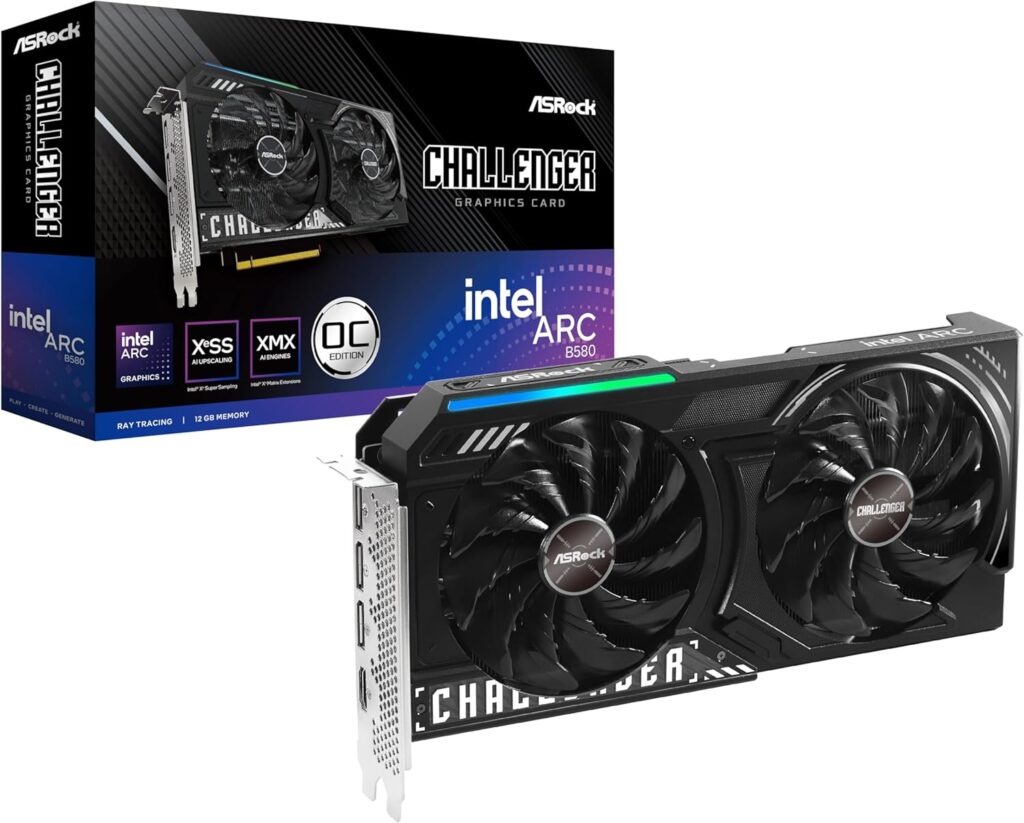
The Intel Arc B580 is priced at approximately $400-$445, making it the only card at this tier that genuinely stays under $500 at current market pricing. It offers 12GB of GDDR6 VRAM — more than either the RTX 5060 or RX 9060 XT 8GB.
In raw rasterisation performance it trails the RX 9060 XT 8GB by around 15-22% and sits close to the RTX 4060. Its advantage is that 12GB of VRAM at $269 is unmatched at this price point.
The driver caveats we covered in our full Arc B570 article apply here too — modern titles work well, older DX11 titles can be problematic, and it requires a current-generation CPU to avoid the overhead penalty. Not a card for first-time builders who want plug-and-play reliability.
For experienced builders on a strict budget who primarily play modern titles: the B580 12GB at $400-$445 is genuinely compelling. For everyone else the AMD and Nvidia options are safer.
Head-to-Head Comparison
| RTX 5060 | RX 9060 XT 8GB | RX 9060 XT 16GB | Arc B580 | |
| Current Price | ~$390 | ~$560 | ~$580 | ~$400-$445 |
| VRAM | 8GB GDDR7 | 8GB GDDR6 | 16GB GDDR6 | 12GB GDDR6 |
| 1080p Performance | Good | ~15% faster | ~15% faster | ~10% behind 5060 |
| Ray Tracing | Best in class | ~29% behind 5060 | ~29% behind 5060 | Behind both |
| Upscaling | DLSS 4 + MFG | FSR 4 | FSR 4 | XeSS 2 |
| Driver Reliability | Excellent | Very good | Very good | Improving |
| 1440p Longevity | Limited by 8GB | Limited by 8GB | Strong | Moderate |
| Best For | Ray tracing, 1080p esports | 1080p AAA performance | 1080p/1440p longevity | Budget, modern titles |
The Honest Recommendations
Best overall under $600 — RX 9060 XT 8GB at $560
If you are gaming at 1080p, primarily play non-ray-traced titles, and want the most native performance for your money: the RX 9060 XT 8GB wins on raw frames per dollar. It is faster than the RTX 5060 in standard rasterisation at nearly identical pricing. The 8GB VRAM limitation is the same as the 5060. FSR 4 on RDNA 4 is impressive and helps compensate for scenarios where VRAM pressure appears.
Best for longevity — RX 9060 XT 16GB at $580
If your budget can stretch to $448 and you game at 1440p or want this card to remain fully capable into 2028: this is the correct purchase. The VRAM headroom changes the card’s trajectory entirely. Spending an extra $109 over the 8GB version to avoid the 8GB ceiling for three to four years is money well spent.
Best for ray tracing — RTX 5060 at $390
If ray tracing in specific titles matters to you and you are gaming at 1080p: the RTX 5060 is the pick. DLSS 4 Multi Frame Generation is genuinely impressive. The card runs 29% faster than the RX 9060 XT in ray-traced workloads. At $580 versus the RX 9060 XT 8GB at $560, it is also $20 cheaper while offering better ray tracing — a genuine argument.
Best strict budget option — Arc B580 12GB at $400-$445
If you are an experienced builder, primarily play modern titles, and genuinely cannot exceed $300: the Arc B580 12GB is the most VRAM for the least money at this tier. Know what you are buying — it requires a current CPU, has known older game compatibility issues, and needs Intel’s drivers downloaded directly rather than through Windows Update.
What to Avoid at This Price Point
RTX 4060 new at $560-$580 — the same price as the RTX 5060 with an older architecture. There is no argument for buying it new in May 2026 when the 5060 exists at identical pricing.
Any 8GB card above $560 — if you are spending more than $500 you should be getting 16GB of VRAM. The RX 9060 XT 16GB at $580 is the floor for spending that kind of money confidently.
RTX 5060 Ti 8GB — a card that costs more than the RX 9060 XT 16GB while delivering 8GB of VRAM. The RTX 5060 Ti 8GB cannot be recommended at any price — if you are spending over $350 on a GPU you should not have to fine-tune every setting to avoid running out of VRAM.
The Summary
For raw 1080p performance at current pricing, the RX 9060 XT 8GB edges out the RTX 5060. For ray tracing the RTX 5060 wins clearly. For longevity at any resolution above 1080p low settings, the RX 9060 XT 16GB at $580 is the card that actually solves the problem rather than delaying it.
The VRAM situation across this entire price tier is genuinely bad in 2026. AMD and Nvidia are both selling 8GB cards at launch prices knowing the limitation exists. The Arc B580 12GB and RX 9060 XT 16GB are the only options at this tier that sidestep it. That shapes every recommendation in this article.
Check current pricing at the links below before buying — these figures shift weekly in the current market.