
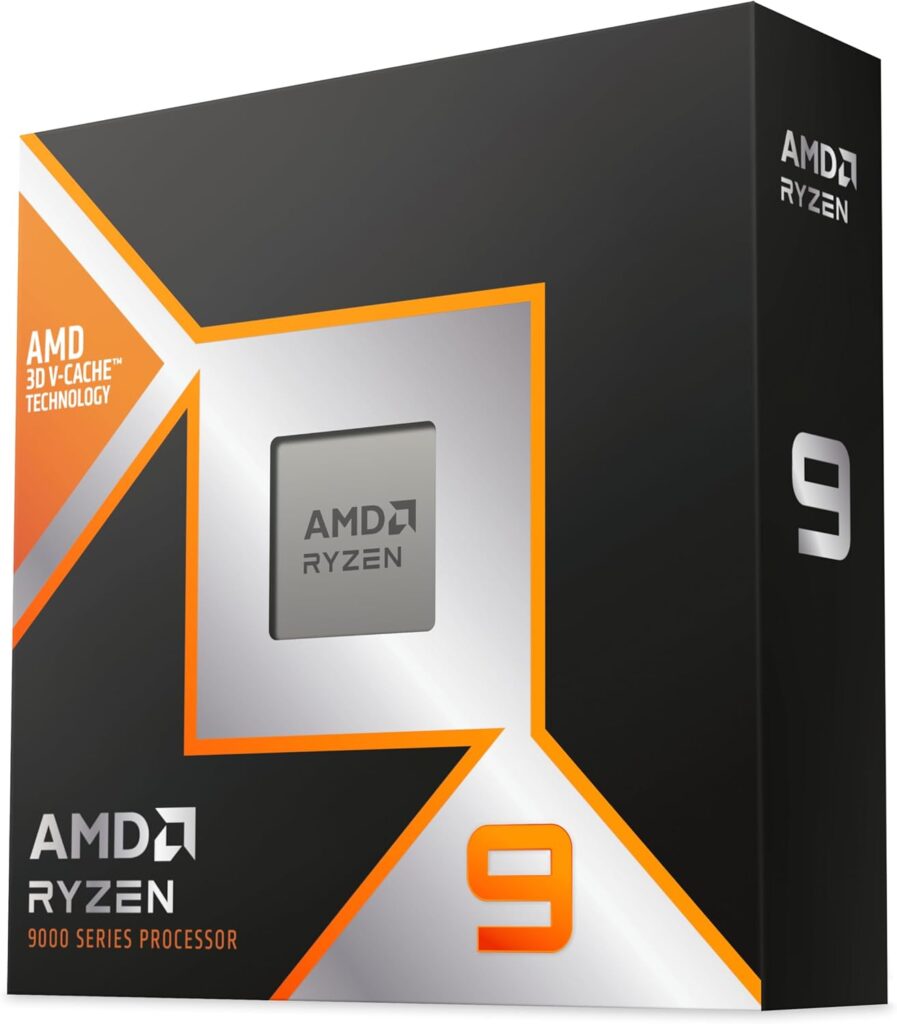
The Ryzen 9 9950X3D is the most capable consumer desktop processor AMD makes. Sixteen Zen 5 cores, 128MB of total L3 cache, a 5.7GHz boost clock, and benchmarks that leave Intel nowhere to stand. Tom’s Hardware found it 37% faster than the Core i9-14900K in gaming. GamersNexus confirmed it as the fastest processor they’ve tested across a wide range of workloads.
It’s also a chip that most people reading this should not buy.
At $675 with a 9800X3D sitting at $449, spending $206 more for the 9950X3D makes sense for a very specific kind of buyer. Identifying whether you’re that buyer is what this article is actually about.
What the AMD Ryzen 9 9950X3D Actually Is
Ryzen 9 9950X3D review is Sixteen Zen 5 cores across two chiplets two CCDs, eight cores each. One CCD carries AMD’s 64MB 3D V-Cache stack underneath it, raising that chiplet’s L3 cache to 96MB. The second CCD runs without V-Cache. Combined L3 total: 128MB.
That architecture creates an asymmetric design that matters for gaming. Games prefer to run on cores with the most cache. AMD’s scheduler routes gaming threads to the V-Cache CCD. The second CCD’s higher 5.7GHz boost clock serves productivity workloads that benefit from frequency over cache. In theory, the 9950X3D should be excellent at both.
Base clock is 4.3GHz. The V-Cache CCD boosts to 5.2GHz, the vanilla CCD to 5.7GHz. TDP is 170W 50W higher than the 9800X3D’s 120W. This is a meaningfully hotter chip than the 8-core alternative. A 360mm AIO is the sensible minimum cooler for it. Air cooling is possible with something like a Noctua NH-D15 or similar high-end tower, but thermals will be tighter than on the 9800X3D.
The Gaming Reality: It Matches the 9800X3D
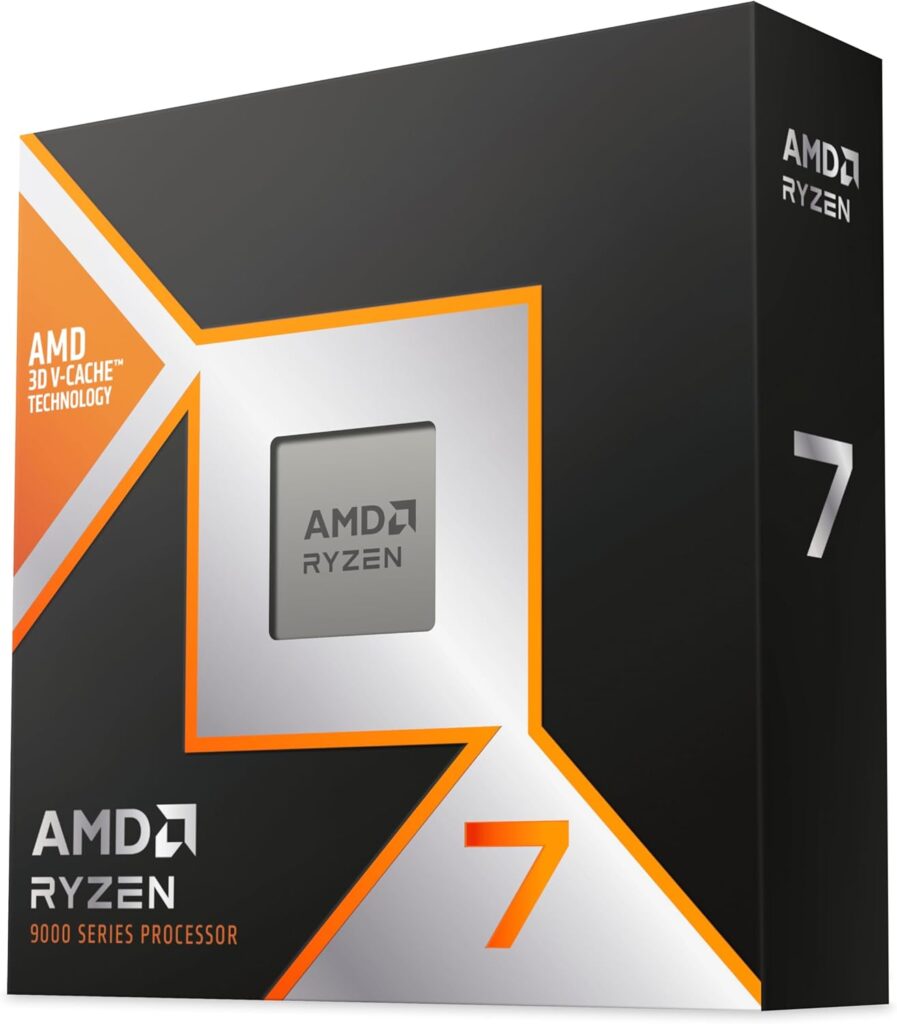
Here’s the number that frames every buying decision around this chip: in gaming, the 9950X3D and 9800X3D trade blows with each other and are essentially the same processor.
Tom’s Hardware’s full review found the 9950X3D ties the 9800X3D on average across their gaming test suite. Some titles go to the 9950X3D, some go to the 9800X3D. Hardware Times confirmed the same pattern “the 9950X3D performs more or less like the 9800X3D in gaming workloads.” GamersNexus put it directly: the 9800X3D is the better value for pure gaming.
Why does a 16-core chip with more total cache match an 8-core chip in gaming? Because of how the V-Cache works on a dual-CCD chip. Only one CCD has the V-Cache stack. Game threads are routed to that V-Cache CCD, which means the effective gaming hardware is essentially identical to the 9800X3D’s single V-Cache CCD. The second CCD’s presence doesn’t add gaming cache it adds cores that games rarely utilise deeply and that can sometimes confuse thread scheduling.
In the titles where the 9950X3D loses to the 9800X3D which happens in a measurable minority of tested games it’s because game thread residency on the V-Cache CCD isn’t always perfectly maintained when the second CCD pulls some threads away. AMD has addressed this with chipset driver improvements over several updates since launch, and the gap has narrowed. But the honest picture remains: this chip does not buy you better gaming than the 9800X3D. It matches it.
The games that genuinely favour the 9950X3D are simulation-heavy open-world titles games that spread work across many threads simultaneously. Dragon’s Dogma 2 showed a 3.2% advantage for the 9950X3D over the 9800X3D in GamersNexus testing. Not irrelevant, but irrelevant at a $206 price premium.
Where the 9950X3D Actually Wins: Productivity
This is where the chip earns its premium and earns it clearly.
Versus the standard Ryzen 9 9950X (the non-V-Cache version), the 9950X3D is 3–6% faster in Blender, Cinebench, and Corona rendering. In 7-Zip compression and decompression, the advantage rises to 10–15%. In cache-sensitive simulation workloads like Stellaris and other grand strategy engines, GamersNexus measured performance gains of up to 54% over the 9950X.
Against the non-X3D 9950X in gaming, the gap is even larger the 9950X3D leads by 21–54% depending on how cache-sensitive the title is. If you’re currently on a non-X3D Ryzen 9 or any Intel processor, the 9950X3D represents a massive gaming performance step up.
Where the 9950X3D genuinely makes sense:
Streaming and gaming simultaneously. The 9800X3D’s eight cores can feel constrained when the game is heavy and the encoder is running simultaneously. Sixteen cores give the encoder dedicated resources without pulling from gaming cores.
3D rendering and content creation alongside gaming. Blender renders faster. Unreal Engine compilation is faster. Video encoding at high quality presets is faster. If your PC is both a workstation and a gaming machine, the 9950X3D is the chip the 9800X3D isn’t.
Game development. Large code compilations, Unreal Engine source builds, asset cooking workloads that benefit from high core count and large cache simultaneously. This is the use case where the 9950X3D’s dual-CCD design creates genuine synergy rather than just adding unused cores.
Scientific and engineering simulation. GamersNexus noted the 9950X3D’s OpenFOAM result as a genuine outlier 24% improvement over Intel’s 270K Plus and significantly above other tested chips in computational fluid dynamics. If you run simulation workloads professionally on a desktop machine, the 9950X3D is relevant hardware.
What About the 9950X3D2?
The Ryzen 9 9950X3D2 launched in April 2026 at $900 with V-Cache stacks on both CCDs 192MB total L3 cache. The promise was better gaming performance from the symmetrical dual-CCD V-Cache architecture.
GamersNexus titled their review “DO NOT BUY” and stood by it. In gaming, the 9950X3D2 is 0–6% faster than the 9950X3D. Against the 9800X3D, it “often about the same sometimes slightly worse, sometimes slightly better.” For a chip that costs $225 more than the 9950X3D and $431 more than the 9800X3D, that’s not a compelling case.
If you’re considering a 9950X3D, the 9950X3D2 is not the upgrade path. At $900, nothing in gaming justifies it over the $469 9800X3D. The 9950X3D2 exists for workstation users who specifically need maximum cache for professional applications a narrow audience.
Current Pricing and the Buying Decision
Current prices at time of writing:
| CPU | Cores | Cache | TDP | Price |
|---|---|---|---|---|
| Ryzen 7 9800X3D | 8 | 96MB | 120W | ~$469 |
| Ryzen 7 9850X3D | 8 | 96MB | 120W | ~$499 |
| Ryzen 9 9950X3D | 16 | 128MB | 170W | ~$675 |
| Ryzen 9 9950X3D2 | 16 | 192MB | 170W | ~$900 |
The decision is clear for most buyers: the 9800X3D at $449 is the right gaming CPU. It matches the 9950X3D in gaming, costs $206 less, runs 50W cooler, and is easier to cool with a high-end air cooler or 240mm AIO.
The 9950X3D at $675 is the right choice if your use case is genuinely mixed — production workloads that benefit from 16 cores alongside gaming. The productivity premium is real and the gaming performance doesn’t suffer for it. You’re paying $206 for the workstation capability, not for gaming gains.
The 9850X3D at $499 is the marginal choice between the two 8-core options. As covered in the 9850X3D vs 9800X3D article on SpecClear, the gaming performance delta is 2–7% depending on title. For most buyers the $30 difference is worth it for the higher boost clock — but the 9950X3D doesn’t factor into that decision.
The Verdict
The 9950X3D is the best consumer desktop CPU available. It’s not the best gaming CPU that’s still the 9800X3D at a far lower price. The two chips match in gaming and diverge in productivity. The price gap between them is your cost of entry for AMD’s workstation-class multi-threaded performance on top of gaming capability that doesn’t regress.
If gaming is all you do: buy the 9800X3D and save $206 for a better GPU or more RAM. If gaming is one of several serious workloads on your PC: the 9950X3D earns its price honestly.
SpecClear participates in affiliate programmes. When you purchase through links on this site we may earn a commission at no additional cost to you.
–