
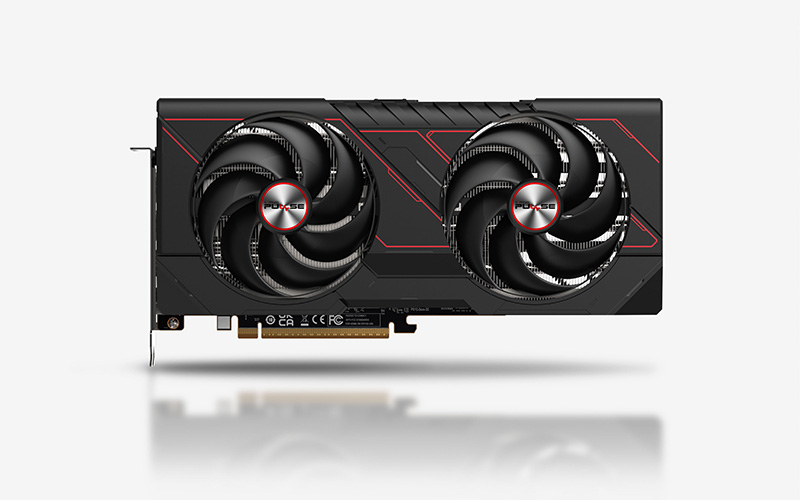
The question sounds simple. The RX 9070 GRE costs $549. The standard RX 9070 costs ~$649. The gap is often ~$100 depending on where you shop and what’s in stock this week. So which one do you actually buy?
Here’s the honest answer before we get into the numbers: buy the RX 9070.
The ~$100 price difference does not reflect the performance difference, the standard RX 9070 is 18–22% faster on average, carries 4GB more VRAM, moves data 32% faster through its memory subsystem, and handles ray tracing meaningfully better. For $50. That maths only works one way.
But the full picture is more nuanced than a one-line verdict because there is a specific scenario where the GRE makes sense, and you should know what it is before spending money on either card.
RX 9070 GRE vs RX 9070: The Spec Differences That Actually Matter
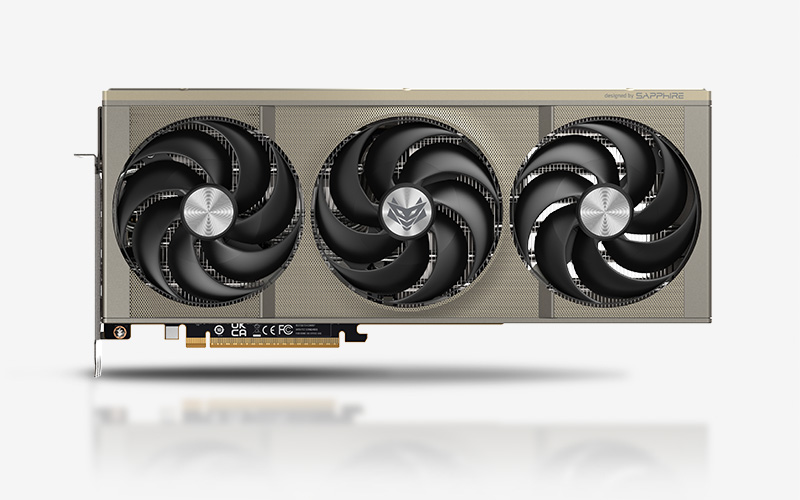
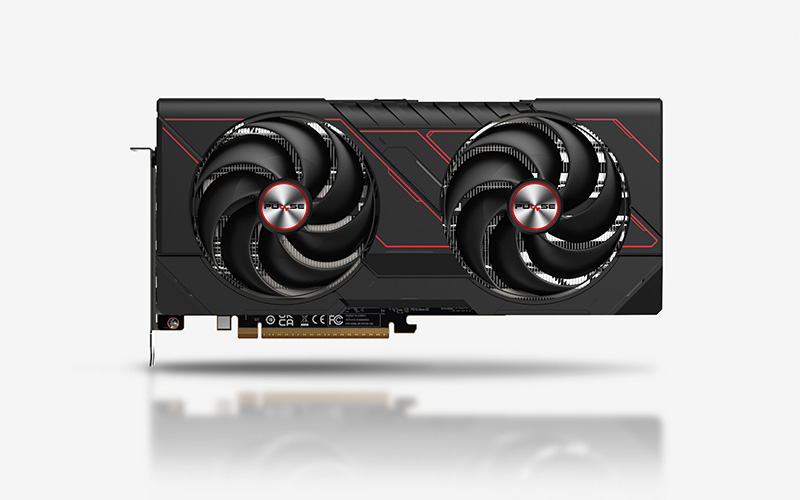
Both cards use the same Navi 48 silicon on TSMC’s 4nm process. Both run RDNA 4 architecture. Both consume 220W. On paper they look like close siblings. In practice, AMD has cut three things from the GRE that create a larger real-world gap than the spec sheet implies.
Compute units: 48 on the GRE versus 56 on the standard RX 9070. That’s a 14% reduction in shader cores, RT accelerators, and matrix cores simultaneously. The GRE partially compensates with a higher boost clock 2.79GHz versus 2.52GHz but a 270MHz frequency advantage doesn’t recover 14% fewer execution units.
Memory bandwidth: This is the bigger problem the GRE runs 12GB of GDDR6 at 18Gb/s on a 192-bit bus — 432GB/s total. The RX 9070 runs 16GB at 20Gb/s on a 256-bit bus 640GB/s total. That’s a 32% reduction in memory bandwidth. You won’t feel it at 1080p in older titles. You’ll feel it at 1440p in demanding 2026 games, and you’ll feel it hard at 4K or in ray-traced workloads where the bandwidth ceiling becomes the bottleneck.
VRAM: 12GB versus 16GB in mid-2026, games are regularly hitting 10–12GB of VRAM at 1440p with high texture settings. The GRE’s 12GB buffer is not comfortable headroom it’s the exact ceiling you don’t want to be bumping against in a card you’re planning to use for the next three years.
The Performance Numbers
Multiple independent reviews benchmarked both cards at 1440p on Ryzen 9000 series test systems, the results are consistent across sources.
Averaged across standard raster gaming at 1440p, the RX 9070 is 18–22% faster than the GRE. In specific titles at 1440p the gap ranges from 8% to 28% depending on how memory-intensive the workload is older, less demanding titles sit closer together while newer titles with higher bandwidth requirements pull the gap wider.
In ray tracing, the gap is worse the GRE is 22–28% slower than the RX 9070 in RT workloads. It has 14% fewer RT accelerators and 32% less memory bandwidth both are critical for ray tracing, and both are cut on the GRE. Neowin’s testing showed the GRE trading blows with the last-gen RTX 4070 in 3DMark Speed Way, while the standard RX 9070 sits comfortably above it.
3DMark Speedway the most demanding synthetic benchmark and a reasonable proxy for how cards will handle demanding titles two to three years from now shows the starkest gap: GRE scored 4,334 versus the RX 9070’s 5,799 that’s a 34% difference on a test designed to stress modern rendering workloads.
At 4K, the GRE’s 12GB ceiling starts producing VRAM warnings in the most demanding titles. Games.gg’s testing of Forza Horizon 6 at 4K saw a low VRAM warning appear on the GRE mid-benchmark, though it didn’t cause stuttering in that specific title. In heavier workloads like Stalker 2 at 4K, PC Games Hardware noted the 12GB limit revealing itself clearly.
The Only Case for the GRE
There is one scenario where the GRE is the right buy.
You’re gaming at 1440p without ray tracing, primarily in mainstream titles rather than the most demanding 2026 releases, and you find the GRE at exactly $549 while the RX 9070 is selling above $600 in your region.
At that specific price gap and use case, the GRE is a solid card. Thermals are excellent 58°C peak under sustained gaming load, barely audible fans. FSR 4.1 is present and working properly. 1440p raster performance is genuinely strong. For the use case it’s designed for at the price it was designed for, it delivers.
The problem is that scenario is narrow the RX 9070 at $579 — $30 more than GRE MSRP exists. If you can find that combination of prices, the GRE is defensible. If the gap is $50 or less, it isn’t.
What $50 Actually Buys You on the RX 9070
Let’s be specific about what the premium gets you.
18–22% more average FPS at 1440p. Not theoretical future performance — right now, in current games, with current drivers.
4GB more VRAM 16GB versus 12GB in 2026 this matters. In 2027 and 2028 it will matter more. You can’t upgrade VRAM after the fact.
32% more memory bandwidth — 640GB/s versus 432GB/s. This is the hidden spec that determines how the card ages. Memory bandwidth determines how quickly the GPU can feed its shaders. As games get more complex, bandwidth-constrained cards fall behind faster than the shader count alone would suggest.
22–28% better ray tracing performance. If you ever turn on RT even occasionally the RX 9070 handles it noticeably better.
Better longevity in future demanding titles. The 3DMark Speedway gap of 34% is the signal here. The test is designed to predict how cards handle next-generation rendering workloads. The GRE’s performance there suggests it will age less gracefully as titles get more demanding over the next two to three years.
The Verdict
Spend the $50. The RX 9070 is the right card at this tier for almost every buyer.
The only exception is if you’re strictly 1440p raster gaming with no interest in ray tracing, never plan to push 4K, and you find the GRE meaningfully cheaper than the RX 9070 in your region on the day you buy. If the price gap is $50 or less which it is at most US retailers right now there’s no justification for the GRE’s cut-down spec sheet.
At $549 the GRE is not a bad card. At $579 the RX 9070 is a significantly better one. That’s the complete picture.
SpecClear participates in affiliate programmes. When you purchase through links on this site we may earn a commission at no additional cost to you.