
SpecClear earns a commission if you buy through Newegg links on this page, at no extra cost to you.
The $100 ceiling on gaming headsets is mostly marketing, brands spend years training buyers to believe meaningful audio quality requires three figures. It doesn’t. The components that determine whether a headset sounds good driver size, driver quality, ear cup seal, frequency response don’t cost $100 to get right. What costs money is wireless hardware, RGB lighting, software ecosystems, and brand premium. None of those are audio quality.
Under $100 in 2026 there are genuinely good headsets. There are also a lot of overpriced plastic with gaming aesthetics attached. Here’s how to tell the difference and which ones to buy.
What actually matters under $100
Three things determine whether a gaming headset does its job well. Driver quality determines how accurately the headset reproduces audio footstep clarity, directional cues, dialogue separation. Microphone pickup determines whether your teammates can hear you clearly. Comfort determines whether you can wear it for four hours without your ears hurting.
Everything else is optional. Virtual 7.1 surround sound is a software processing layer that most competitive players turn off because stereo with good imaging beats processed pseudo-surround for positional accuracy. RGB lighting is decoration. Software equalizers are useful if implemented well, irrelevant if not. Build a shortlist around drivers, microphone, and comfort everything else is negotiable.
One more thing worth stating clearly: under $100, wired headsets consistently outperform wireless headsets at the same price. Wireless hardware adds $30 to $50 in manufacturing cost that wired builds put into audio components instead. If you want the best sound for the money, buy wired. If you want freedom from cables and can accept a modest audio quality trade-off, wireless at this tier is genuinely good just know you’re making that trade.
Under $70 HyperX Cloud III Wired (~$70)
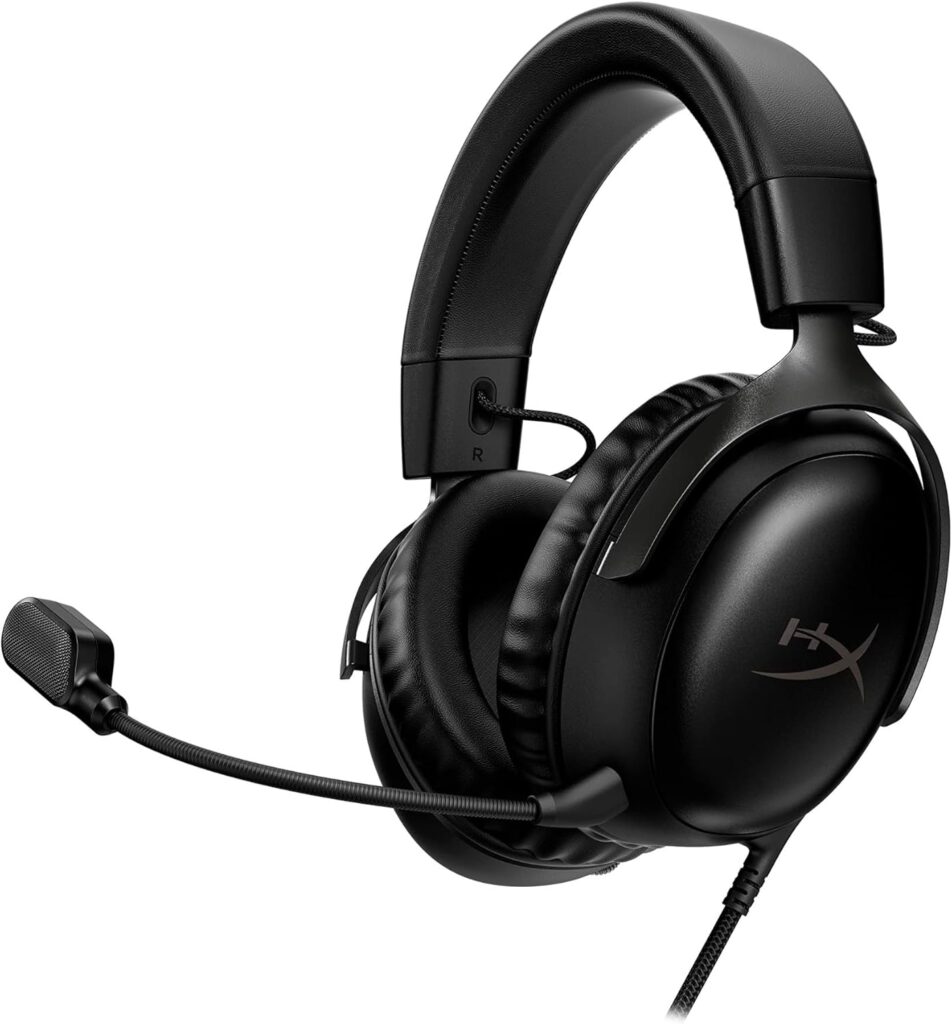
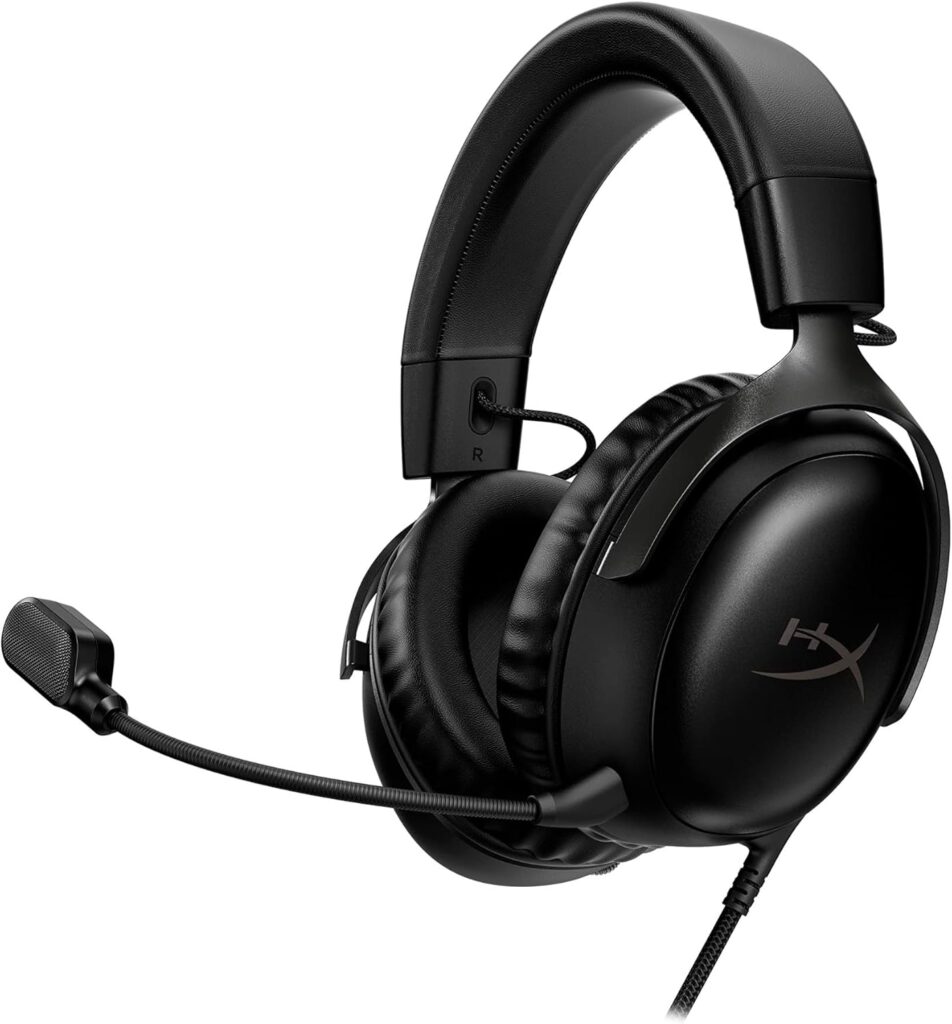
The HyperX Cloud III (about $70) is the default recommendation at budget tier and has been for years. 53mm angled drivers tuned for gaming audio, memory foam ear cushions, a durable aluminium frame that survives being thrown in a bag, and a detachable 10mm microphone that produces clear voice pickup without background muddiness. USB-C, USB-A, and 3.5mm connectivity covers every platform without adapters.
The Cloud III’s sound signature leans warm with strong mid-bass footsteps, explosions, and game soundtrack all feel present and substantial. It’s not a flat analytical sound it’s tuned for enjoyment rather than clinical accuracy. For most gamers that’s the correct tuning. Competitive players who want precise positional imaging sometimes prefer flatter signatures, but at this price the Cloud III’s approach works extremely well for the overwhelming majority of game genres.
The microphone is one of the best at this price tier clear voice pickup with good rejection of background noise. Discord calls and in-game communication both land with clarity.
If you’re buying one headset under $100 and audio quality is the primary concern, this is the one to buy. It’s been at the top of budget headset lists for three consecutive generations for a reason each update has refined without breaking what worked.
Wireless pick: Razer Barracuda X 2022 Edition (~$69)
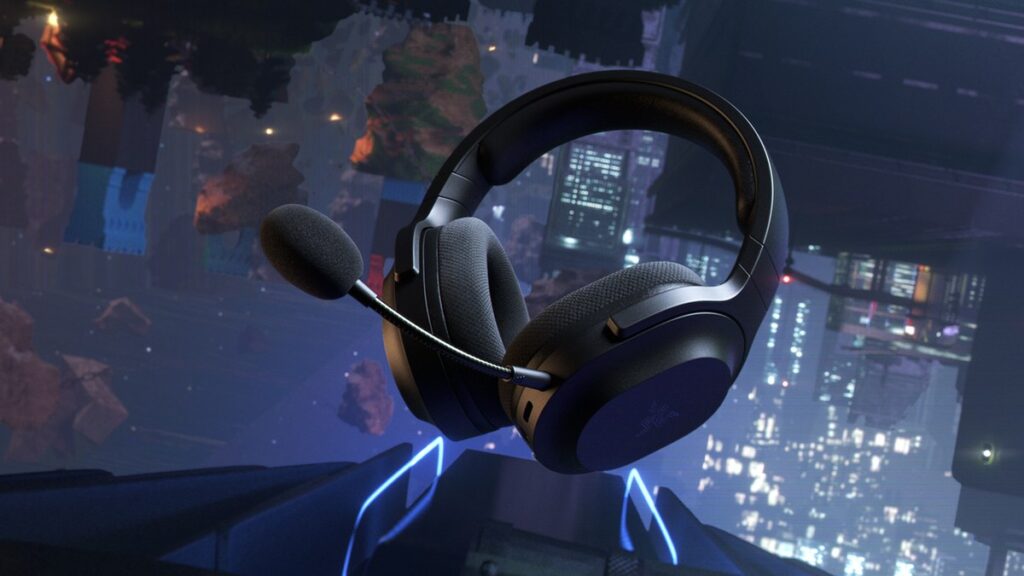
The Barracuda X 2022 Edition is the answer when wireless matters more than extracting the last bit of audio quality. It connects over a USB-C 2.4GHz dongle or Bluetooth 5.2, and Razer rates it for up to 50 hours per charge. The dongle works with PC, PlayStation, Switch and USB-C Android phones, and it weighs 250g. See the Razer Barracuda X 2022 Edition (about $69 from Newegg).
Up to 50 hours means charging about once a week in normal use, going by Razer’s rating, so remembering mid-game that you haven’t charged it shouldn’t happen often.
The drivers are 40mm Razer TriForce units, smaller than the Cloud III’s 53mm drivers. Driver size isn’t the whole story, as the section on what to avoid explains, but this is a wireless convenience headset first and an audio headset second.
The trade-off versus the Cloud III is audio fidelity. The Barracuda X is a wireless convenience product at an honest price, and the Cloud III is an audio quality product at about the same price. Choose based on whether the cable is a problem you want to solve.
Competitive pick: Razer BlackShark V2 X (~$40)
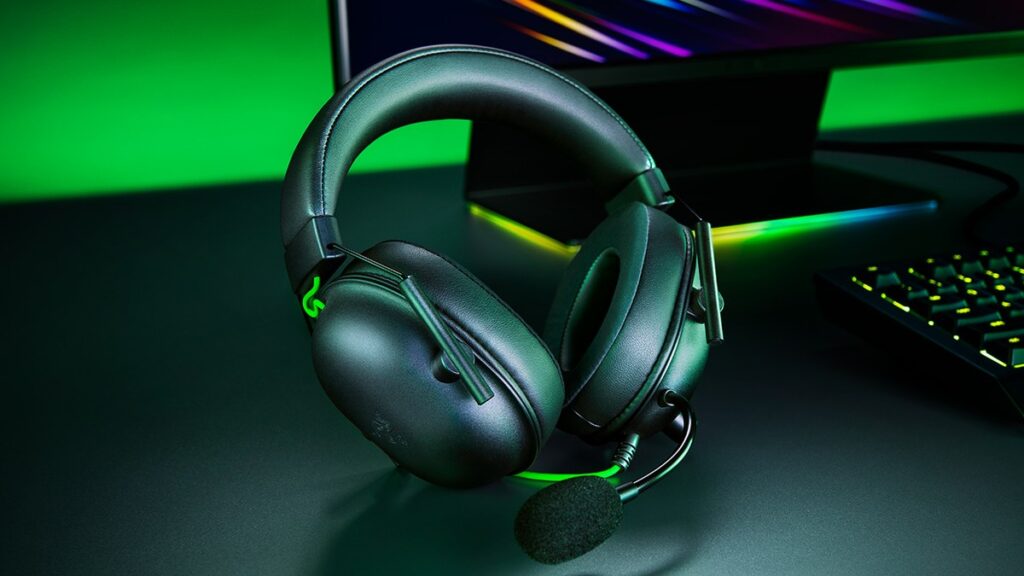
The BlackShark V2 X is the competitive pick, and it’s also the cheapest headset here. Razer built it for esports: 50mm TriForce Titanium drivers that Razer tunes separately for highs, mids and lows, a noise-cancelling mic, and a plain 3.5mm connection. Check the Razer BlackShark V2 X (about $40 from Newegg) for current stock.
It’s wired only, which suits competitive play: there’s no battery to manage and no wireless link to drop. It’s sold as a 7.1 surround headset, but that surround is a software layer, and as covered above most competitive players leave it off and use plain stereo.
Because it’s a plain 3.5mm analog headset, it plugs straight into a PC, a laptop or a console controller with a headset jack, with no dongle or drivers needed for basic use.
If you play competitive shooters like CS2, Valorant and Apex Legends and want a dedicated headset for them, the BlackShark V2 X costs about $30 less than the Cloud III. If your library is mostly single-player games or casual multiplayer, the Cloud III’s warmer tuning is more enjoyable for the money.
What to avoid under $100
No-name brands with enormous driver specifications and no reviews. “50mm drivers” means nothing without context about the driver quality a poorly implemented 50mm driver sounds worse than a well-implemented 40mm driver. Brands like Redragon and Kotion produce functional headsets at very low prices, but build quality, microphone performance, and long-term reliability fall short of the established names at similar price points.
Virtual 7.1 surround sound marketed as a premium feature. Every headset in this article supports some form of spatial audio processing. What matters is the stereo imaging of the underlying drivers, not which 7.1 processing layer is applied on top. Good stereo with accurate driver imaging beats poor stereo with 7.1 branding every time.
The cheapest wireless option at any given price point. Wireless hardware has a floor cost. A $50 wireless headset is either cutting corners on audio drivers, battery capacity, or both. The Razer Barracuda X at about $69 is the floor of wireless headsets worth buying in this category.
The quick decision
You want the best audio quality for the money: HyperX Cloud III wired at ~$70
You want wireless freedom and long battery life: Razer Barracuda X 2022 Edition at ~$69.
You play competitive shooters and want a dedicated wired headset: Razer BlackShark V2 X at ~$40.
All three are good headsets, and all three are under $100 on Newegg right now.