SpecClear earns a commission if you buy through Newegg links on this page, at no extra cost to you.
The best gaming headsets in 2026 have settled into a pattern that makes buying decisions easier than they used to be. Wireless is now standard at every price point above $80. Battery life has become genuinely impressive placed at 70 to 300 hours depending on the model. Spatial audio is table stakes. The spec differences between brands have narrowed significantly.
What that means for buyers is that the differentiators have moved. You’re no longer choosing between wireless and wired at the $100 tier. You’re choosing between audio tuning philosophies, microphone quality, comfort over long sessions, and increasingly whether you want a traditional headset at all. Gaming IEMs have matured enough in 2026 that they’re a legitimate alternative for a specific type of player.
This guide covers the best options at each tier, from mid-range to premium, plus the two IEM options worth considering if you’ve been curious about in-ear for gaming.
How to Choose — Four Questions First
Before looking at specific products, answer these:
1. Do you game competitively or casually? Competitive players on CS2, Valorant, Apex — benefit from headsets tuned for positional accuracy. Footstep directionality, spatial precision, low latency. Casual players benefit more from comfort and a well-balanced sound profile they can wear for four hours.
2. Do you game on multiple platforms? Some headsets are PC-only for their best features. Xbox compatibility requires specific wireless standards. Check before buying.
3. How long do you wear it per session? Weight matters more than most buyers account for. A 380g headset feels fine for 90 minutes and punishing at hour four. Under 300g is the target for marathon sessions.
4. Are you open to IEMs? In-ear monitors have real advantages for gaming the absolute up side to this zero weight on your head, isolation that headsets can’t match, portability. The disadvantage is that some people find in-ear uncomfortable for extended wear. Know which camp you’re in before spending $130 on earbuds.
The Best Mid-Range Headset — Razer BlackShark V3 — $149.99
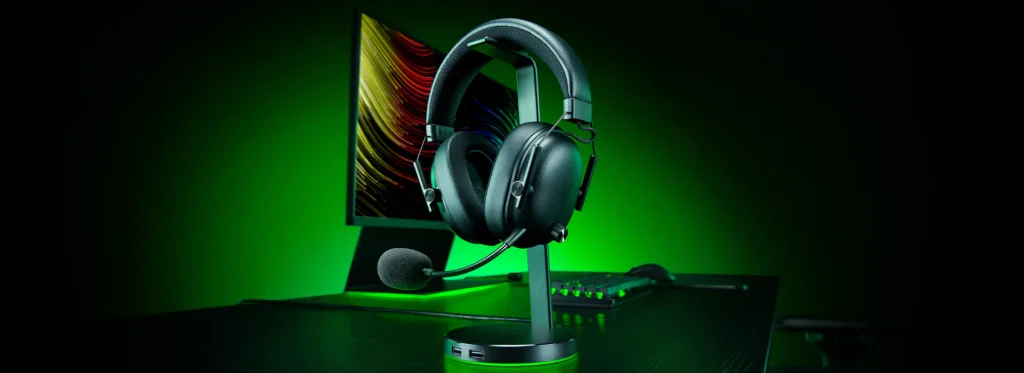
The Razer BlackShark V3 is the headset most PC gaming reviewers have converged on as the best all-around option in 2026. Not the most feature-rich. Not the best battery life. The best overall package for the money.
What makes it stand out:
The wireless latency is exceptional. HyperSpeed Gen-2 gets you to 10ms, which is at the low end of what gaming headsets achieve. Most wireless headsets sit between 15-30ms. The difference isn’t always perceptible, but in fast-paced competitive gaming it can be.
The TriForce Titanium 50mm Gen-2 drivers deliver what multiple reviewers describe as the clearest mids they’ve heard in a gaming headset at this price. Footsteps register distinctly. Voice communication is clean. Music sounds competent without being exceptional.
The microphone is the strongest in its class. The detachable HyperClear Super Wideband 9.9mm mic captures a wider frequency range than standard gaming microphones, and the practical result is voice communication that sounds natural rather than telephone-quality.
The specs:
| Specification | Detail |
|---|---|
| Drivers | TriForce Titanium 50mm Gen-2 |
| Weight | 270g |
| Connectivity | 2.4GHz HyperSpeed + Bluetooth 5.3 + USB |
| Simultaneous dual wireless | Yes (2.4GHz + Bluetooth at the same time) |
| Latency | 10ms (2.4GHz) |
| Battery | 70 hours (2.4GHz) |
| Spatial Audio | THX Spatial Audio 7.1.4 (via Razer Synapse on PC) |
| EQ Profiles | 9 onboard, including pro-tuned FPS game profiles |
| Platform | PC, Mac, PS5/PS4, Switch — not compatible with Xbox |
| Price | $149.99 |
The simultaneous dual wireless is worth flagging specifically you can run PC audio on 2.4GHz and phone audio on Bluetooth at the same time, swapping between sources without disconnecting either. Very few headsets at this price tier do this. It means your Discord stays on your PC connection while you take a call on your phone without touching the headset.
One genuine limitation: Xbox is not supported. The HyperSpeed 2.4GHz protocol doesn’t play with Xbox’s proprietary wireless standard. If you game primarily on Xbox, this isn’t your headset.
Who it’s for: PC gamers who want the best combination of low latency, audio clarity, microphone quality, and multi-device wireless in the mid-range tier.
The Best Battery Life Headset — HyperX Cloud Alpha Wireless — $120
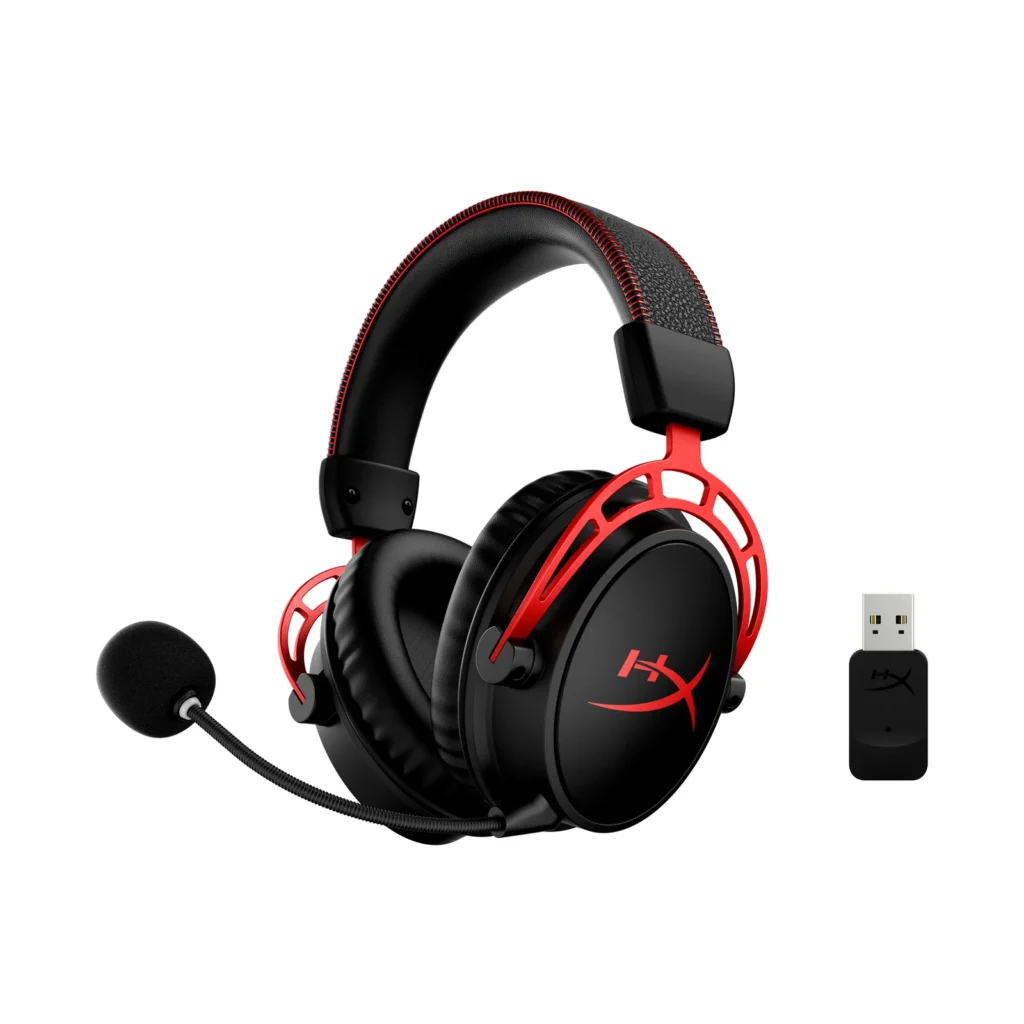
The HyperX Cloud Alpha Wireless held the top spot in most gaming headset rankings for years. The Razer BlackShark V3 eventually displaced it on audio quality and microphone performance. But the Cloud Alpha Wireless has one specification that nothing else comes close to. HyperX Cloud Alpha Wireless (~$120)
300 hours of battery life.
That’s not a typo. On a full charge the Cloud Alpha Wireless lasts approximately 12 weeks of daily two-hour gaming sessions before you need to plug it in. Most competing headsets offer 40-70 hours. The Cloud Alpha Wireless lasts longer than most people remember to charge it.
The specs:
| Specification | Detail |
|---|---|
| Drivers | HyperX 2nd Gen Dual Chamber Drivers |
| Weight | 309g |
| Connectivity | 2.4GHz wireless only |
| Battery | 300 hours |
| Spatial Audio | DTS Headphone:X |
| Microphone | Noise-cancelling boom mic |
| Platform | PC only via 2.4GHz dongle |
| Price | $120 (currently at lowest-ever pricing) |
The dual chamber driver design separates bass frequencies from mid and high frequencies within the earcup, which reduces bass bleed into the midrange. The practical result is a cleaner, more defined sound profile than most single-chamber drivers at this price. It’s not audiophile-grade, but it’s noticeably more composed than the competition.
The limitations are real. 2.4GHz only with no Bluetooth for your phone. PC-focused console support is limited. No simultaneous dual wireless. At 309g it’s one of the heavier headsets in this guide. No ANC.
Who it’s for: PC gamers who forget to charge things. Anyone who’s been burned by a headset dying mid-session. The person who wants to charge once and not think about it for three months. If battery anxiety is your primary concern, there’s nothing else that competes.
The New One Worth Watching — MSI Maestro 500 Wireless $69.99
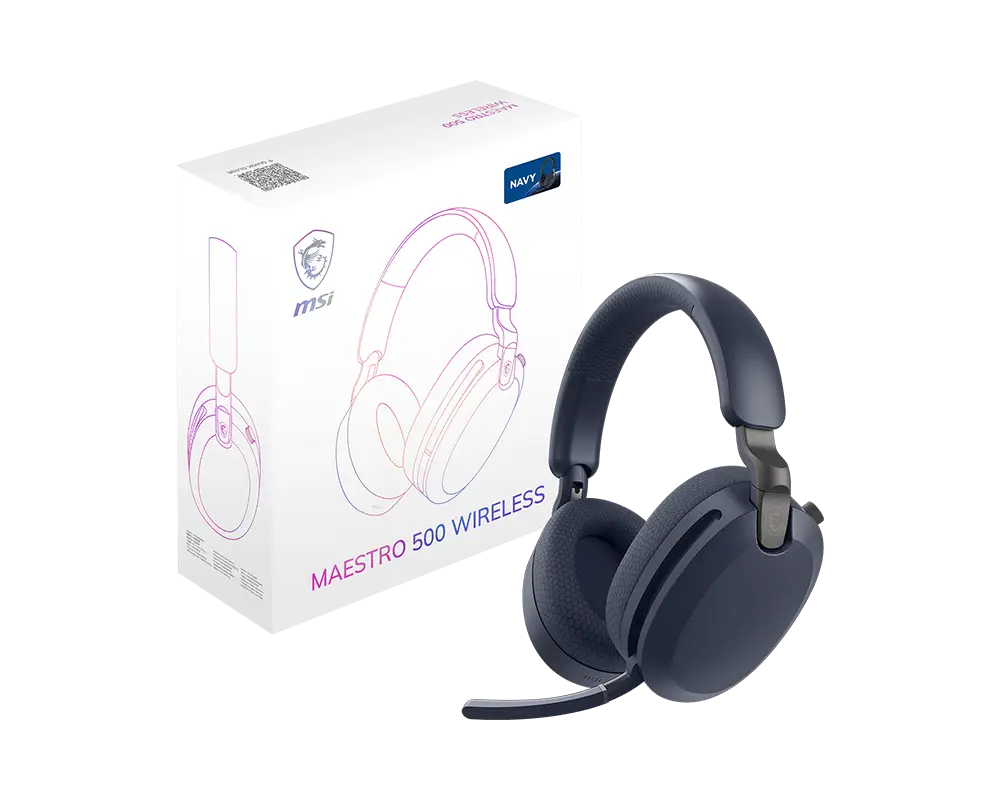
The MSI Maestro 500 Wireless is the most interesting new headset of 2026 and the one that doesn’t fit neatly into the gaming headset category. MSI Maestro 500 Wireless ($69)
It launched June 2026 with no RGB, a foldable design that looks like a Sony lifestyle headset, and a battery claim that sits between the Cloud Alpha Wireless and everything else.
The headline specs:
| Specification | Detail |
|---|---|
| Drivers | 40mm, frequency response up to 40kHz |
| Weight | 280g |
| Connectivity | 2.4GHz + Bluetooth 5.4 + 3.5mm wired |
| Battery | 90 hours (Bluetooth) / 60 hours (2.4GHz) |
| Fast charge | 5 minutes = 6 hours playback |
| ANC | Yes — with Transparency mode |
| Microphone | 6-mic array with beamforming and ENC, flip-to-mute |
| Spatial Audio | Nahimic for Headset (PC) |
| Design | Foldable, swivelling earcups |
| Platform | PC, Mac, PS, Switch, mobile |
| Price | Not yet confirmed — available now on Newegg |
The 6-microphone beamforming array is genuinely unusual at this price tier. Most gaming headsets use a single boom mic. MSI has built in environmental noise cancellation that runs across six microphones simultaneously, which should theoretically produce cleaner voice pickup than any single-mic competitor. Early reviews confirm the mic performs well.
The 90-hour battery via Bluetooth and 60-hour via 2.4GHz puts it between the Cloud Alpha Wireless and standard 70-hour competitors. The 5-minute fast charge delivering 6 hours of playback is the more practically useful battery feature for most people however if you forget to charge and have a session in 30 minutes, a quick plug solves it.
One honest note from early reviewers: the single multi-function button handles all playback controls, and the placement on the top-left of the headset had reviewers fumbling before muscle memory kicked in. It’s not a deal-breaker but it’s worth knowing.
Who it’s for: The person who uses their headset for work calls and gaming in the same day. The player who commutes with their gaming headset. Anyone who wants ANC and a serious microphone without paying $250 for the Razer BlackShark V3 Pro.
Check current pricing on Newegg before buying retail pricing hasn’t been publicly confirmed at time of writing.
The Premium Option — Razer BlackShark V3 Pro — $249.99
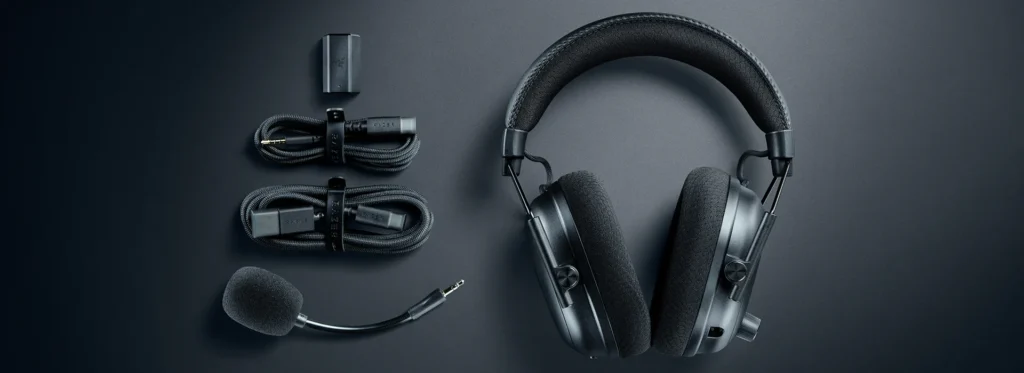
If you want the absolute best and price isn’t the limiting factor, the BlackShark V3 Pro is the current competitive ceiling. Razer BlackShark V3 Pro ($249)
It adds Active Noise Cancellation to the V3’s feature set will be the first time ANC has appeared in the BlackShark lineup. Four microphones handle the ANC processing alongside the detachable Full Band 12mm boom mic. The latency stays at 10ms via HyperSpeed Gen-2. Battery drops to 70 hours with ANC off, around 40 with ANC running.
The price premium over the standard V3 buys you: ANC, a better microphone (12mm Full Band vs 9.9mm Super Wideband), and simultaneous 2.4GHz + Bluetooth connectivity that the standard V3 also has.
Whether the ANC justifies $100 extra over the V3 depends on your environment. Open-plan offices, noisy households, people who game near air conditioning or traffic when ANC earns its price. Quiet rooms with a door save the $100 and buy the V3.
Who it’s for: Competitive gamers who want the best microphone available in a gaming headset, or anyone gaming in a noisy environment who needs ANC that actually works.
The IEM Option for Gaming — Razer Hammerhead V3 HyperSpeed — $139.99

This is where the guide shifts category. If you’ve never considered gaming IEMs, here’s the honest case for them.
Traditional gaming headsets sit on your ears. After two or three hours the clamping force, heat, and weight add up. IEMs sit in your ears and weigh almost nothing. If you’re sensitive to headset pressure or run hot, the comfort difference is significant.
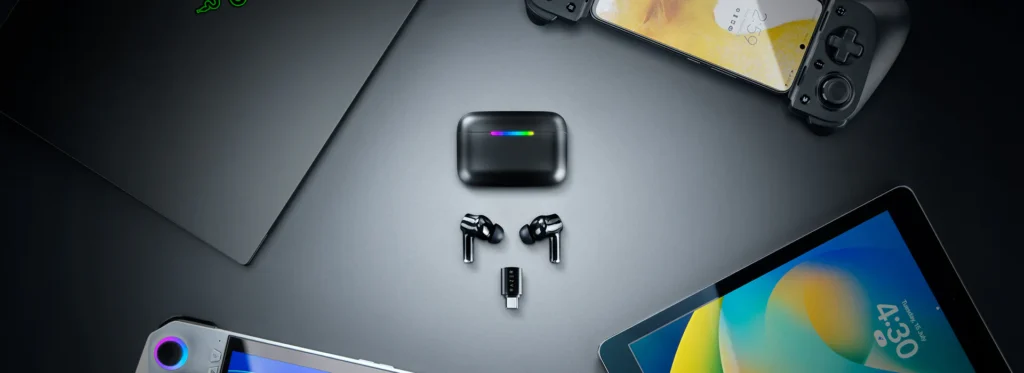
The Razer Hammerhead V3 HyperSpeed launched April 2026 and is the most technically complete gaming IEM available.
The specs:
| Specification | Detail |
|---|---|
| Connectivity | 2.4GHz HyperSpeed + Bluetooth 6.0 |
| Battery | 40 hours total (buds + case) |
| ANC | Hybrid Active Noise Cancellation |
| Spatial Audio | THX Spatial Audio 7.1 (PC via Razer Synapse) |
| Charging case | Doubles as 2.4GHz receiver via USB-C |
| SmartSwitch | Seamless switching between 2.4GHz and Bluetooth |
| Platform | PC, PS5, Steam Deck, mobile |
| Price | $129.99 |
The charging case acting as the 2.4GHz receiver is the clever hardware decision here. Plug the case into your PC via USB-C and the earbuds connect through it at gaming-grade latency. Take the dongle out of the case and use it standalone for console or handheld gaming. The earbuds themselves carry Bluetooth 6.0 for phone and tablet use. You get proper low-latency gaming audio and proper Bluetooth lifestyle audio from the same earbuds without compromising either.
The ANC reduces ambient noise by 50% compared to the previous Hammerhead generation. On public transport or in noisy environments, that’s meaningful.
The $99.99 V3 X HyperSpeed drops to Bluetooth 5.3 instead of 6.0 and reduces total battery to 35 hours, but keeps the core 2.4GHz gaming capability. If the $30 premium feels steep, the X version does the same gaming job.
The honest limitation: IEMs don’t provide the same soundstage as over-ear headsets. Competitive positional audio is definitely worth knowing whether a footstep is 10 metres to your left or 15 metres behind you is less accurate from in-ear than from well-tuned 50mm drivers. For casual gaming, co-op play, or battle royale at a non-competitive level, the difference won’t matter. For CS2 at a serious rank, headsets have the edge.
Who it’s for: Gamers who want zero head fatigue, anyone who uses the same audio device for gaming and daily commuting, and people who’ve been frustrated by traditional headset comfort.
The Honest Summary — What to Buy
| Budget | Best Pick | Price |
|---|---|---|
| Under $80 | Corsair HS35 v3 Wireless | $79.99 |
| $100-150 | Razer BlackShark V3 | $149.99 |
| $100-130 IEM option | Razer Hammerhead V3 HyperSpeed | $139.99 |
| Best battery | HyperX Cloud Alpha Wireless | $120 |
| New release worth watching | MSI Maestro 500 Wireless | TBC |
| Premium | Razer BlackShark V3 Pro | $249.99 |
The BlackShark V3 at $149.99 is the honest recommendation for most PC gamers in 2026. It does the most things well, has the best microphone in its class, and the dual wireless is genuinely useful. The Cloud Alpha Wireless at $120 is the pick if battery is your priority. The Hammerhead V3 HyperSpeed is the pick if you want to try IEMs without compromising on gaming performance.
SpecClear participates in affiliate programmes. When you purchase through links on this site we may earn a commission at no additional cost to you.