SpecClear earns a commission if you buy through Newegg links on this page, at no extra cost to you.
Computex 2026 was one of the more interesting years for gaming peripherals in a while — once you look past the GPU headlines.
A few things converged at once. Hall effect and magnetic switches are now mainstream enough that even Gigabyte, a company better known for motherboards than keyboards has entered the market with a competitive product. Polling rates have hit 8,000Hz across the board, making the spec table largely flat between brands. And Corsair did something nobody else has done: they put a Stream Deck button directly into a mouse.
This article covers the most notable peripheral launches from Computex 2026, here are what each product is, who it’s for, and the honest answer on whether it’s worth buying.
Corsair NIGHTSWORD v2 WIRELESS SD — $129.99
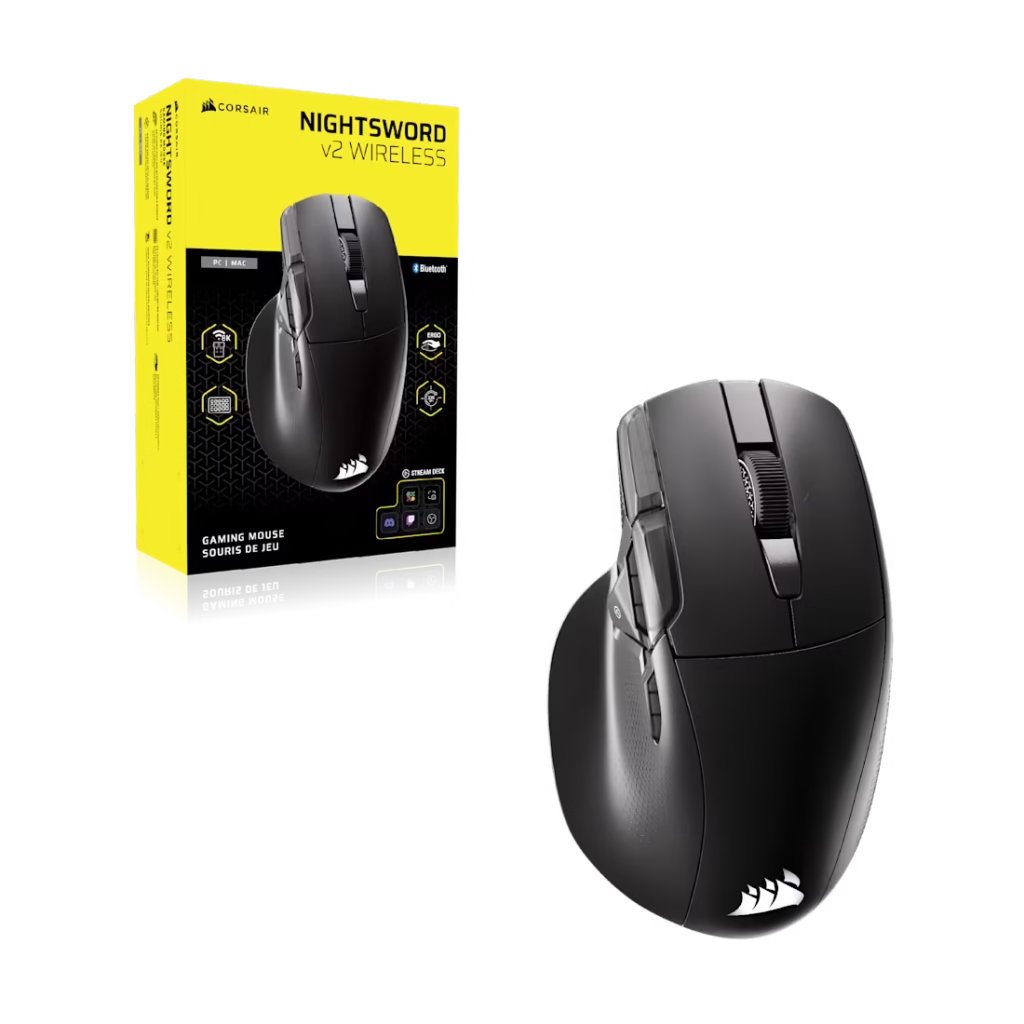
Among the best gaming peripherals of 2026, a few things converged at once
The NIGHTSWORD v2 WIRELESS SD is the first gaming mouse with a dedicated Stream Deck Launch button built into the body. Press it and a Virtual Stream Deck panel appears on your monitor. From there you can trigger macros, launch apps, switch OBS scenes, control Spotify, manage inventory shortcuts plus anything you’d do on a physical Stream Deck, without reaching across the desk for a separate device. Newegg does not list the Corsair NIGHTSWORD v2 WIRELESS SD right now.
This isn’t a workaround or a third-party integration. Corsair owns Elgato, so the mouse shows up natively inside the Stream Deck app. You can map Stream Deck actions directly to any of the eight programmable mouse buttons. No additional software required beyond Stream Deck version 7.0 or later, which you’d already have if you own any Stream Deck hardware.
The specs:
| Specification | Detail |
|---|---|
| Sensor | Marksman S Optical |
| Max DPI | 33,000 |
| Max Speed | 750 IPS |
| Polling Rate | Up to 8,000Hz (wired and wireless) |
| Connectivity | 2.4GHz SLIPSTREAM, Bluetooth 5.2, USB-C wired |
| Battery Life | 170 hours (2.4GHz, 1,000Hz, RGB off) / 47 hours at 8,000Hz |
| Weight | 89g |
| Buttons | 11 total, 8 programmable |
| Switches | Optical, rated 100 million clicks |
| Form Factor | Right-handed ergonomic |
| Ships | Around July 27, 2026 |
The weight is worth flagging. 89g sits on the heavier end for a wireless mouse in 2026, where ultralight options under 55g have become common. If you main competitive FPS and weight is your primary concern, this isn’t that mouse. It’s built for the person whose setup sits somewhere between gaming and content creation which will be the streamer, the work-from-home gamer, the person whose keyboard shortcuts are already packed out.
The one real question mark is the Stream Deck button placement. It sits just below the two left side buttons. Until muscle memory kicks in, accidental presses mid-firefight are a genuine risk. The button summons an overlay on your monitor, which is the last thing you want during a clutch round. How recessed and tactile that button feels in practice will determine whether this feature works as intended or becomes something people disable after a week.
Corsair’s browser-based Web Hub handles configuration — no iCUE download required.
Who should buy it: Streamers and content creators who game seriously and want Stream Deck access without adding another device to the desk. If you’ve considered buying both a mid-range gaming mouse and an entry-level Stream Deck, the NIGHTSWORD v2 at $130 is worth pricing against that combination.
Who shouldn’t: Competitive FPS players who prioritise weight and minimalism. Look at the Logitech G Pro X2 Superlight or Razer Viper V3 Pro instead.
Gigabyte AORUS K10 INFINITY Keyboard + M10 INFINITY Mouse
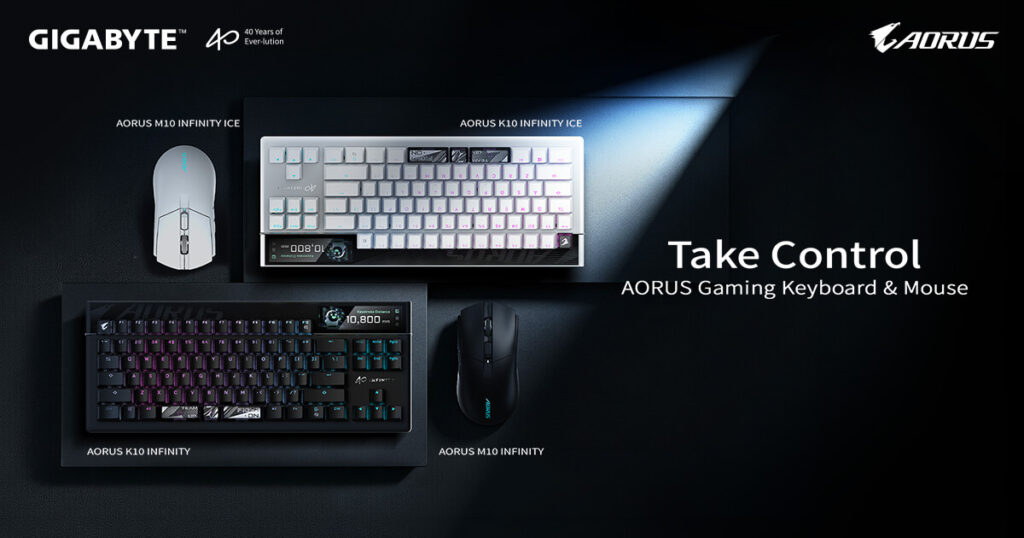
Gigabyte’s last gaming keyboard was the AORUS K1. Released six years ago. Cherry MX switches. It was fine for its time and then it sat there collecting dust while the rest of the market moved on to hall effect, rapid trigger and 8,000Hz polling.
The K10 INFINITY is the update. It’s also a statement that Gigabyte is serious about peripherals now.
AORUS K10 INFINITY Keyboard:
The core specs match or exceed anything in the competitive tier. Tactical magnetic switches with 0.1mm trigger-point adjustment. 8,000Hz polling rate as standard. 100 million keystroke lifespan. Multi-stage trigger settings for those who want to tune actuation differently per key. Onboard storage for profiles.
The differentiator is the 3.1-inch full-colour OLED touchscreen built into the top right of the keyboard. 311 PPI is the craving Gigabyte calls it retina-grade, which is accurate at that pixel density. The screen gives you direct access to profiles, trigger settings, lighting, audio controls and something called Combat Power.
Combat Power is more interesting than it sounds. It’s a real-time analytics overlay that tracks your Actions Per Minute, key mileage, precision percentage and error count while you play. If you’re genuinely trying to improve at competitive games, having that data live on the keyboard rather than in a post-session app is a different workflow. It’s the kind of feature that’ll feel gimmicky to casual players and genuinely useful to those who care about optimising their inputs.
Available in black and ICE white. Pricing not confirmed at time of writing on the other hand Gigabyte didn’t announce retail pricing at Computex, which usually means a later ship window. As of September 2026, confirm each SKU on the maker store before treating Computex pricing as final.
AORUS M10 INFINITY Mouse:
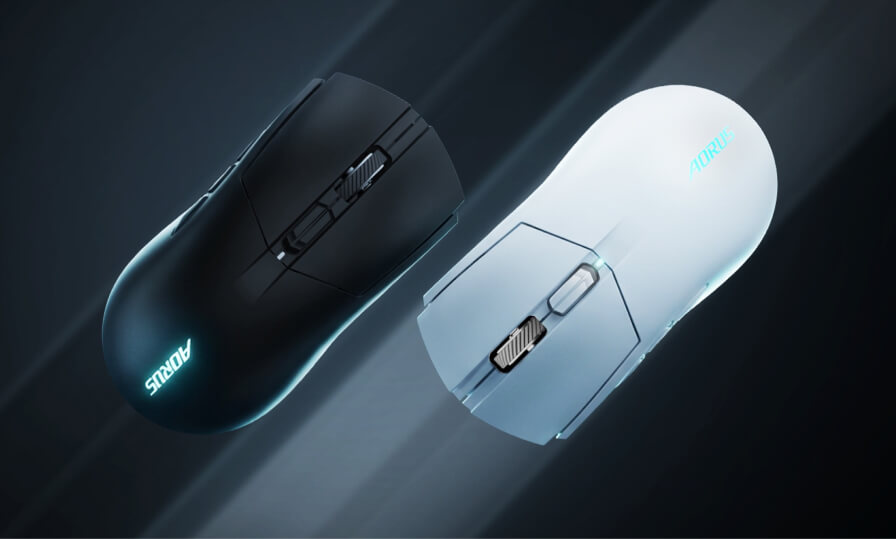
The companion mouse. 8,000Hz polling, optical switches, onboard storage. The construction is interesting becuase of its excimer-coated shell for a matte skin-friendly surface, aluminium-magnesium alloy base for rigidity and weight consistency. Native Nvidia Reflex 2 support, which reduces system latency when paired with Reflex-enabled games and displays.
Available in black and ICE white, matching the keyboard for a coordinated setup aesthetic.
Who should buy it: The K10 INFINITY is for the person who wants top-tier competitive specs plus something genuinely different from every other keyboard on the market. If you’re building or upgrading a setup and the OLED screen and Combat Power analytics appeal to you or if you’re a Gigabyte ecosystem buyer who wants peripheral continuity with your motherboard and GPU this is the one to watch.The recommended option is to Wait for the pricing announcement before committing.
Razer Huntsman V3 Pro TKL 8KHz — $219.99
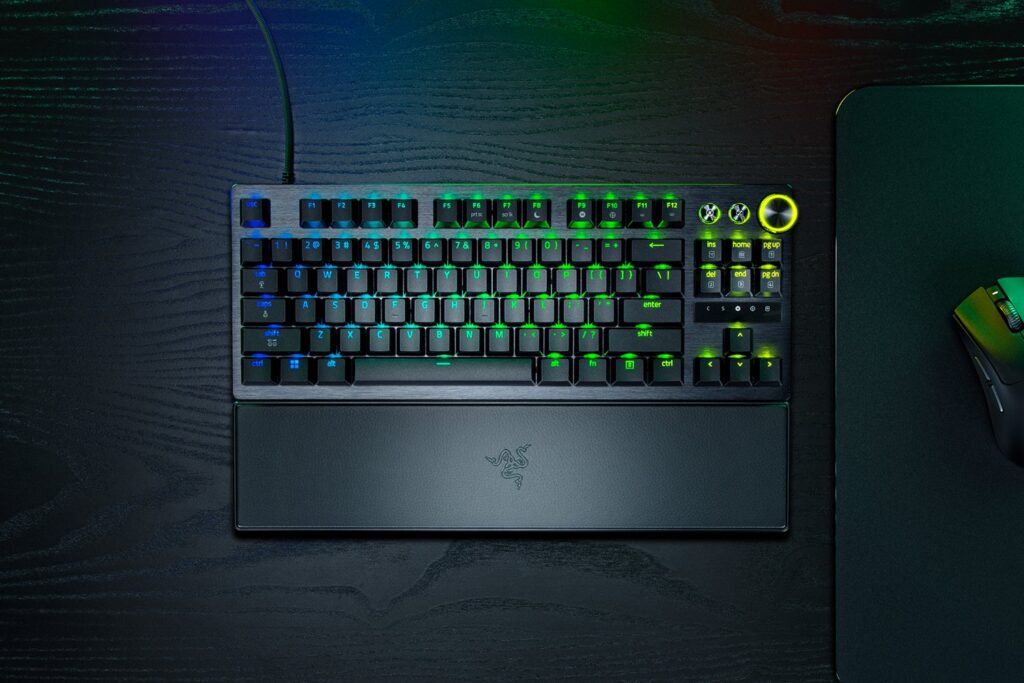
This one arrived in late 2025 but is worth covering here because it’s still the competitive keyboard benchmark and it’s been receiving strong review coverage into 2026.
The core of the Huntsman V3 Pro 8KHz is Razer’s Gen-2 Analog Optical switches. Adjustable actuation from 0.1mm to 4.0mm. Rapid Trigger mode for faster key resets. Snap Tap for improved directional input. True 8,000Hz HyperPolling.
What makes it significant is that it does all of this without requiring software to configure. Actuation, rapid trigger settings and polling rate can all be tuned directly on the keyboard. For tournament players who can’t install software on a competition PC, that matters.
The body is 5052 aluminium alloy is very noticeably solid. Doubleshot PBT keycaps that won’t shine through with use. A media control dial sits in the top right alongside dedicated media keys.
The TKL format removes the numpad, bringing the mouse closer and reducing arm travel on large mousepads. If you play FPS titles at any serious level and you’re still on a full-size keyboard, this is worth thinking about.
$219.99 for the standard black TKL. White and Esports Green editions run $10-20 more.
Who should buy it: Competitive FPS and CS2 players who want the best combination of optical switch feel, rapid trigger performance and build quality at this price point. Multiple independent reviews have called it the best keyboard Razer has made.
Who shouldn’t: Casual gamers who don’t need rapid trigger precision, and anyone who wants a wireless option the Huntsman V3 Pro 8KHz is wired only.
Logitech G Pro X2 Superstrike: $179 MSRP
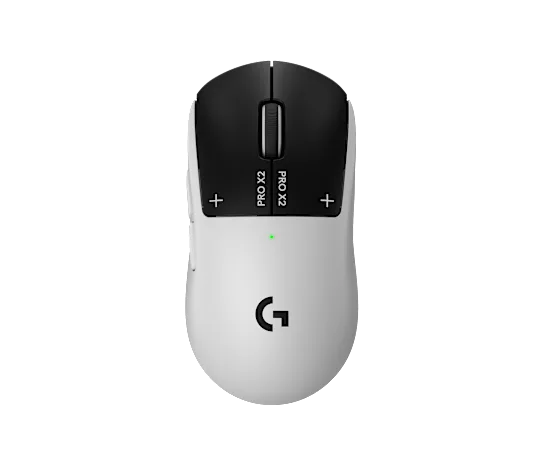
Logitech’s G Pro X2 Superstrike is the mouse that got the most attention heading into Computex was not because it was announced there, but because it represents where Logitech is betting on input technology heading. You can find the Logitech G Pro X2 Superstrike on Newegg, where it’s about $280 from a marketplace seller right now.
The headline feature is the Haptic Inductive Trigger System. Instead of traditional mechanical or optical main switches, the Superstrike uses electromagnetic haptic actuation. The click generates haptic feedback rather than mechanical travel while the sensation of clicking without the physical switch engagement. Independent testing reported 8-9% faster response times compared to the previous G Pro X2 Superlight.
Rapid Trigger support is included. 8,000Hz polling.
The weight sits around 60g — not ultralight, but competitive. Hero 2 sensor with high tracking accuracy across surface types.
Pricing is at the premium end for a gaming mouse. This is a professional-grade competitive product, not a casual upgrade.
Who should buy it: Serious competitive players who’ve exhausted what conventional switches offer and want to push response times further. If you’re already on a G Pro X2 Superlight and you’re competitive enough that 8-9% faster actuation would register in your gameplay this is the upgrade.
Who shouldn’t: Anyone who doesn’t need to be at the absolute competitive ceiling. The previous G Pro X2 Superlight is still one of the best gaming mice available and costs significantly less.
The Corsair CLIPPER PRO MINI 60 — $100
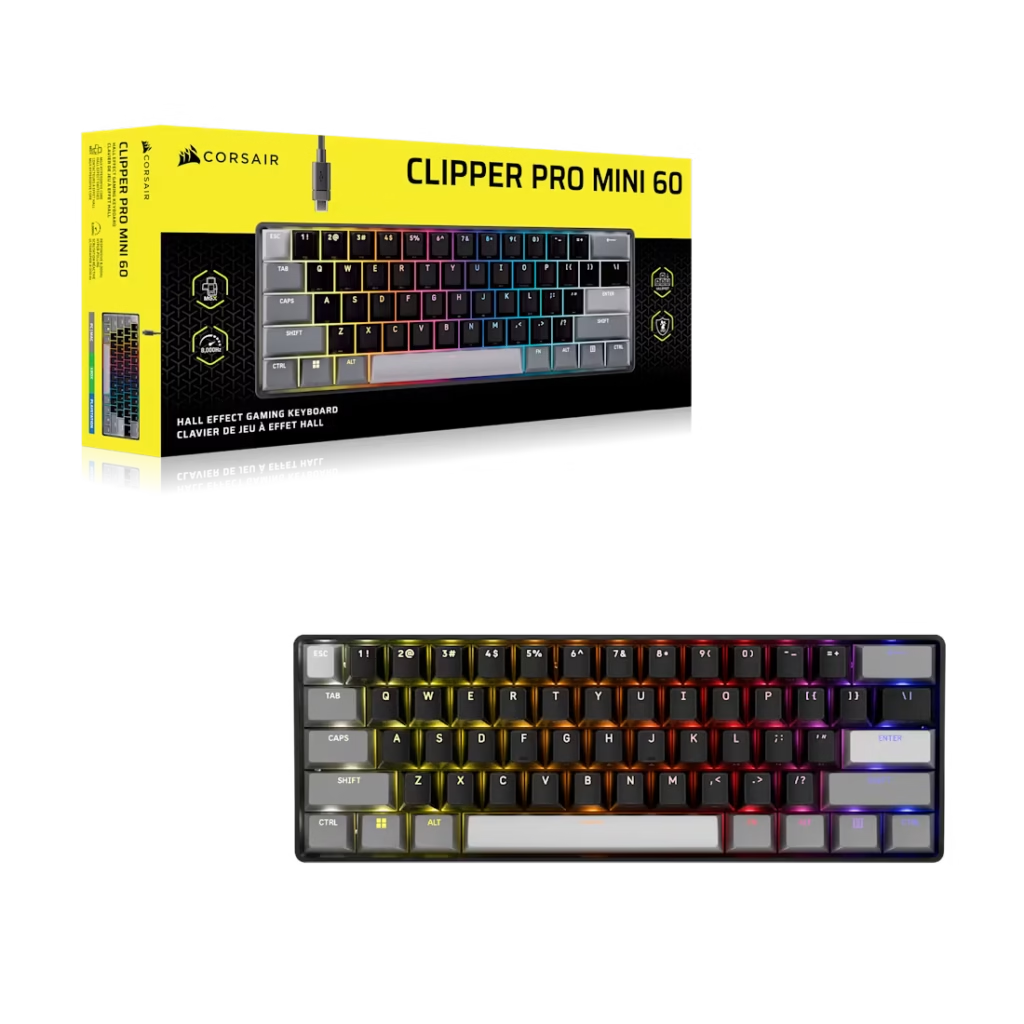
Worth a brief mention alongside the NIGHTSWORD. Corsair’s 60% keyboard from Computex 2026 brings the same MGX Hyperdrive Core magnetic hall effect switches found in their premium lineup to a more accessible price point. It is listed on Newegg as the Corsair Clipper Pro Mini 60.
0.2mm to 3.8mm adjustable actuation. 0.1mm Rapid Trigger reset. 8,000Hz polling. IP57 water and dust resistance which is unusual and genuinely useful on a keyboard at this price.
Dual-layer sound dampening. Browser-based Corsair Web Hub for configuration with five onboard profiles.
$100 for a 60% hall effect keyboard with IP57 protection and 8,000Hz polling is competitive pricing. If you want the compact form factor for travel or a smaller desk footprint, this is worth a look.
The Honest Verdict on Where Peripherals Are in 2026
Everything launches at 8,000Hz now. Rapid Trigger is table stakes. Magnetic and hall effect switches are mainstream. The spec table has flattened significantly, which means the differentiators have moved elsewhere.
Corsair went to ecosystem integration along side the Stream Deck button in a mouse is a legitimate innovation that solves a real problem for streamers. Gigabyte went to analytics and display the OLED Combat Power screen is the most novel keyboard feature announced at Computex. Razer went to haptic actuation just after removing the mechanical switch entirely.
None of these are spec upgrades. They’re different answers to the question of what a peripheral should do beyond input. Which one matters to you depends entirely on how you use your setup.
If you’re building a new gaming PC and budgeting for peripherals, the honest recommendation right now is: the NIGHTSWORD v2 at $130 if you stream or create content alongside gaming, the Huntsman V3 Pro TKL 8KHz at $220 if competitive keyboard performance is your priority, and wait on the AORUS K10 INFINITY pricing before making a call on Gigabyte’s entry.
SpecClear participates in affiliate programmes. When you purchase through links on this site we may earn a commission at no additional cost to you.