
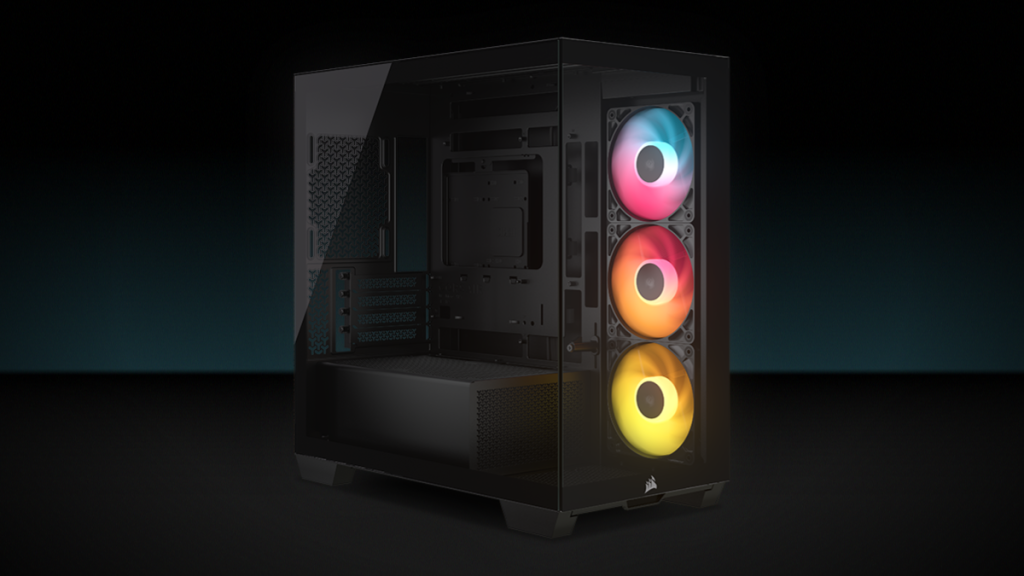
The Micro-ATX form factor has always made sense on paper. Smaller footprint, cheaper motherboards, the same GPU and cooler support as a full mid-tower. In practice, the cases have always been the problem. Either they’re cramped, or the airflow is compromised, or they cost as much as the ATX cases they’re supposed to undercut.
The Corsair 2800X RS-R ARGB is $89.99. It fits GPUs up to 410mm. It ships with three fans already installed. And it looks like something that costs significantly more.
That’s the pitch. Here’s whether it holds up.
What You Get for $89.99
The 2800X is Corsair’s first Micro-ATX case since the 2500X in early 2024. The idea is straightforward: take the 3500X mid-tower , one of the better cases in Corsair’s current lineup , and shrink it down to mATX dimensions without gutting the feature list.
Corsair largely pulled it off.
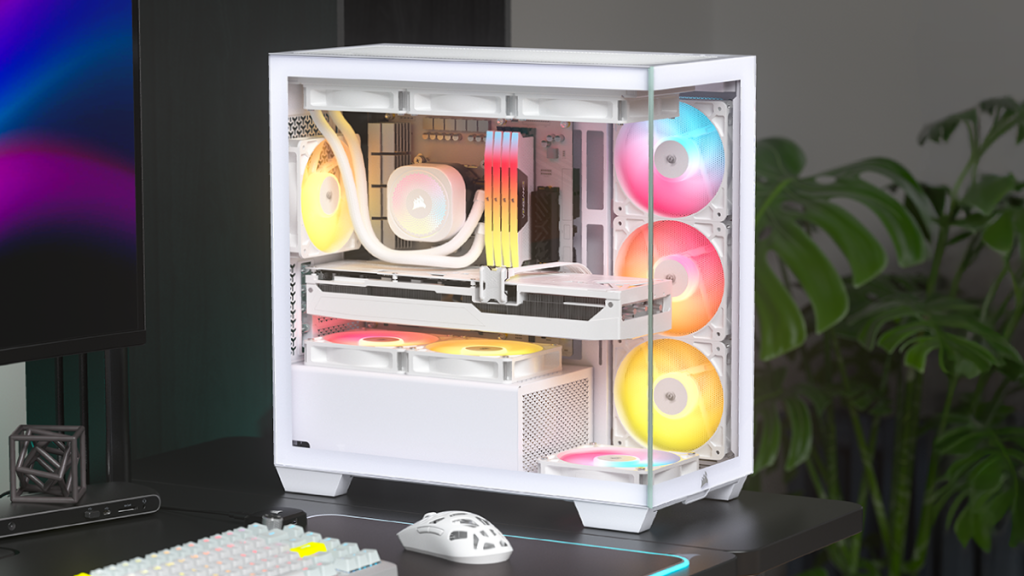
The case ships with two tempered glass panels , one across the front, one on the side , meeting at the corner to give you that wraparound aquarium look that costs more on competing cases. It’s not the single seamless sheet you get on Corsair’s premium Frame series, but at this price the effect is nearly identical. Your build is on show.
Three RS120-R ARGB reverse-rotor fans come pre-installed on the side intake. These are the same fans Corsair introduced for glass-front builds earlier this year , the reverse-rotor blade design pulls air in through the ventilated side panel rather than through a front mesh, keeping the panoramic glass unobstructed while still moving meaningful airflow. Each fan runs up to 2,100 RPM and 72.8 CFM. They’re not silent at full speed, but at gaming loads they’re not the loudest thing in your system either.
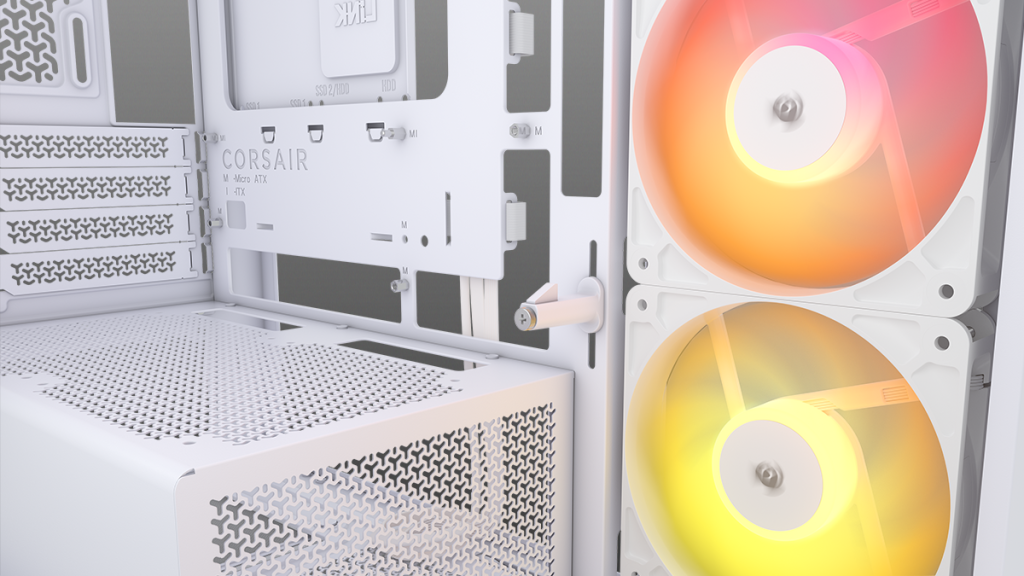
The case supports up to 10 x 120mm fans total across the side, top, rear and bottom. There’s also room for a 360mm radiator in the top, which is what you want for a hot chip like a 9800X3D or a Core Ultra 9 on an AIO. That’s not a given at this price point.
GPU clearance is 410mm. That fits every current-gen card including the RTX 5090 Founders Edition. CPU cooler height limit is 170mm, which covers most tower air coolers. Power supply length is up to 200mm.
Build Experience
The interior is more spacious than you’d expect from the dimensions. Corsair’s mATX boards don’t have the unused PCIe slots eating space, which keeps the layout clean.
Cable management is functional. There are cutouts behind the motherboard tray with rubber grommets on some , not all , of them. The gap between the motherboard tray and the side panel is workable but tighter than a full mid-tower. If you’re used to building in the 4000D or the 3500X, plan for a slightly more deliberate routing process. It’s not difficult. Just less forgiving.
The 2800X supports back-connect motherboards , ASUS BTF, MSI Project Zero, Gigabyte Project Stealth. If you’re running one of those boards, the cable management situation improves dramatically because there’s almost nothing to route on the front side at all.
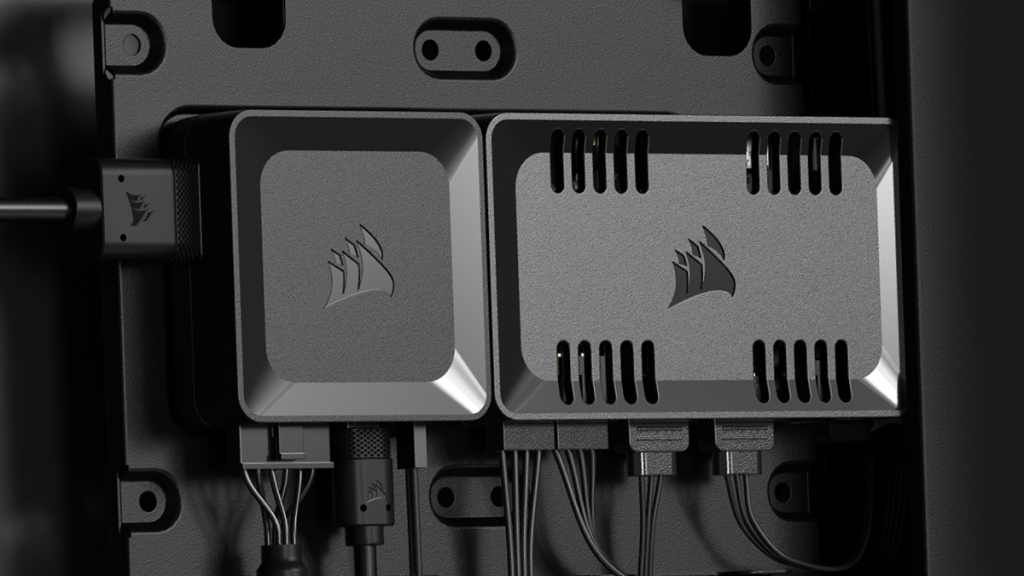
One thing that’s missing: no rear exhaust fan. Corsair doesn’t include one and doesn’t mount one by default. The three side intakes create positive pressure inside the case, which is fine, but in a hot system , high TDP CPU, triple-slot GPU , you’ll want to add a 120mm exhaust at the rear. Budget $15-20 for that if you’re pushing the thermal limits of the build.
The front IO is solid for the price: one USB 3.2 Gen 2×2 Type-C, one USB 3.2 Gen 1 Type-A, and a 3.5mm audio combo jack. The Type-C at Gen 2×2 is the headline , that’s 20Gbps, which most cases at this price drop down to Gen 1 or skip entirely.
Cooling Performance
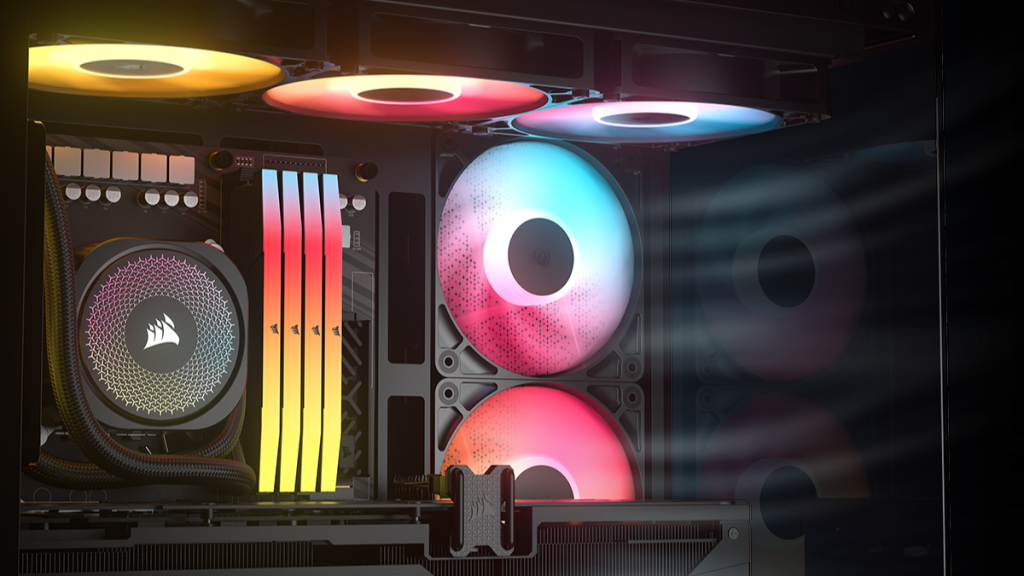
Under load, the 2800X handles mainstream gaming builds well. In testing with a Core Ultra 7 265K and an RTX 4070 Ti Super drawing 670W at the wall , the hard end of what most people will ever put in this case , thermals stayed within acceptable ranges. The GPU runs warmer than it would in a pure mesh case with front intakes, because the side-intake, reverse-rotor approach trades raw airflow volume for aesthetics.
That’s the honest trade-off with this design. The glass front is a restriction. The three fans compensate reasonably well, but this isn’t a Phanteks EX5 or a Cooler Master HAF II 500 for airflow. If thermal performance is your top priority, buy a mesh-front case. If you want the glass look in a compact footprint without paying $130+, the 2800X makes the trade sensibly.
For most gaming builds at current GPU power targets , RTX 5060 Ti, RX 9070, that tier , it won’t be a problem.
Who Should Buy It
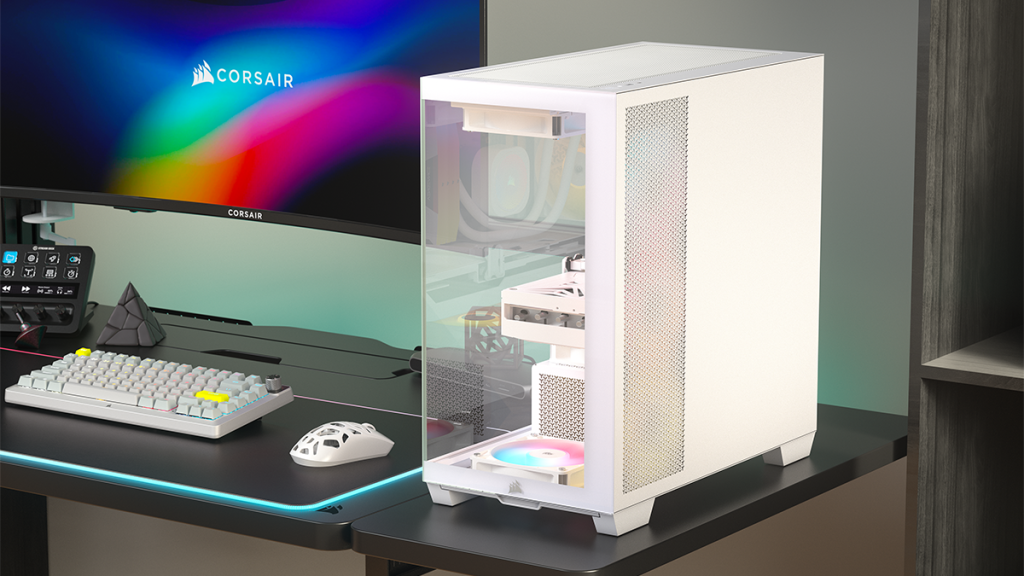
You’re building a Micro-ATX system and you want the panoramic glass look without paying for a full mid-tower. The 2800X is the answer.
At $89.99, it undercuts most comparable mATX cases while including fans and a USB Type-C front panel most competitors charge extra for. The three pre-installed RS120-R fans alone would run you $60 if purchased separately.
Don’t buy it if your build involves a 9800X3D, an RTX 5080, and no AIO. A mesh case will serve that combination better. Do buy it if your build is mid-range, you value the aesthetic, and desk space is limited.
The Micro-ATX case market at under $100 is mostly cheap options with compromises. The Corsair 2800X RS-R ARGB is not that.
Specs at a Glance
- Form factor: Micro-ATX, Mini-ITX
- Dimensions: 436 x 232 x 447mm
- GPU clearance: 410mm
- CPU cooler height: 170mm
- Fan support: Up to 10 x 120mm (3 x RS120-R ARGB pre-installed)
- Radiator support: 360mm top, 360mm side
- Front IO: USB 3.2 Gen 2×2 Type-C, USB 3.2 Gen 1 Type-A, audio
- PSU clearance: 200mm
- Back-connect motherboard support: Yes
- Price: $89.99 (black or white)
- Warranty: 2 years
Verdict
The Corsair 2800X RS-R ARGB is the best Micro-ATX case under $100 right now. The build quality is solid, the glass panels look significantly more expensive than the price suggests, and shipping with three ARGB fans included makes the value case easy. The missing rear exhaust is a real omission for hot systems, and the side-intake airflow design is a trade-off you need to accept going in.
If you want to build small and build clean without spending mid-tower money, this is the case to buy.