
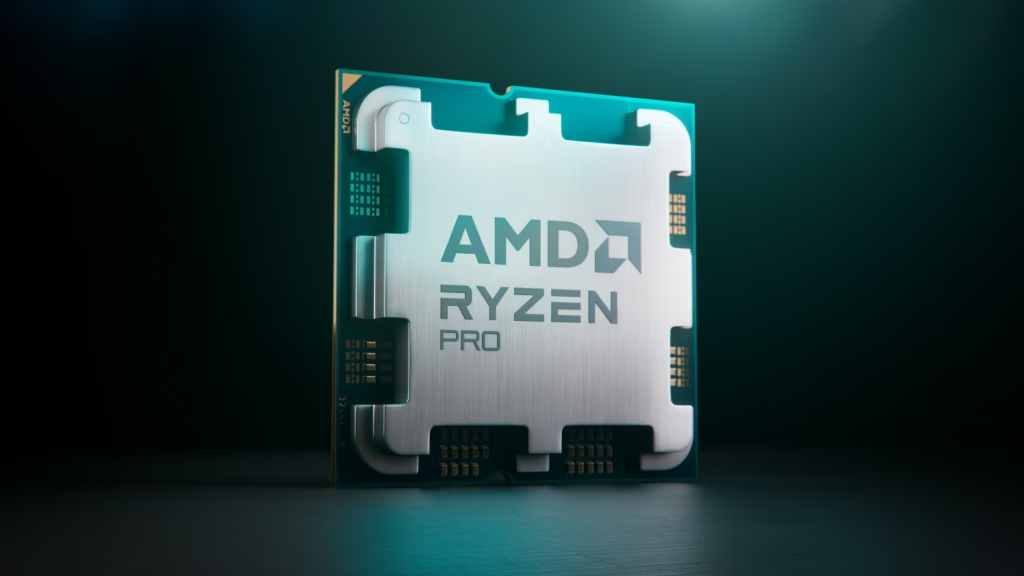
Every gaming laptop with AMD’s 3D V-Cache today costs over $2,000. That’s not a coincidence. The only mobile X3D chip AMD makes right now is the Ryzen 9 9955HX3D: 16 cores, 128MB of cache, 55-75W TDP, and a price tag that pushes it into halo-tier machines only.AMD Ryzen 9 9950X3D Review
The Ryzen 7 9800HX3D changes that. Eight cores, 96MB of cache, and no mandatory GPU tier requirement. If the leaks are accurate, AMD is about to bring 3D V-Cache to a much wider range of gaming laptops than it’s ever been available in before.
Here’s what we know, what we don’t, and whether it’s worth waiting for.
Where the Information Comes From
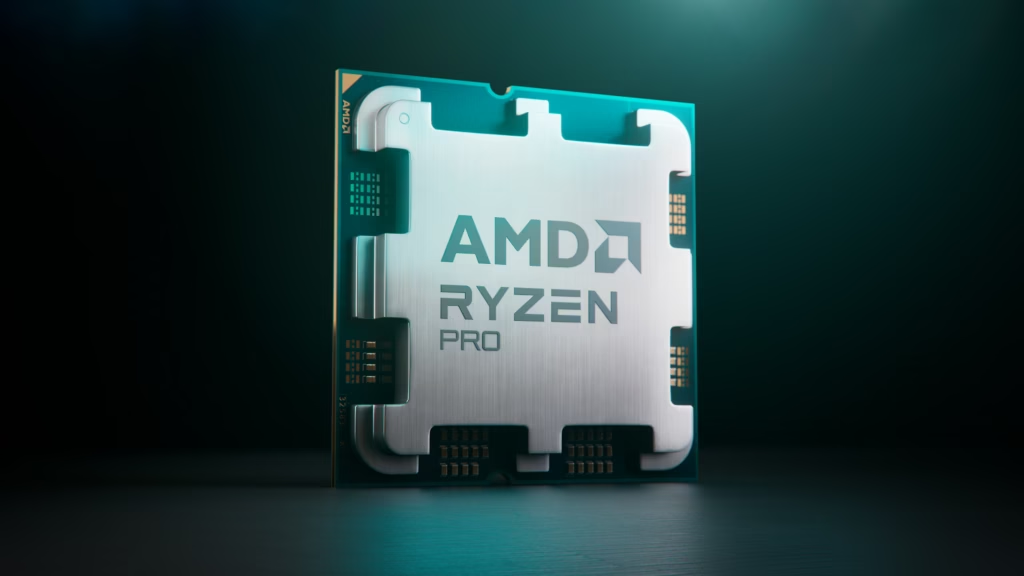
AMD hasn’t announced the 9800HX3D. Everything here comes from Golden Pig Upgrade Pack, a Weibo-based hardware leaker with a strong track record on AMD mobile products. The same source correctly called the Ryzen 9 9955HX3D specifications and timeline well before announcement.
The chip was previously floating around in leaks as the Ryzen 7 9755HX3D. AMD reportedly settled on the 9800HX3D name instead, a deliberate alignment with the desktop Ryzen 7 9800X3D branding that makes the product positioning immediately clear to anyone who knows the desktop lineup.
Treat everything below as unconfirmed until AMD says otherwise. The source is reliable. The chip is not official.AMD Zen 7 and Zen 8 Confirmed
Specs: What’s Reportedly Inside
Eight Zen 5 cores, 16 threads, boost clock up to 5.1 GHz. That’s 100 MHz below the desktop 9800X3D’s 5.2 GHz boost. The cache configuration is identical to the desktop chip: 32MB of conventional L3 on the CCD with a 64MB 3D V-Cache stack on top, giving a total of 96MB.
The single-CCD design is important. All eight cores have direct, equal access to the full 96MB cache pool. Compare that to a dual-CCD design where only one chiplet gets the V-Cache, the asymmetry creates latency differences between cores that schedulers have to manage. A single CCD with full cache access is the cleaner gaming architecture.
TDP isn’t confirmed but the 9955HX3D runs at 55-75W. The 9800HX3D with fewer cores and a smaller die should land at similar or lower power consumption, which is meaningful for laptop thermals and battery life in lighter gaming machines.Intel Nova Lake
AMD reportedly won’t mandate a specific GPU tier for OEMs pairing with this chip. The 9955HX3D came with informal expectations of pairing with RTX 5080M or above. The 9800HX3D could theoretically appear alongside anything from an RTX 5070M upward, which opens the door to $1,400-$1,800 gaming laptops rather than $2,000+ ones.
Why This Matters
Gaming performance in laptops is not primarily a core count problem. Games don’t scale linearly past eight cores in most titles. What kills laptop gaming performance is latency, the time it takes for the CPU to serve up data to the GPU fast enough to keep frames moving. That’s exactly what V-Cache solves.
The 9955HX3D proved the concept. In gaming benchmarks it outperforms Intel’s best mobile offerings despite lower clock speeds, in the same way the desktop 9800X3D beats Intel’s desktop chips on raw frequency. Eight cores with 96MB of cache will beat twelve cores without it in the vast majority of gaming workloads.
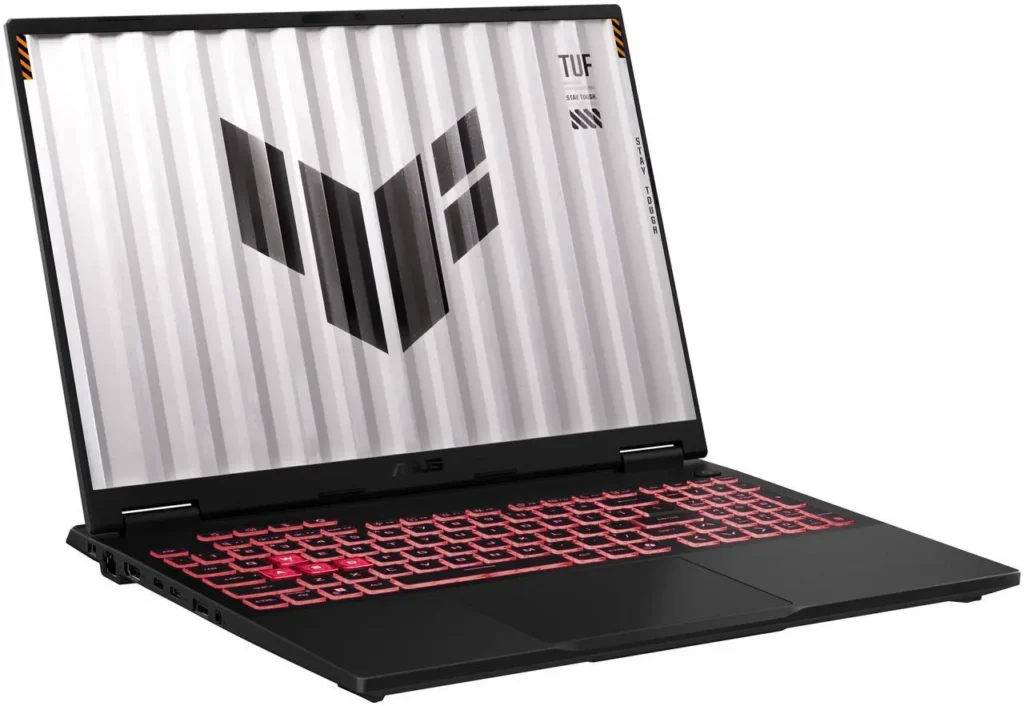
The practical result: a gaming laptop in the $1,500-$1,800 range with a 9800HX3D and an RTX 5070M could deliver gaming performance that currently requires spending $2,200+. That’s the market shift this chip enables if OEMs price it sensibly.
The Honest Caveat
This is a 2027 product. Mass production starts Q4 2026, first laptops may trickle out before year end, but the broad launch is CES 2027 in January. You won’t be buying a 9800HX3D laptop in the next few months.Best Gaming Laptop in 2026
There’s also the Zen 6 mobile timeline to consider. AMD’s Gator Range, Zen 6 for laptops, is reportedly targeting mid-to-late 2027. That means the 9800HX3D is a Zen 5 chip launching into a market that will see Zen 6 mobile within twelve months of its own release. If you’re buying a gaming laptop in early 2027, the 9800HX3D is the chip to target. If you’re buying mid-2027, wait for Gator Range benchmarks first.
And no pricing has leaked. The 9955HX3D commands a significant premium in laptop pricing. Whether the 9800HX3D genuinely reaches the $1,500 tier depends entirely on OEM decisions that haven’t been made public.
Should You Wait?
If you need a gaming laptop now, the Ryzen 9 9955HX3D in machines like the ASUS ROG Zephyrus G16 or Lenovo Legion Pro 7 is the current best-in-class mobile gaming CPU. It’s faster than anything Intel offers in gaming at the same TDP range.
If you can wait until January 2027 and your budget is under $2,000, the 9800HX3D is worth holding out for. It’s the chip that could finally make AMD’s V-Cache advantage accessible without spending flagship laptop money.
Watch CES 2027; that’s when the real picture is expected to arrive.