
SpecClear earns a commission if you buy through Newegg links on this page, at no extra cost to you.
Most gaming chair marketing is aimed at your eyes, not your spine. Racing stripes, aggressive bolstering, “esports-grade” foam, RGB strips on the base: none of this has any bearing on whether your lower back hurts after four hours of gaming. The chair that looks best on your battlestation and the chair that keeps you comfortable through a long session are often different products.
This guide is about the second chair: the one your back chooses, not your eyes.
The honest truth about gaming chairs vs office chairs
The gap between a well-designed gaming chair and a well-designed office chair has narrowed significantly. The best gaming chairs in 2026 borrow heavily from office ergonomics (adjustable lumbar support, seat depth adjustment, 4D armrests, tilt mechanisms) while the best office chairs now ship in gaming-friendly colourways. The category overlap is real, and pretending otherwise is marketing.
What hasn’t changed is the bottom of the gaming chair market. Budget racing-style chairs with thin PVC leather, fixed lumbar pillows, and minimal adjustability are still the dominant product type by volume. They look like what most people picture when they imagine a gaming chair. They’re also the chairs that end up on Facebook Marketplace eighteen months later because the foam compressed and the lower back pain got worse.
The rule worth knowing: below $250, you’re buying a chair you’ll replace within two to three years. The foam compresses, the armrests loosen, and the lumbar pillow stops being useful once it loses its shape. The $180 chair that saves you money now costs you again when you replace it in 2028, so buy once and buy correctly.
What actually matters: the ergonomics checklist
Lumbar support is the most important feature. Your lower back should be supported in its natural inward curve, not pushed forward by a fixed pillow and not left hanging. Adjustable lumbar systems that let you set both height and depth independently are worth paying for. Fixed lumbar pillows are better than nothing but rarely hit the right position for everyone.
Seat depth adjustment matters more than most reviews acknowledge. A seat that’s too deep for your leg length forces you to sit away from the backrest to avoid pressure behind the knees, which means you lose the lumbar support entirely. Seat depth adjustment lets you bring the front edge of the seat to the right position regardless of your leg length.
Armrest adjustability determines whether your shoulders stay neutral or climb toward your ears. 4D armrests (height, depth, width, and angle) let you park your arms so your shoulders aren’t hunched. Fixed armrests at the wrong height cause the same shoulder tension that bad posture causes, just from a different direction.
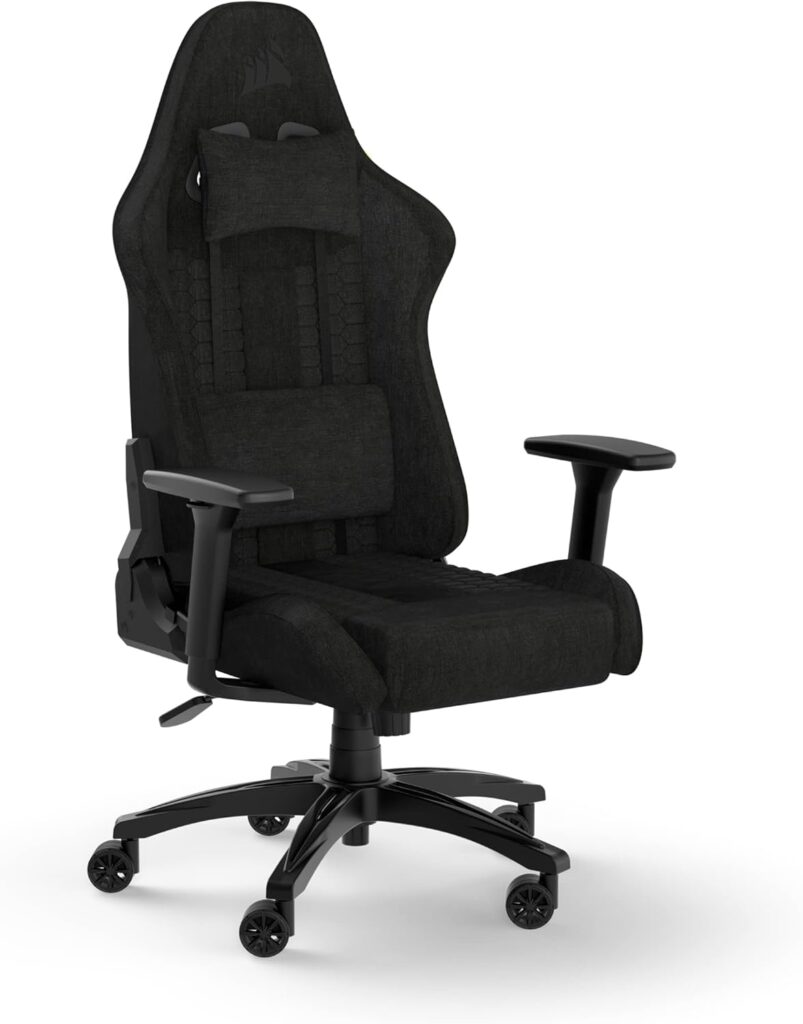
Seat foam density determines longevity. Cold-cure foam holds its shape for years. Standard PU foam compresses within months of daily use. You can’t feel the difference on day one in a shop or from a product photo. You feel it at month eight when the seat has lost two centimetres of its original cushioning. Corsair TC100 ($314)
Around $315: Corsair TC100 Relaxed (~$314 on Newegg)
The floor of gaming chairs worth recommending for daily use. The TC100 Relaxed uses a breathable leatherette rather than vinyl, has 4D armrests, an adjustable lumbar pillow, and a high backrest that supports the full spine. It’s not an ergonomic masterpiece (the lumbar support is fixed rather than adjustable in depth), but it’s built substantially enough to last and comfortable enough for three to four hour sessions without significant discomfort.
For builders who spend most of their time gaming rather than working at a desk, and who want something that looks the part without spending $500+, the TC100 Relaxed is the honest budget recommendation. Don’t go below $250; chairs in the $100–$200 range are temporary solutions. If you can spend a little more, the next step up is the Razer Iskur V2. Newegg doesn’t sell it right now, so buy it from Razer or another retailer.
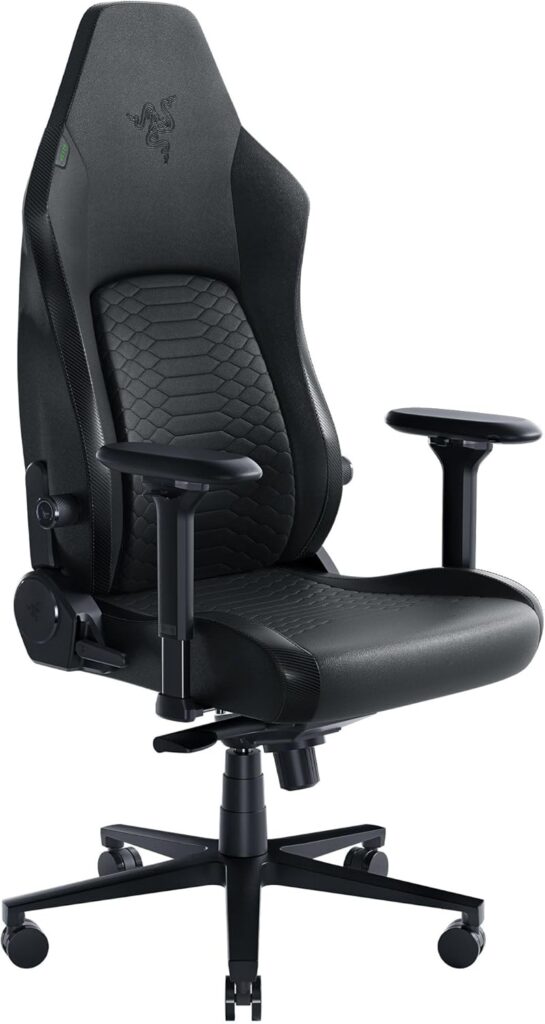
Around $350: Razer Iskur V2 (~$249–$399)
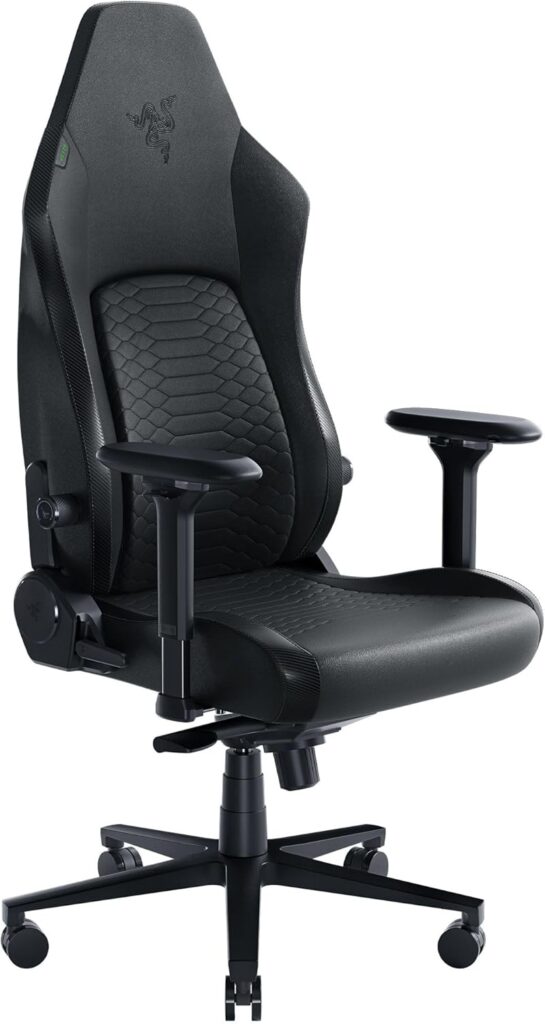
The Razer Iskur V2 is the first gaming chair Razer built with genuine ergonomic intent rather than aesthetic priority. The floating adjustable lumbar support (height and depth independent of a pillow) is the defining feature. PC Gamer’s tester noted it addressed lower back discomfort that other gaming chairs in the same price range hadn’t resolved.
The V2 X at around $249-$399 removes the floating lumbar system and some armrest adjustability for a lower price. It’s a reasonable compromise if the V2’s price is over budget, but the lumbar system is the reason to buy the V2 specifically. The X without it is a better-than-average racing chair rather than a step-change ergonomic improvement.
PU leather upholstery on both models means heat retention in warm rooms. If you run hot or your room doesn’t have air conditioning, the breathable mesh backrest of the AutoFull G7 at a similar price point is worth considering as an alternative.
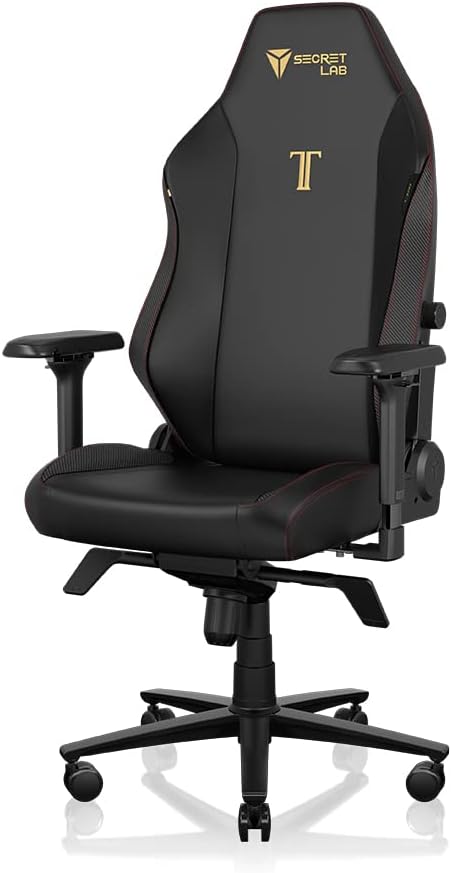
Around $499: Secretlab Titan Evo
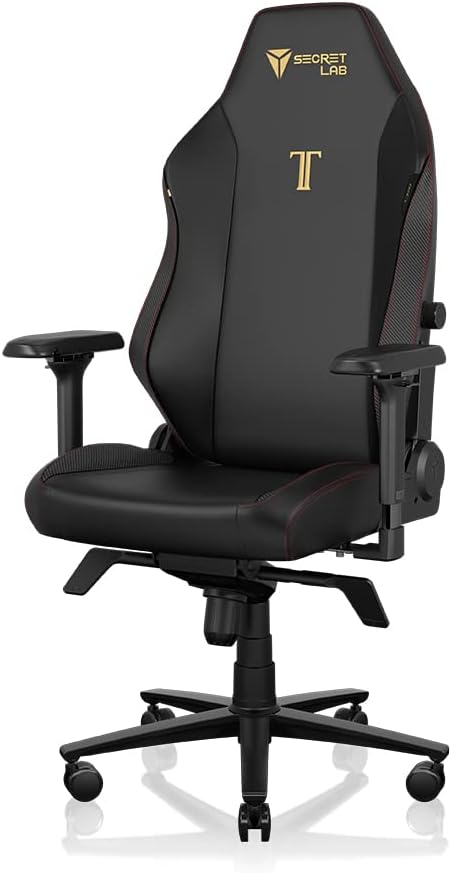
It’s the consensus recommendation across PC Gamer, Tom’s Hardware, GamesRadar, and the r/gamingchairs community for most people, and that consensus has held for years without being displaced. The L-ADAPT 4-way lumbar system adjusts height and depth independently (genuinely more useful than any fixed pillow), and the cold-cure foam seat holds its shape over years rather than months.
Three sizes (Small, Regular, and XL) cover users from around 4’11” to 6’9″ and up to 395 lbs. You get a magnetic memory foam head pillow, 4D armrests, recline from 85° to 165°, a full-metal tilt mechanism smoother than anything in the sub-$400 bracket, and a five-year warranty.
The Titan Evo is not cheap. It’s also the chair that consistently doesn’t appear on the “I regret this purchase” threads that populate gaming subreddits. At $549 it sits between budget racing chairs and premium office seats in a position where the ergonomic quality exceeds most gaming chairs and the price is more accessible than Herman Miller territory.
For people who work and game at the same desk: the office chair argument
If your PC does double duty as a work computer (eight hours of work, then gaming on top), a gaming chair may not be the right product category at all.
The Herman Miller Aeron at around $1,400–$1,500 and the Steelcase Leap at $1,200–$1,400 are purpose-built task chairs designed for sustained seated work. Their adjustment range, lumbar systems, and seat mechanics are more sophisticated than any gaming chair at equivalent prices, they carry twelve-year warranties, and they don’t look like gaming chairs.
If the aesthetic matters (you want a gaming setup look rather than an office), the Secretlab Titan Evo is still the correct call. If the aesthetic doesn’t matter and you’re spending more than six hours daily at the same desk for both work and gaming, the Herman Miller Aeron is worth serious consideration. The $800–$900 price gap versus the Titan Evo buys you meaningfully better ergonomic engineering.
The Herman Miller x Logitech G Embody at $1,795 is the gaming-branded version of this argument: a PostureFit lumbar system derived from the Aeron, gaming colourways, and a twelve-year warranty aimed at dual-purpose desk users. It’s excellent. It’s also nearly $1,250 more than the Titan Evo and the ergonomic improvement, while real, doesn’t scale proportionally with the price gap for most people.
The one thing that matters as much as the chair
No chair compensates for sitting completely still for six hours. The best ergonomic setup still requires movement. Standing up once every 45–60 minutes, stretching your hip flexors, and changing your seated position periodically does more for long-term comfort and spinal health than any lumbar system can achieve alone.
The chair’s job is to support good posture when you’re seated. Your job is to not sit for six uninterrupted hours. Both parts of the equation matter.
The quick verdict
Most people should buy the Secretlab Titan Evo around $499–$549. Get the correct size, spend fifteen minutes adjusting lumbar and armrests on day one, and it should last five years without complaint.
Budget: Corsair TC100 Relaxed at about $314 on Newegg. The floor of what’s worth buying for daily use.
Hybrid work and gaming desk: Herman Miller Aeron at $1,400+ if aesthetics don’t matter. Secretlab Titan Evo if they do.
Don’t buy any gaming chair below $250 for daily use. The savings are temporary; the back pain isn’t.