
SpecClear earns a commission if you buy through Newegg links on this page, at no extra cost to you.
850 watts is where most serious gaming builds land in 2026. An RTX 5070 Ti or RX 9070 XT paired with a Ryzen 9 or Core Ultra 9 sits comfortably under 600W at full gaming load, which gives an 850W supply a 40% headroom buffer which is enough to handle transient spikes and leave room for overclocking and avoid running the PSU at the stressed end of its efficiency curve. The Corsair RM850x has held this position as a standard recommendation for years for exactly that reason, and the 2024 ATX 3.1 revision with its native 12V-2×6 connector keeps it current for the hardware shipping today.
Specifications
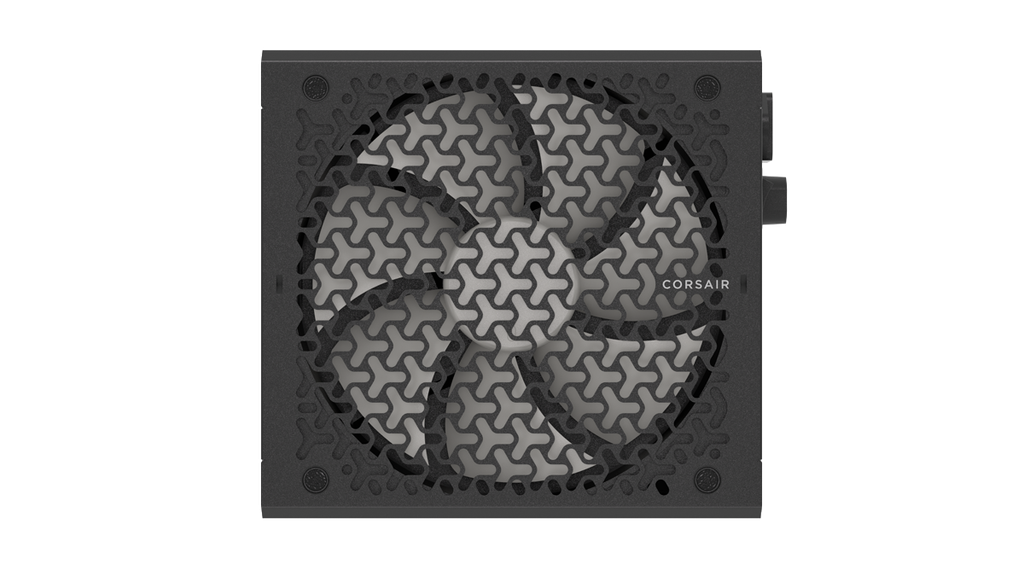
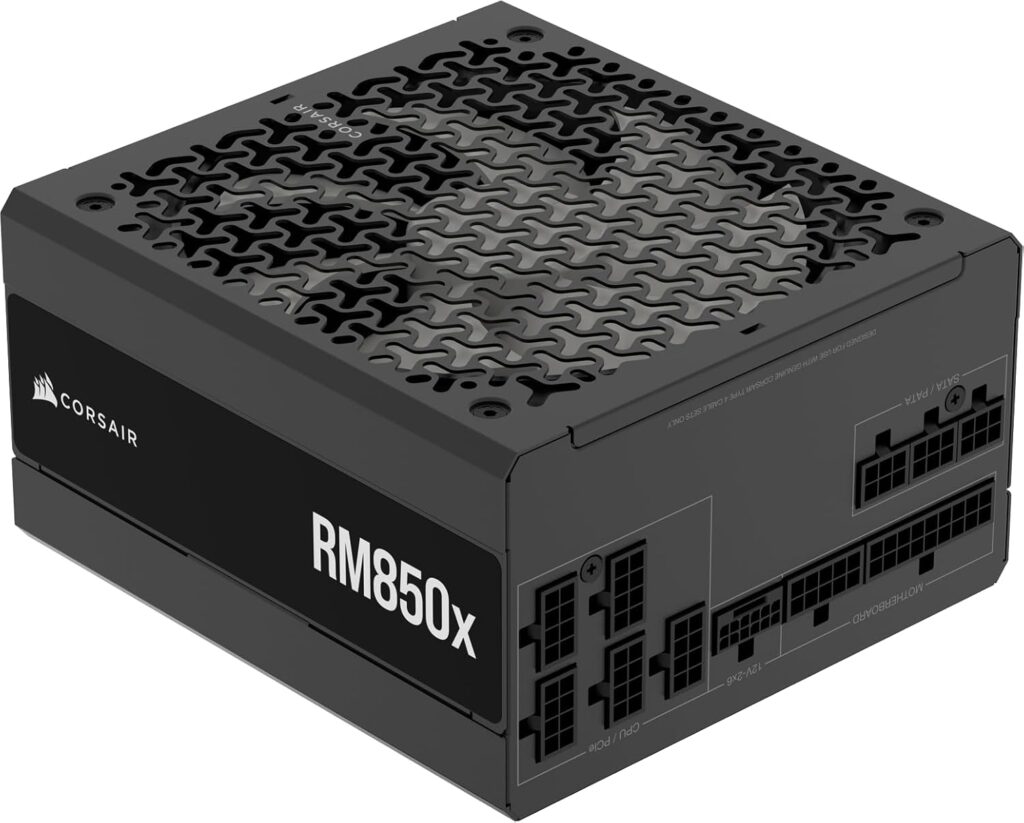
The RM850x is an 850W fully modular ATX 3.1 power supply that holds Cybenetics Gold certification, with Corsair quoting efficiency of up to 91%. It runs on a single +12V rail rated at 70.8A, includes a native 12V-2×6 connector for current-generation GPUs, uses 105°C-rated Japanese capacitors, and ships with a 10-year warranty. The 140mm fan operates in Zero RPM mode at loads below approximately 40% for silent operation during desktop use and light gaming, barely audible under sustained full-load gaming sessions. Corsair RM850x ($139.99)
MSRP remains $169.99, but as of late September 2026 you’ll usually find the current ATX 3.1 unit at $139.99 at Amazon, Best Buy, Newegg, Walmart and B&H, while Corsair’s own store lists it at $149.99.
Why 850W is the right tier right now
The RM850x is the sweet spot for performance desktops whose calculated component load fits comfortably within a 750–999W supply. That covers the RTX 5070 Ti (300W TDP) paired with a 170W TDP processor, a combined 470W at full load, with substantial headroom remaining. An RTX 5080 (360W TDP) paired with a high-TDP CPU sits around 550W peak gaming load, still well within the 850W envelope.

The headroom matters for two reasons. First, PSUs run most efficiently in the 40-70% load range. A unit running at 60% of its rated capacity during typical gaming sessions operates in its efficiency sweet spot, where heat generation is lowest and fan noise is minimal. Second, transient power spikes, the brief current draws that happen during GPU boost transitions, can exceed average power draw significantly. An 850W supply handles these without the protection circuits engaging provided the power demand sits within these efficiency limits… have a look at our PSU calculator, it will tell you where your system currently sits based on your PSU and if you’re looking to buy a PSU it will recommend the best one for your specific system.
The ATX 3.1 upgrade: why it matters for this generation
The 2024 revision brought ATX 3.1 compliance and a native 12V-2×6 connector. This is the connector standard for RTX 40, RTX 50 and RX 9000 series GPUs, replacing the 12VHPWR connector that caused concern on earlier implementations. The native 12V-2×6 connector eliminates adapter cables, no more 8-pin to 12V-2×6 adapters that add potential failure points and cable bulk. The connector seats positively, routes cleanly, and handles high-current transients the way the specification requires.
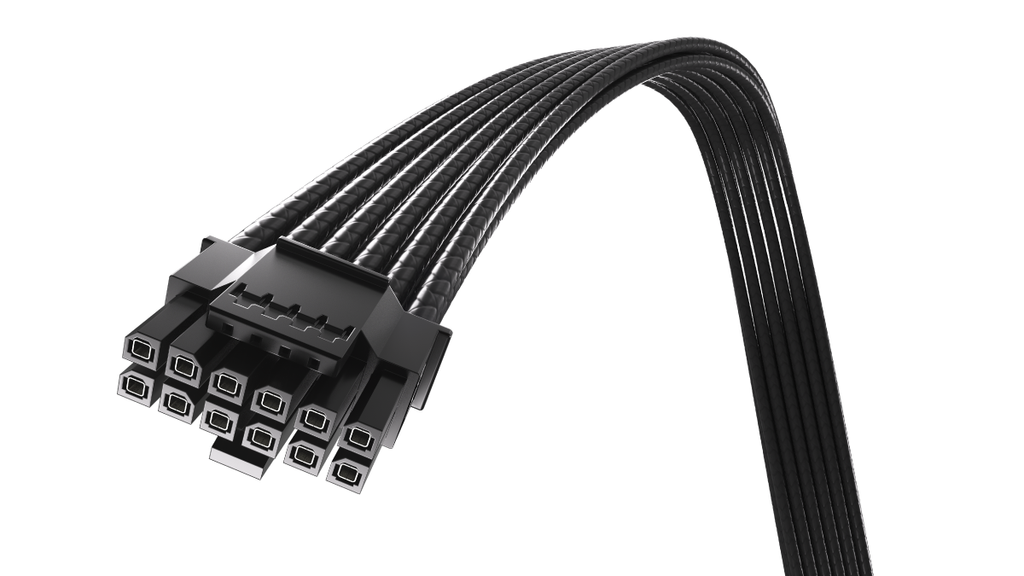
If you’re building with any current-generation flagship GPU, buying a non-ATX 3.1 PSU means using an adapter which carries a small risk though most adapters are fine, but there’s no reason to introduce it when ATX 3.1 units exist at comparable pricing.
Efficiency: 91% at typical loads
Corsair certifies the RM850x at Cybenetics Gold and quotes efficiency of up to 91%, so that’s the figure you should plan around. Cybenetics measures efficiency across the full load range rather than at a handful of fixed points, which makes its Gold badge a tougher and more useful rating than the old 80 Plus sticker, and it’s the only efficiency certification Corsair lists for this 2024 model.
In practice, 91% efficiency at load means the PSU wastes roughly 50W as heat when delivering 550W to components. A unit rated at 80 Plus Bronze wastes roughly 80W at the same load. Over a year of daily gaming sessions that difference adds up, though at current electricity prices it’s months or years before the efficiency premium pays back through electricity savings.
Noise levels
The Zero RPM fan mode keeps the PSU silent during normal use, and the 140mm fan remains barely audible even during gaming sessions. For builders who run their PCs in quiet rooms or who’ve invested in a silent case and quiet coolers, the RM850x’s acoustic performance matches that investment. A PSU that spins up loudly under load undermines a quiet build, this one doesn’t. Corsair RM850x ($139.99)

The fan uses a fluid dynamic bearing, the type you want for long-term use because it holds up far better than a cheap sleeve bearing, so you shouldn’t have to worry about bearing noise creeping in over a typical five to seven year ownership period.
The SHIFT variant: worth knowing about
Corsair also sells the RM850x SHIFT, which repositions the modular connectors from the rear to the left side of the unit. This enables direct cable routing behind the motherboard tray, but its unique connector placement limits case selection considerably. Corsair bets that a substantial segment of enthusiast builders will prioritise cable management perfection enough to accept reduced case compatibility.

The SHIFT is worth considering if you’re building in a case specifically designed to accommodate it, the Corsair 4000D Frame series was designed with the SHIFT in mind. For any other case, the standard RM850x is the correct choice though. Corsair RM850x ($139.99)
Protection features
The RM850x implements OVP, UVP, OCP, OTP, SCP and OPP, these safeguards shut down the PSU before damage occurs to your components during fault conditions. The single +12V rail design handles even power-hungry components without issues, some older PSUs used multiple +12V rails with individual OCP limits that could cause nuisance shutdowns with high-power GPUs. With 70.8A available on the single rail, no modern gaming GPU will hit the overcurrent limit under normal operation.

Warranty
The 10-year warranty is two years shorter than some competitors offer at this price point, though Corsair’s reliability track record suggests this shouldn’t concern most buyers because, in practice, a well-built PSU with quality capacitors and a single-rail design should last well beyond 10 years under normal gaming loads. The warranty is a backstop, not the primary reason to buy.
The honest caveat
At its current pricing the RM850x is not the most competitively priced option at this tier. The Seasonic Focus GX-850 and be quiet! Pure Power 12 850W both sit at similar or lower prices with comparable performance ratings. If price is the primary factor and you don’t need the SHIFT variant or Corsair’s ecosystem integration with iCUE, both are legitimate alternatives. The RM850x earns its premium through build quality consistency, the native 12V-2×6 connector implementation, and a track record of reliability that shorter-lived products can’t match. Based on the internal components, a service life of 8-10 years of typical use is a reasonable expectation. Corsair RM850x ($139.99)

The verdict
The RM850x is a high-quality PSU with pricing that is pretty much on point, making it an excellent pick for a mid-range to high-end gaming PC. The 850W capacity covers every current gaming configuration with headroom to spare, the ATX 3.1 native 12V-2×6 connector handles current-generation GPUs without adapters, the Cybenetics Gold efficiency keeps waste heat down, and it runs silently through most gaming sessions. For anyone building a new system at the RTX 5070 tier or above, it belongs on the shortlist before anything else.