
SpecClear earns a commission if you buy through Newegg links on this page, at no extra cost to you.
Check the price of a 32GB DDR5-6000 kit before you read this. Go on. We’ll wait.
RAM prices in 2026 have hit levels nobody saw coming. Whatever number you saw, it’s probably not what you expected. The cheapest 32GB DDR5 kit available in the US at the start of June 2026 was $374.97. As of October 19, 2026, a 32GB DDR5-6000 kit costs about $470 to $560 on Newegg. The cheapest CL30 kit Newegg sells is the Klevv 32GB DDR5-6000 CL30 at about $470, and the Corsair Vengeance 32GB DDR5-6000 CL30 is about $560. A year ago, the same capacity cost $80 to $120. That’s not a typo, and it’s not temporary. This is the state of the memory market in 2026, and if you’re planning a PC build right now, you need to understand what’s happening before you spend a dollar on components.
What Actually Happened to RAM Prices in 2026
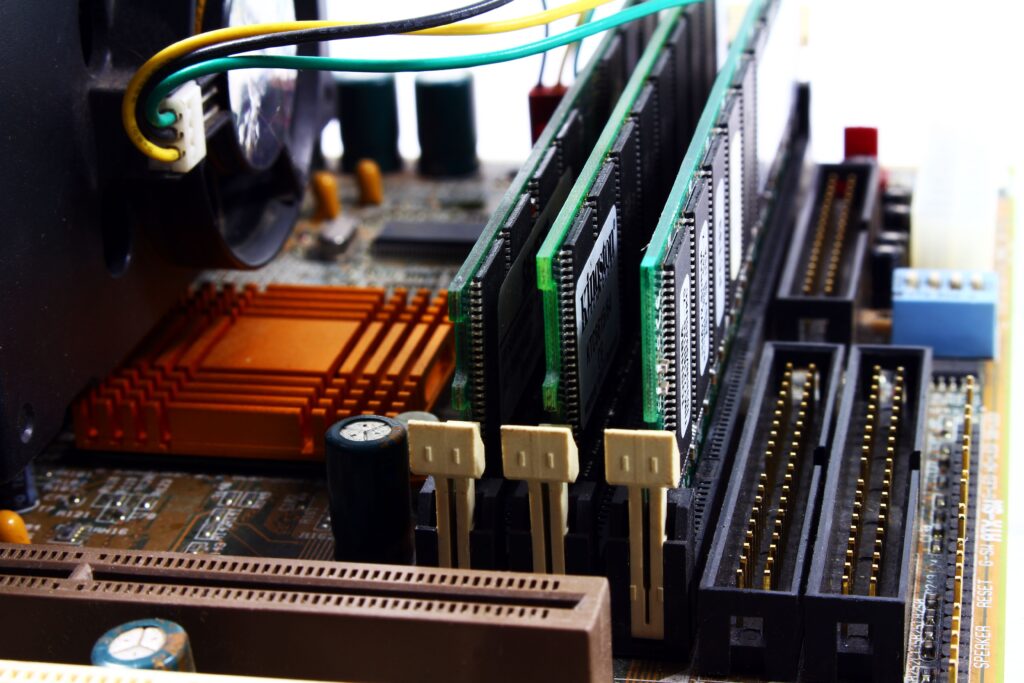
The short version: AI ate the factory.
Samsung, SK Hynix, and Micron produce virtually all of the world’s DRAM. Between them, they control the taps on global memory supply. And for the past year, they’ve been redirecting a growing portion of their wafer capacity away from the consumer DDR5 you’d put in a gaming PC toward High Bandwidth Memory, the stacked, ultra-dense DRAM that Nvidia’s data centre GPUs run on.
The economics make the decision obvious. One gigabyte of HBM consumes roughly three to four times the wafer capacity of standard DDR5, but the profit margin is dramatically higher. Microsoft, Google, Meta and every AI hyperscaler in the world is signing long-term contracts at premium prices. Your 32GB gaming kit is competing with those contracts for factory time, and it’s losing.
TrendForce estimated that AI workloads absorbed about 20% of global DRAM wafer capacity in 2026. That doesn’t sound catastrophic until you factor in how little slack the consumer DRAM market had to begin with. Prices rose roughly 300 to 400% from mid-2025 lows. Gartner coined the term “memflation”, forecasting 80% DRAM price inflation through 2026 with shortages persisting into H2 2027.
Then Micron made it concrete. In February 2026, Micron wound down its consumer-facing Crucial brand entirely to concentrate on enterprise AI customers. The consumer memory market didn’t just get more expensive. It lost a first-party supplier.
DDR4 isn’t a safe haven either. A 32GB DDR4 kit that cost $60 to $90 in October 2025 was running $150 to $180 by January 2026. Manufacturers were already retiring older DDR4 production nodes to free up capacity, which tightened supply from both ends simultaneously. In some configurations, DDR4 now costs as much per gigabyte as DDR5 on a platform with no future.
“But I Saw a Headline About Prices Dropping”

You probably did. In April 2026, a few news outlets reported DDR5 prices falling after Google published an AI compression algorithm that reduced memory requirements for certain inference workloads. Memory manufacturer stock prices dipped. Some specific kits dropped by $30 to $40.
PCWorld’s investigation put it plainly: it was noise, not a trend. In the US, 7-day and 30-day price movements were fluctuating by 1 to 2% in either direction. A kit that peaked at $500 dropping to $369 is still $369, nearly four times what it cost a year earlier. The structural problem, fabs building HBM instead of DDR5, hasn’t changed. TrendForce confirmed prices had entered a plateau phase: they stopped rising as steeply as they did in Q4 2025, but they didn’t drop meaningfully either.
Don’t wait for a recovery that isn’t coming this year.
When Will Prices Actually Come Down?
Honestly, not in 2026. Gartner’s forecast doesn’t show meaningful relief inside this calendar year. The earliest credible window for normalisation is late 2027, which is when new fab capacity from Samsung’s Pyeongtaek P4 expansion and Micron’s Idaho facility might start meaningfully reaching consumer channels. Most analysts converge on the same timeline. The optimistic view earlier this year was a 15 to 20% drop in DDR5 prices by late 2026, which would have brought a 32GB kit from $375 down to about $300 to $310. As of October 19, 2026 that hasn’t happened: the cheapest 32GB DDR5-6000 kit on Newegg is about $470.
One wildcard: if AI capex spending slows significantly and hyperscalers pull back on Nvidia GPU orders, HBM demand softens and more wafer capacity flows back to consumer DDR5. Nobody can reliably predict when or whether that happens.
So far prices have stayed high through 2026 instead of drifting down. The realistic hope now is something resembling normality in late 2027. The $80 DDR5 kit era is probably gone permanently. The economics of AI memory have structurally repriced the market.
So Should You Build Now or Wait?
It depends on why you’re building.
If your current PC is dead or genuinely failing, you need to build. Waiting until 2027 for cheaper RAM isn’t a useful strategy when you have no working computer. Buy what you need, use the strategies below to minimise the damage, and move on.
If you’re upgrading a working PC and you don’t need 32GB right now (you’re currently on 16GB and games are running fine), wait. There’s no upgrade that justifies paying current prices for headroom you don’t yet need.
If you’re planning a new build and it isn’t urgent, it’s worth watching prices into 2027 as new manufacturing capacity comes online, but don’t expect a quick drop.
If your build is urgent and budget is the constraint, there are still smart ways to approach it.
How to Build a PC Right Now Without Getting Destroyed by RAM Prices
Buy bundles. The single best strategy in the current market. Retailers like Newegg have started bundling DDR5 kits with motherboards or CPUs at significantly below-standalone pricing. Tom’s Hardware tracked a Gigabyte X870 Aorus Elite + 32GB Corsair Vengeance DDR5-6000 combo at $479.99, which effectively priced the RAM at $215, about $160 below standalone market rate. These deals move fast. Watch Newegg’s combo section and pull the trigger when a bundle appears that matches your platform.
Start with 16GB, plan to upgrade. If budget is tight and you’re on AM5 or Intel LGA 1851, buy a single 16GB DDR5-6000 stick now (the G.Skill Flare X5 16GB is about $270 on Newegg) and leave the second slot empty. It runs in single channel until you add the second stick, which costs some performance on AM5, but most games run acceptably on 16GB in 2026. A 2 x 8GB kit costs about the same, but it can’t grow to 32GB without replacing both sticks. When prices moderate, add a matching stick to reach 32GB in dual-channel. This spreads the cost across the shortage and avoids paying peak prices for capacity you can defer.
Don’t go DDR4 on a new build. The temptation is understandable: DDR4 prices are bad but not quite as bad as DDR5 in absolute terms, and some older AM4 boards are cheap. But DDR4 ties you to a dead-end platform, and DDR4 supply is only going to tighten further as manufacturers retire production. If you’re buying new today, AM5 or Intel LGA 1851 and DDR5 is the only sensible path.
Stick to DDR5-6000 CL30 for AM5 builds. Don’t overspend chasing DDR5-7200 or faster kits trying to squeeze extra performance. The gaming return is negligible: 1 to 3fps in CPU-sensitive titles, zero difference in GPU-limited games. DDR5-6000 CL30 is the sweet spot for Ryzen AM5: it runs the memory controller at a 1:1 ratio with the memory clock, it’s universally stable without manual tuning, and it’s typically the cheapest entry point in the “good” tier.
Watch for XMP to be enabled. Whatever you buy, the first thing to do after install is enter the BIOS and enable XMP (Intel) or EXPO (AMD). Without it, your DDR5-6000 kit runs at the JEDEC default speed of 4800MT/s. That’s a meaningful performance loss on Ryzen for zero reason. Thirty seconds in the BIOS fixes it.
Buy from authorised retailers. Counterfeiting follows shortages. Tom’s Hardware documented counterfeit DDR5 modules built from empty plastic chips relabelled to pass as legitimate. Buy from Newegg, Amazon directly, B&H Photo or Corsair’s own store. Avoid grey-market sellers or unusually cheap listings on marketplace platforms. Test new memory on arrival with MemTest86.
The Bottom Line
RAM is the most expensive it’s ever been relative to what you get for the money. That’s not going to change fast. But a PC build isn’t impossible. It just requires being strategic about where you spend and where you wait. Bundles are your best friend. DDR5-6000 CL30 is your spec. And 16GB to start is a legitimate plan if budget is the constraint.
The shortage is structural, not temporary. Build accordingly.
SpecClear participates in affiliate programmes. When you purchase through links on this site we may earn a commission at no additional cost to you.