
SpecClear earns a commission if you buy through Newegg links on this page, at no extra cost to you.
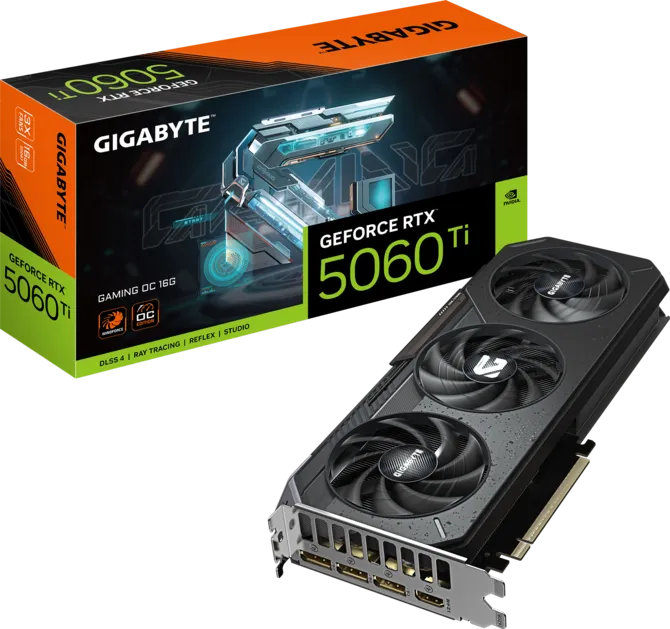
If you’re building or upgrading a gaming PC right now and choosing between the RTX 5060 Ti 16GB and the RX 9060 XT 16GB, this is the comparison you need to settle. They’re still close in 1440p raster performance, but street pricing has diverged hard through summer 2026 — AMD sits near the old mid-range budget for the GPU, while the Nvidia 16GB Ti has climbed well above it.
The RX 9060 XT 16GB is the smarter buy for most people. But “most people” doesn’t mean everyone, and the RTX 5060 Ti 16GB is the correct call for a specific group of buyers. This article is about figuring out which one you are.
The 8GB versions don’t exist for this comparison
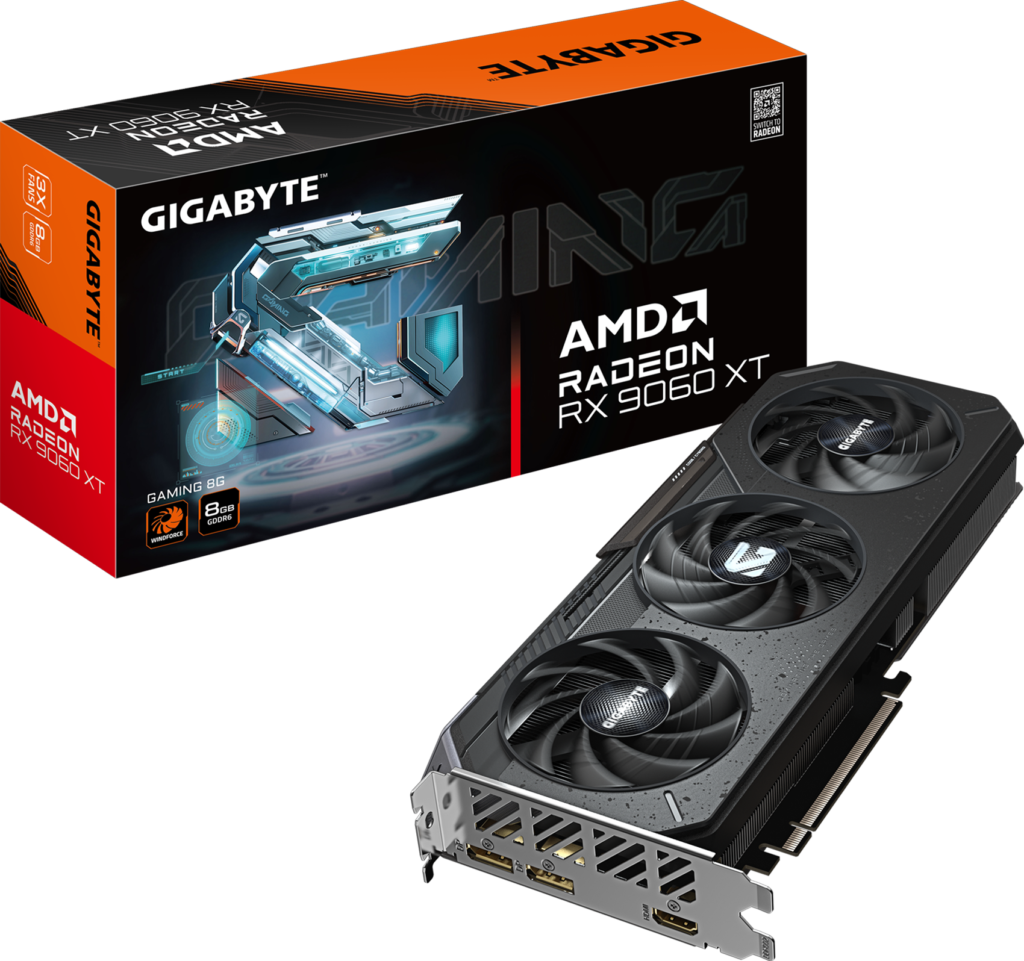
Before anything else: don’t buy the 8GB version of either card. Both the RTX 5060 Ti and the RX 9060 XT ship in 8GB and 16GB configurations. The 8GB variants are cheaper. They’re also a mistake.
Modern AAA titles at 1440p ultra settings — Black Myth: Wukong, Indiana Jones and the Great Circle, Cyberpunk 2077 — regularly exceed 8GB of VRAM. The 8GB RX 9060 XT shows serious stutter and texture pop-in once it hits its memory ceiling. AMD’s own official launch benchmarks only showed the 16GB version, which tells you everything you need to know about how the 8GB card performs. The 5060 Ti 8GB has the same cliff. Hardware Unboxed testing documented 30%+ average FPS loss and 215% worse 0.1% lows on the 8GB SKU at 1440p texture-heavy settings compared to the 16GB version.
Buy the 16GB of whichever card you choose. That’s the decision you’re actually making.
What the price gap looks like right now
Street pricing in early September 2026 puts the RX 9060 XT 16GB around $450–$490 (Tom’s Hardware US low ~$469). The RTX 5060 Ti 16GB typically runs ~$720–$780 (Tom’s low ~$758), with occasional outlier deals nearer $570 that vanish quickly. The 5060 Ti launched at $429 MSRP and the 9060 XT 16GB at $349; the street gap has widened since mid-summer, not compressed. Expect roughly $250–$300 between comparable AIB models unless you catch a short-lived Nvidia deal.
That gap buys you a noticeably better monitor, or 32GB of RAM instead of 16GB. Or a better case. It’s not nothing.
Rasterization — where the 9060 XT holds its own
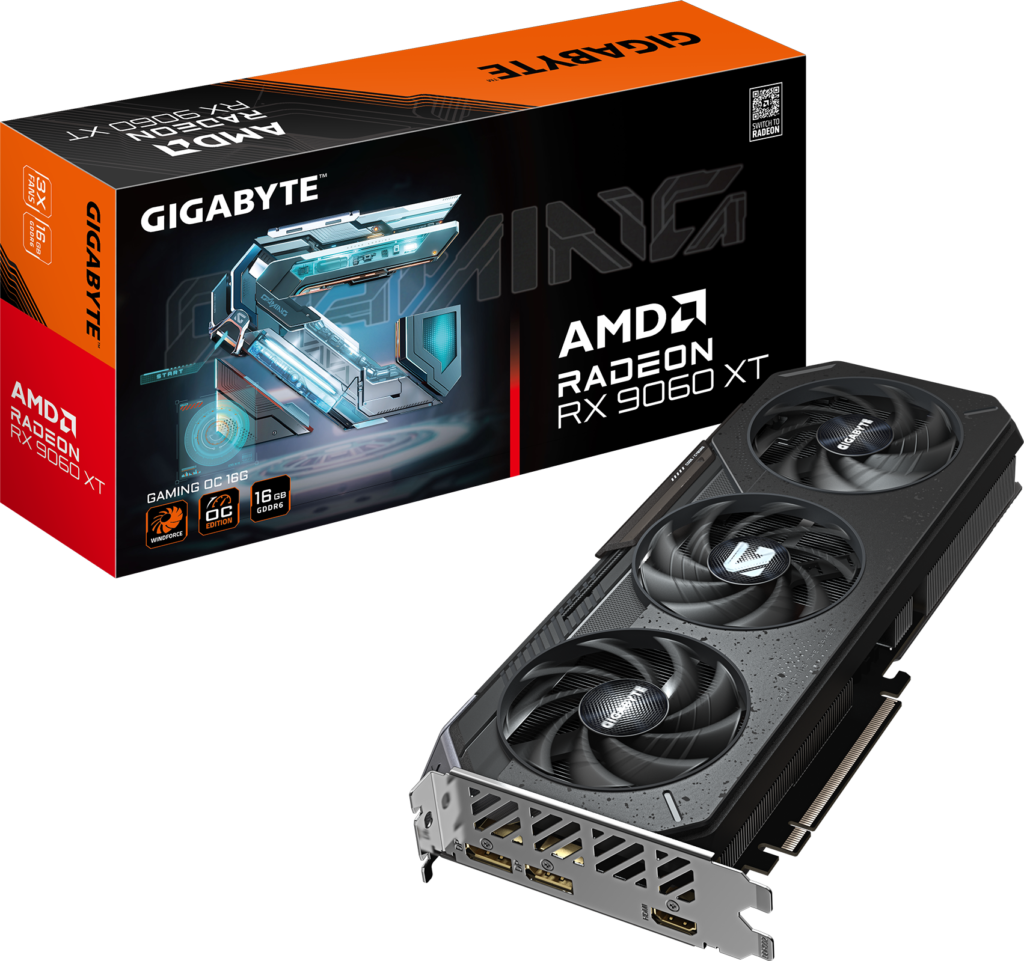
At 1440p ultra in rasterized workloads — which is the vast majority of games — the RTX 5060 Ti leads the RX 9060 XT by about 5–7% on average. In some titles the 9060 XT trades blows or leads outright. In others, the 5060 Ti pulls 10%+ ahead. One model to look at is the RX 9060 XT 16GB.
At 1080p very high settings, both cards push well above 145 FPS in most titles. Neither one is the bottleneck on a 144Hz panel at that resolution.
The RX 9060 XT wins on raster value: it delivers around 85–92% of the 5060 Ti’s performance at a much lower street price. That’s the case for buying AMD here — you get a lot of what the Nvidia card does without paying the inflated premium.
Ray tracing the 5060 Ti’s clear advantage
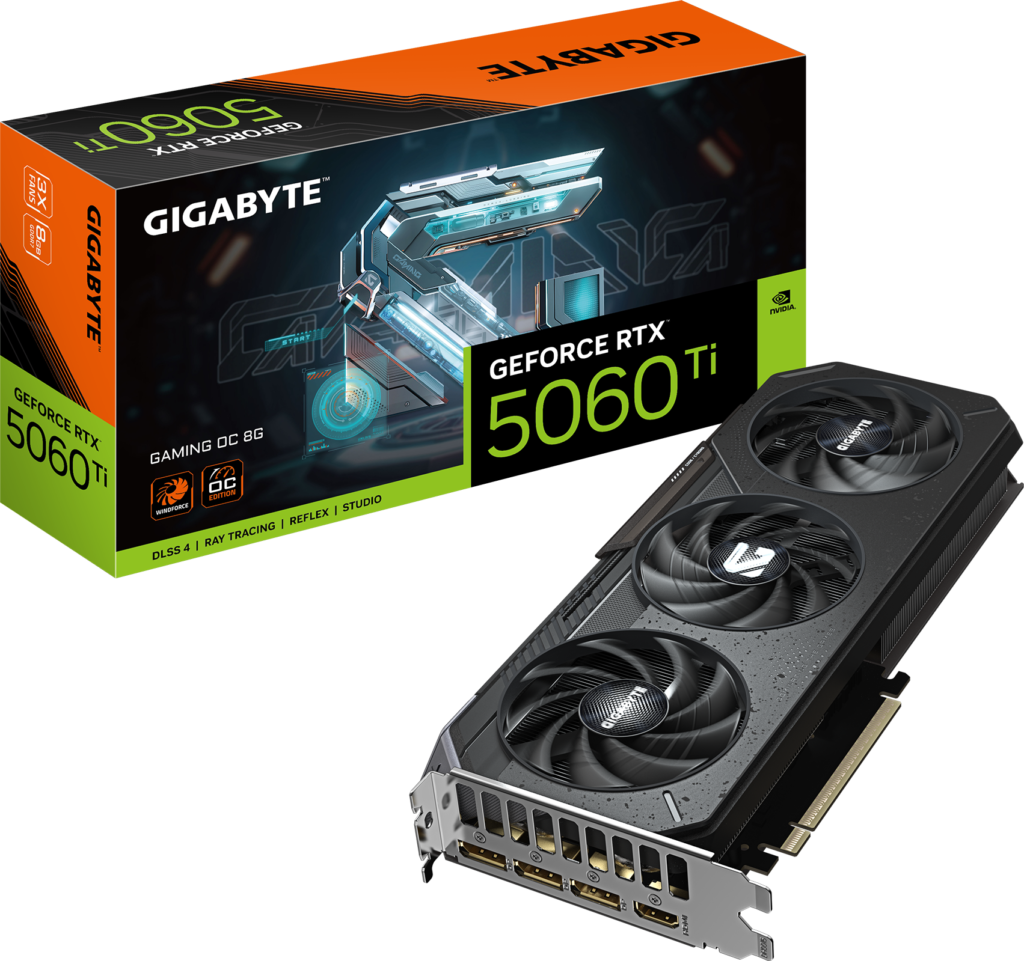
This is where the calculus shifts: the RTX 5060 Ti has 4th-gen RT cores and GDDR7 memory, both of which matter for ray tracing. In Cyberpunk 2077 at 1440p with full RT enabled and upscaling active, the 5060 Ti holds roughly a 6% lead over the 9060 XT. In more demanding RT scenarios the gap is larger and more consistent.
Neither card is comfortable at heavy ray tracing without upscaling. Both cards handle typical RT implementations shadows, ambient occlusion, reflections in games where RT isn’t the entire rendering pipeline without falling apart. But if you play Cyberpunk with RT Ultra on by default, or if Alan Wake 2’s full RT mode is something you actually use, the 5060 Ti is the correct card.
DLSS 4 with Multi-Frame Generation is real and worth discussing. With MFG active the 5060 Ti hits 130+ FPS in Cyberpunk at 1440p Quality mode. FSR 4’s frame generation tops out at one generated frame per rendered frame, landing the 9060 XT around 110 FPS in the same scenario. If you’re on a 165Hz+ display and you use upscaling, the Nvidia card’s ceiling is meaningfully higher.
Power draw smaller difference than the spec sheets suggest
The RX 9060 XT has a TDP of around 150W, the RTX 5060 Ti runs at roughly 165W. In practice both cards land in the 70–76°C range under sustained load in a well-ventilated mid-tower. Neither one runs hot.
The 15W difference doesn’t change the PSU equation: both cards are comfortable on a quality 650W unit in a standard mid-range build. In a compact or small form factor case where thermal headroom is tight, AMD’s lower draw is a real advantage. Otherwise, it’s not a deciding factor.
Streaming and creative work Nvidia wins clearly
If you stream, NVENC on the 5060 Ti is better than AMD’s encoder for quality at a given bitrate. CUDA acceleration matters in Premiere Pro, DaVinci Resolve, and Blender. If your PC does double duty as a gaming and creative workstation, the 5060 Ti earns its premium on these grounds alone.
If you just game, this point doesn’t apply to you.
The AIB models worth buying
For the RX 9060 XT 16GB: the Sapphire Pulse is the standard recommendation compact dual-fan design, runs cool, quiet under load, single 8-pin connector. PowerColor’s Reaper is the budget entry if you want to save a few dollars and don’t need a flagship cooler.
For the RTX 5060 Ti 16GB: the ASUS Prime OC is the clean value pick. The MSI Gaming Trio and ROG Strix variants are excellent if you want better thermals and don’t mind paying for them.
Avoid 8GB variants of either card from any brand.
The verdict
Buy the RX 9060 XT 16GB if you game at 1440p, you keep ray tracing off or at modest settings, and the $250–$300 typically saved matters to your build budget. It’s the smarter value card at this tier.
Buy the RTX 5060 Ti 16GB if you play RT-heavy games by default, you stream or do GPU-accelerated creative work, or you’re on a 165Hz+ panel and DLSS 4 MFG is something you’ll actually use.
Don’t buy the 8GB version of either card. It doesn’t matter how much cheaper it is.