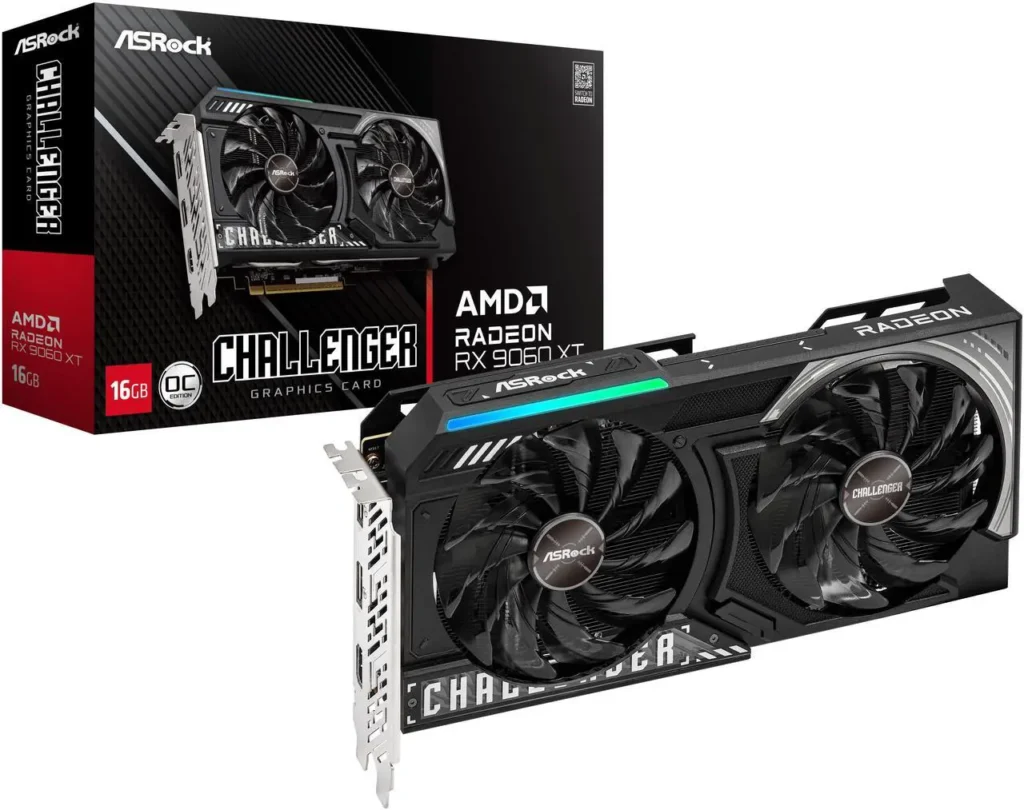
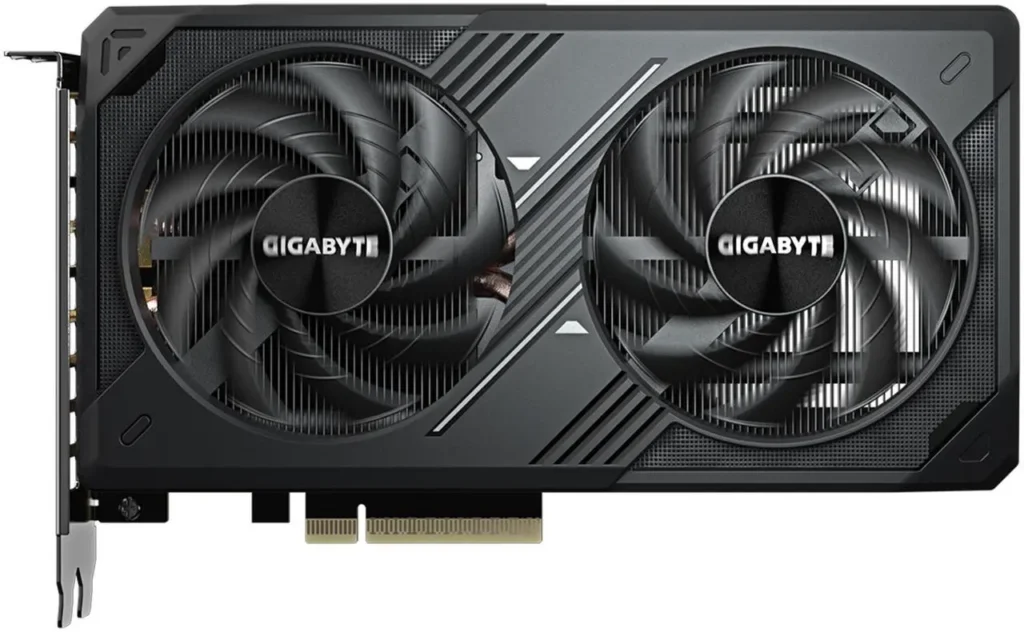
The RTX 5060 launched at $299 and the RX 9060 XT 16GB at $349. Neither card is at MSRP anymore. Both cards are selling above MSRP in early September 2026, which changes the decision more than most buying guides acknowledge.
Here’s the honest version of this comparison, including the pricing reality, the VRAM situation, and the specific scenarios where each card makes sense.
What You’re Actually Paying Right Now
RTX 5060 (8GB GDDR7): ~$350-$470 street band on Newegg in mid-September 2026 (deal floor mid-$350s; many boards still ~$450-$470). MSRP was $299.
RX 9060 XT 16GB (GDDR6): ~$390-$470 street band on Newegg in mid-September 2026 (tracker lows near ~$470; deal boards can sit lower). MSRP was $349.
RX 9060 XT 8GB: ~$399 street. Exists, but don’t buy it (explained below).
The gap between the RTX 5060 and the RX 9060 XT 16GB is no longer a fixed ~$20 punchline. Deal-floor 5060 boards can sit mid-$350s while many still land ~$450-$470; 9060 XT 16GB often spans ~$390-$470. That matters more than the old $60–$110 mid-summer spread or the $50 MSRP differential.
The Specs That Actually Matter
The RTX 5060 runs on Nvidia’s Blackwell architecture. 8GB of GDDR7 on a 128-bit bus. 145W TDP. DLSS 4 with Multi Frame Generation. Full Nvidia ecosystem: NVENC for streaming, GeForce Experience, DLSS integration across thousands of games.RTX 5060 Ti vs RX 9060 XT
The RX 9060 XT 16GB runs on AMD’s RDNA 4 architecture. 16GB of GDDR6 on a 128-bit bus. 150-182W TDP. FSR 4 upscaling. XeSS support as an alternative. AMD’s streaming encoder is competitive but not at NVENC’s level for quality at lower bitrates.
The headline difference is 8GB versus 16GB. Everything else is secondary.
Performance: What the Benchmarks Actually Show
At 1080p across a broad game library, the RTX 5060 and RX 9060 XT 16GB trade blows. The RTX 5060 pulls ahead in Nvidia-optimised titles, particularly competitive games (CS2, Valorant, Fortnite) where DLSS 4 and raw rasterisation performance combine favourably. The RX 9060 XT 16GB edges ahead in raw rasterisation in several AMD-optimised titles and holds a consistent lead anywhere VRAM pressure is a factor.
Ray tracing is not this card’s territory for either option. The RTX 5060 handles basic ray tracing better than the 9060 XT, but neither card is what you’re reaching for when you want path tracing in Cyberpunk 2077. At the $300-$400 price bracket in 2026, you’re gaming with ray tracing set to low or off.Should I Buy the RTX 5060 Right Now
The VRAM difference shows up at 1440p with demanding texture packs. Titles like Kingdom Come Deliverance 2 at Very High settings at 1440p push past 8GB. When that happens the RTX 5060 stutters and the RX 9060 XT 16GB doesn’t. It’s not a few frames difference. It’s the difference between playable and broken in the worst cases.
The 8GB RX 9060 XT: Don’t Bother
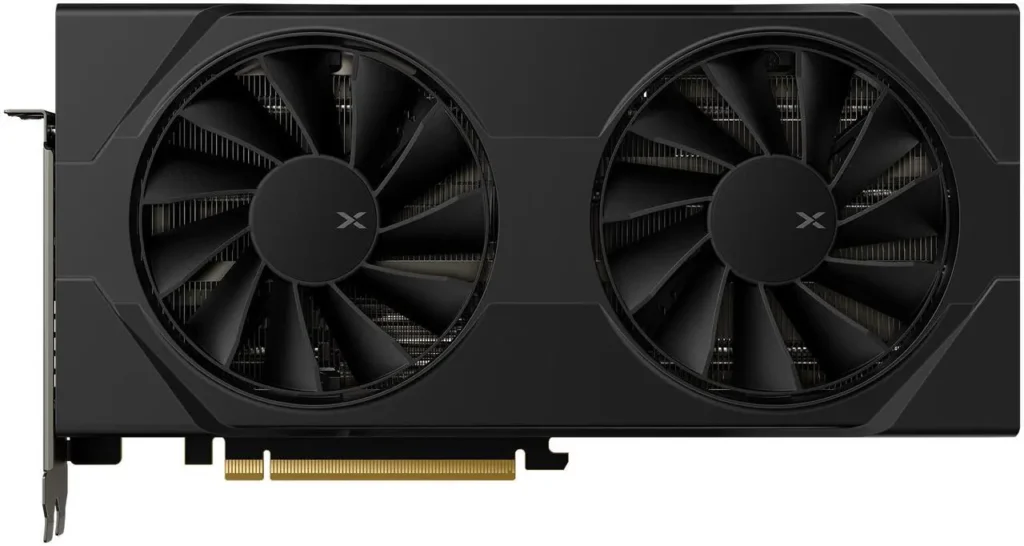
AMD sells an 8GB version of the RX 9060 XT at ~$399. It’s not the card to buy. You lose the VRAM advantage that makes the RX 9060 XT worth considering in the first place, and the performance difference over the RTX 5060 at that price point doesn’t justify choosing the AMD ecosystem for most buyers. If budget is tight enough that the 8GB version is all you can afford, the RTX 5060 is the better call, DLSS 4 is a more mature upscaling solution than FSR 4 for current game support.
Who Should Buy the RTX 5060
You play primarily esports titles: CS2, Valorant, Apex Legends, Marvel Rivals. These games don’t hit 8GB VRAM ceilings at 1080p or 1440p. DLSS 4 frame generation works in your favour for extra headroom at high refresh rates. The RTX 5060 in the current 5060 street band is the smarter buy for this specific use case.Best Budget GPU in 2026
You stream. NVENC on Blackwell is still the best hardware encoder at this price point for streaming quality-to-bitrate ratio. If streaming is part of your setup, Nvidia’s encoder advantage is real and worth the money.
You have a Nvidia-heavy game library with lots of DLSS integrations. Switching to AMD doesn’t break those games, but you lose DLSS and gain FSR 4, which is good but not equal to DLSS 4 across all titles.Is Now a Good Time to Buy a GPU
Who Should Buy the RX 9060 XT 16GB
You play AAA games at 1440p with high settings. The 16GB buffer means you don’t hit VRAM walls that the RTX 5060 does. Kingdom Come Deliverance 2, Cyberpunk 2077, Black Myth: Wukong at 1440p high-ultra settings, these are the titles where the 9060 XT 16GB earns its mid-September street band.
You’re keeping this card for three or more years. 8GB VRAM is already a limitation in some titles today. In 2028, the ceiling will be lower and the list of affected games longer. The 16GB card ages better.
You don’t stream or don’t care about encoder quality. AMD’s VAAPI encoder is competent. If you’re not streaming competitively or to an audience that will notice bitrate quality differences, it’s fine.
The Honest Verdict
At original MSRP the RX 9060 XT 16GB was an easy recommendation for most buyers: double the VRAM for about $50 more.
At mid-September 2026 street bands that trade is even clearer for anyone who might touch 1440p. The RTX 5060 stays defensible for 1080p esports-focused builds when you specifically want DLSS/NVENC, and the RX 9060 XT 16GB becomes a harder sell unless you specifically need the VRAM headroom at 1440p.
If you game at 1080p in lighter titles: RTX 5060 in the current 5060 street band.
If you game at 1440p in demanding AAA titles or plan to keep the card for 3+ years: RX 9060 XT 16GB in the ~$390-$470 Newegg band if stock is honest.
If neither card is at a sensible price right now: wait. GPU prices above MSRP in the $600-$800 range are a bad deal in a market where pricing should normalise.