
SpecClear earns a commission if you buy through Newegg links on this page, at no extra cost to you.
Updated September 11, 2026: Valve’s August 2026 Steam Hardware Survey (published early September) widens the July crossover. 16GB VRAM is now clearly ahead of 8GB, and the same story holds for 8-core CPUs versus 6-core. The original July framing below is updated to the August numbers.
The Steam Hardware Survey crossed a line PC hardware watchers have circled for three years. For the first time since Valve began breaking out GPU memory capacity by tier, graphics cards with 16GB of VRAM overtook 8GB cards as the most common configuration on the platform in July, and August stretched that lead further.

That single data point ends a debate that has run since Nvidia shipped the RTX 4060 Ti with 8GB in 2023 to widespread criticism. The community argued for three years that 8GB was already too thin for modern gaming. This is the first month in the Steam Hardware Survey’s history where 8GB of VRAM is no longer considered the majority, closing the book on this debate in a rather definitive way.
For anyone building or upgrading a gaming PC in 2026, these numbers are the most useful data Valve publishes. Here’s what the August survey actually shows (with July as the crossover month) and what it means for your hardware decisions.
The GPU Numbers: 16GB Takes the Lead
According to the August 2026 survey, 16GB GPUs now account for 26.92% of all systems tracked by Steam, ahead of 8GB cards at 25.74%. July was the first crossover month (16GB at 25.90% vs 8GB at 25.32%). August added a full 1.02 points to the 16GB tier while 8GB still grew 0.42 points, so both tiers rose, but 16GB pulled away.
The margin is no longer a rounding error: 1.18 percentage points separate 16GB from 8GB in August, up from 0.58 in July. 12GB sits at 12.99%. The direction is clear and accelerating even as memory costs push some new cards toward smaller frame buffers.
The Nvidia GeForce RTX 5070 Ti is the most popular graphics card that exclusively packs 16GB of VRAM, commanding 1.73% of all surveyed Steam users. The RTX 5060 Ti and RTX 4060 Ti occupy more PCs at 2.41% and nearby shares respectively, but those figures include 8GB variants of both cards. The RTX 5070 Ti (about $1,400) is listed on Newegg.

The GeForce RTX 3060 continues to hold the top spot as the most popular individual GPU on Steam, representing 3.76% of surveyed systems (reclaiming first from the RTX 4060 Laptop GPU after July’s brief laptop-topped ranking). The 3060 at 12GB has held that position for years, its VRAM headroom over the 8GB RTX 4060 likely explains some of its continued relevance in the survey despite being a significantly older card. VRAM is one of the main things to plan for, as our guide to future-proofing a PC build explains.
The broader picture: Nvidia holds overwhelming dominance in the GPU market share breakdown. AMD and Intel GPUs register only a minor presence in the list of top individual cards. That’s partly a function of the survey reflecting installed base rather than current sales, Nvidia’s dominance over several GPU generations means more Nvidia cards are in active use across the platform.
The CPU Numbers: 8 Cores Pass 6 Cores
On the processor side, the survey shows 28.04% of users now running 8-core CPUs, compared with 27.43% on 6-core chips. July was the first crossover; August widened the gap. If you are buying an 8-core chip for gaming, the AMD Ryzen 7 9800X3D ($479) is the usual pick.

The margin here widened from 0.33 points in July to 0.61 points in August, and again the direction is meaningful. The rise in 8-core CPUs reflects the massive popularity of AMD’s Ryzen 7 chips, particularly the 7800X3D and 9800X3D for those upgrading to AM5. Even the AM4-based 5800X3D was rereleased with a special Anniversary Edition.
The 8-core shift matters because modern game engines are increasingly designed around thread counts that actually stress 8-core chips. The 6-core era that dominated the survey for years was based on the AMD Ryzen 5 and Intel Core i5 generation where 6 cores were the mainstream gaming standard. As game developers target higher thread counts, 8-core CPUs provide the headroom that 6-core chips are increasingly running short of.
What this doesn’t mean: that you need to rush to an 8-core CPU if you’re currently on a 6-core chip with a good GPU. The frame rate difference between a Ryzen 5 9600X (6 cores) and a Ryzen 7 9800X3D (8 cores) in GPU-limited scenarios at 1440p is small. The CPU upgrade earns its money at 1080p competitive gaming where the GPU is no longer the bottleneck. Know what’s actually limiting your system before deciding whether cores are the answer.
Other Notable Survey Data
Windows 11 64-bit remains the most popular operating system on Steam, accounting for 70.97% of all surveyed users (+0.71 vs the prior month). Windows 10 sits at 22.90%, still sliding after the October 2025 end-of-support cliff.
16GB of system RAM continues to be the most common memory configuration, with 41.20% of users. 32GB systems are close behind at 37.45%. 16GB remains the pragmatic mainstream standard for now, but the 32GB tier keeps climbing even with DDR5 kit prices at about $460 and up.
Display resolution data continues to show 1920×1080 as the dominant gaming resolution by installed base at 50.52%. 1440p climbed to 21.86% and 4K is still only 4.98%. This is the survey data point that most diverges from what premium gaming hardware is sold against, monitor manufacturers and GPU brands market heavily toward 1440p and 4K while the majority of actual Steam users still game at 1080p.
What This Data Actually Means for Buying Decisions
The survey data confirms several things SpecClear has been arguing specifically about VRAM for months.

The 8GB GPU buying argument is over. Not because the cards can’t run games, they can. But because the majority of Steam users have now moved past them, game developers can increasingly target 16GB as an expected minimum, and the headroom that an 8GB card has left is shrinking with every major release. The RTX 5060’s 8GB and the RX 9050’s 8GB are both limiting decisions in 2026. Someone still running an 8GB card, including relatively recent models like the RTX 5060 Ti 8GB, may increasingly find themselves unable to run upcoming titles smoothly, not because the GPU’s core processing power is inadequate, but because its memory capacity has become the bottleneck. A 16GB card such as the RX 9060 XT 16GB (about $530) avoids that problem. For a cheaper route, see our used GPU guide.
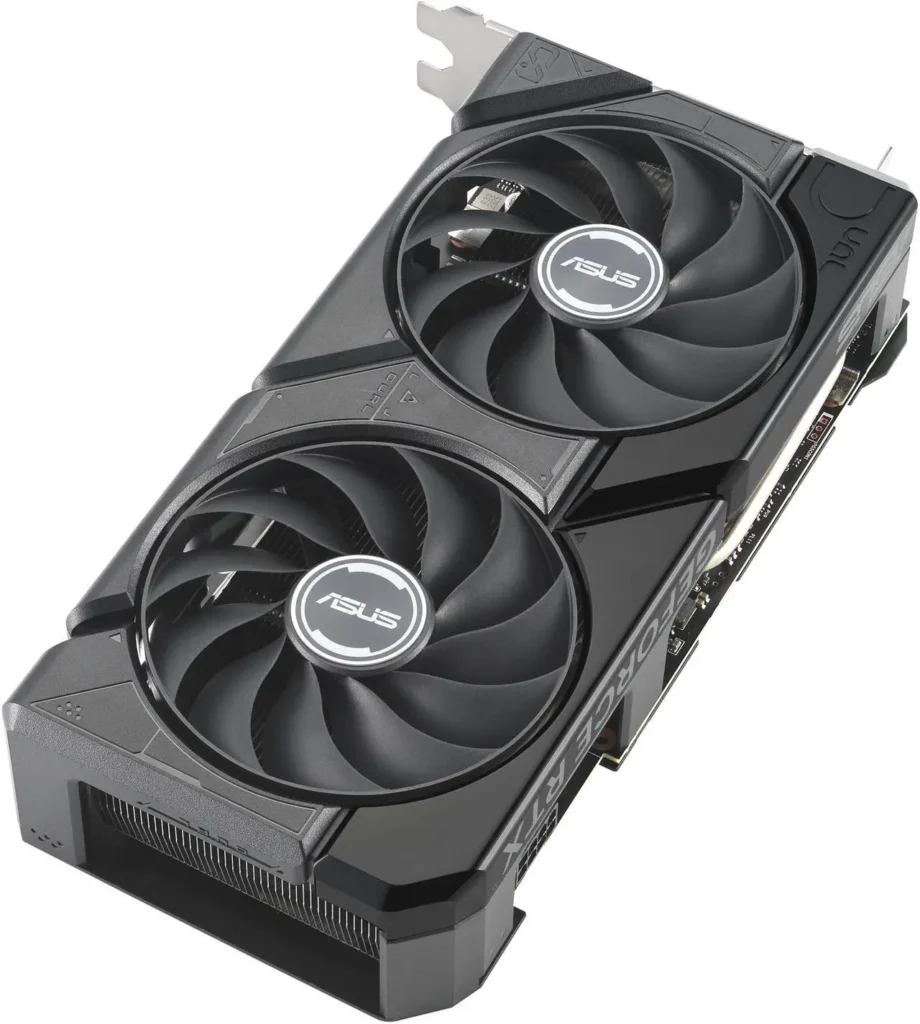
12-16GB is the correct minimum for any new GPU purchase in 2026. The survey’s trajectory makes this clear, the platform is moving toward 16GB as the standard, not away from it. Buying 8GB today means buying into the shrinking tier.
6-core CPUs remain competent but their longevity window is closing. The survey’s 8-core crossover doesn’t mean 6-core systems become suddenly inadequate, it means the mainstream baseline has shifted. For a new build in 2026, an 8-core chip is the forward-looking choice. For an existing 6-core system, the CPU isn’t the upgrade priority unless monitoring confirms CPU bottlenecking.
16GB of system RAM is the floor, not the ceiling. With 41.20% of Steam users at 16GB and 37.45% at 32GB, 16GB is still the plurality standard. For a new build in 2026, starting at 32GB in dual channel is the correct choice, 16GB in 2026 is what 8GB was in 2022, functional now and becoming the visible constraint within two to three years.
The Broader Takeaway
The Steam Hardware Survey is compiled from an opt-in sample of the platform’s user base rather than a full census, so its percentages should be read as directional indicators of mainstream trends rather than exact figures. The sample skews toward whoever leaves the participation option on, it overrepresents engaged PC gamers who pay attention to their hardware relative to the full gaming population. The directional signal is real even if the exact percentages have margin of error.
What the August 2026 survey says clearly: the PC gaming population has moved, and July’s narrow crossovers were not noise. 16GB GPUs and 8-core CPUs are the new mainstream baseline. The hardware decisions that looked forward-thinking two years ago are now the most common configurations on the platform. For anyone building a gaming PC today, this data reinforces buying with headroom rather than at the current minimum.