
Last week AMD launched Zen 6 server chips and in the same breath told us what comes after. At the Advancing AI 2026 event in San Francisco on July 22-23, CEO Lisa Su confirmed two generations of CPU architecture beyond anything currently shipping: Zen 7 in 2028 and Zen 8 in 2030.
Both announcements were server-focused. Neither came with desktop specs. But the roadmap tells PC builders something important about AM5, DDR6, and when to upgrade — if you know what to look for.
What AMD Actually Announced
Zen 6 launched this week in EPYC “Venice” server chips. AMD then kept going.
Zen 7 is confirmed for 2028 under the codename EPYC “Florence.” It brings a next-generation process node — expected to be TSMC’s A16 or A14, both sub-2nm — alongside new ACE AI Compute Extensions. Those extensions are notable: they’re the result of a joint AMD-Intel x86 working group aimed at standardising matrix acceleration across both companies’ chips. Florence will support next-generation MRDIMM and LPDDR memory standards and will cover two server socket platforms, SP7 and SP8.
Zen 8 is confirmed for 2030 under the codename EPYC “Ravenna.” That’s all AMD said. No process node, no core counts, no socket details. The confirmation itself is the news — AMD is publicly planning four generations ahead, which it hasn’t done before.
The Desktop Question — What This Means for AM5
AMD never announces desktop roadmaps years out. But server roadmaps leak desktop intentions when you read them carefully.
The key detail in the Florence announcement: it stays on existing server socket platforms and continues DDR5 support rather than jumping to DDR6. That matters because it strongly implies a Zen 7 desktop Ryzen chip — if and when it arrives — would also run on DDR5. Which means it could run on AM5.
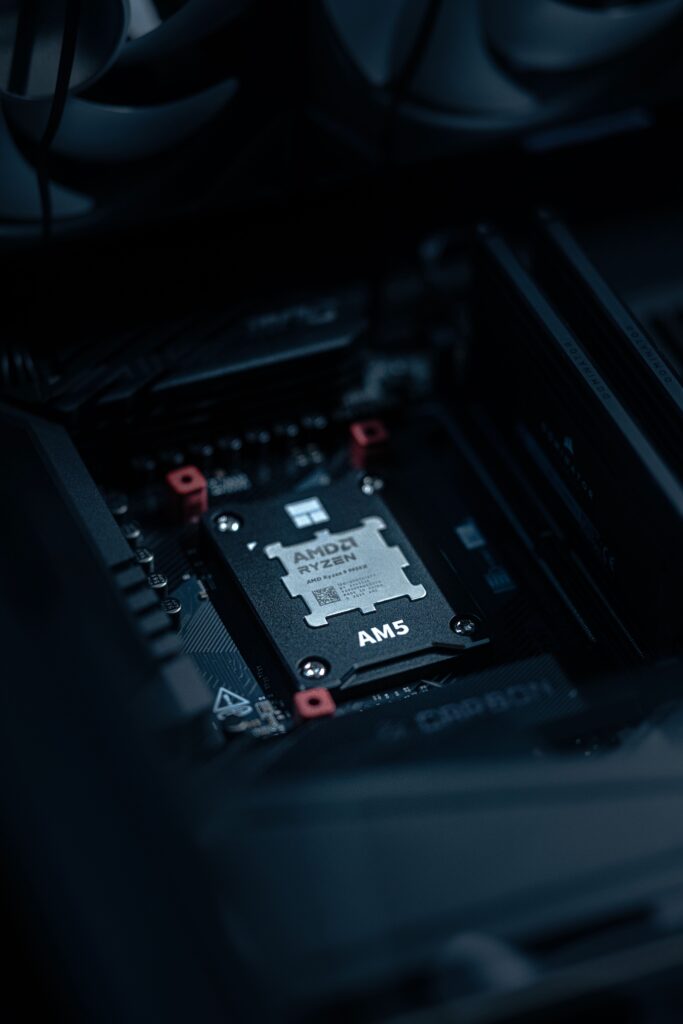
AMD already extended AM5 platform support to 2029+ this year. If Zen 7 lands on desktop in 2028 and doesn’t require DDR6, AM5 motherboards bought today could support four generations of desktop CPUs: Zen 4, Zen 5, Zen 6 (Olympic Ridge, the desktop Zen 6 which is still coming), and potentially Zen 7.
That’s a better platform longevity story than Intel has offered in years.
Zen 8 is the likely break point. A 2030 EPYC generation built on whatever process node follows A14 almost certainly needs a new memory standard and a new socket. AM6 with DDR6 is the logical outcome — but that’s four years away.
What This Doesn’t Tell You
Neither Zen 7 nor Zen 8 have desktop release dates. EPYC server chips typically arrive six to twelve months before their desktop equivalents. A Zen 7 EPYC in 2028 means a Zen 7 desktop Ryzen sometime in 2028 or 2029 at the earliest.

No architectural specifics were shared for either generation. Lisa Su confirmed the names, the years, and the general direction. IPC targets, clock speeds, cache configurations — none of that exists publicly yet.
What to Do Right Now
Nothing about this announcement changes the 2026 buying picture.

If you’re building now, the 9800X3D is still the gaming CPU to buy on AM5. Zen 6 desktop chips (Olympic Ridge) haven’t launched yet, and when they do they’ll drop straight into existing AM5 boards. The platform has years of life left.
Don’t wait for Zen 7. It’s 2028 at the earliest on desktop, and that’s optimistic. Buy the best AM5 chip that fits your budget today, and know that your board will likely support at least one more generation after Olympic Ridge.
The longer story here is that AMD is playing a platform confidence game — and winning it. Every time they extend AM5’s roadmap, every time they confirm another generation of chips for the same socket, they make the platform more attractive relative to Intel’s frequent socket changes. Zen 7 and Zen 8 confirmations are part of that. It costs AMD nothing to name them. It costs buyers nothing to factor them into platform decisions today.
AM5 isn’t going anywhere soon. That’s the headline.