
Last updated 13/07/2026
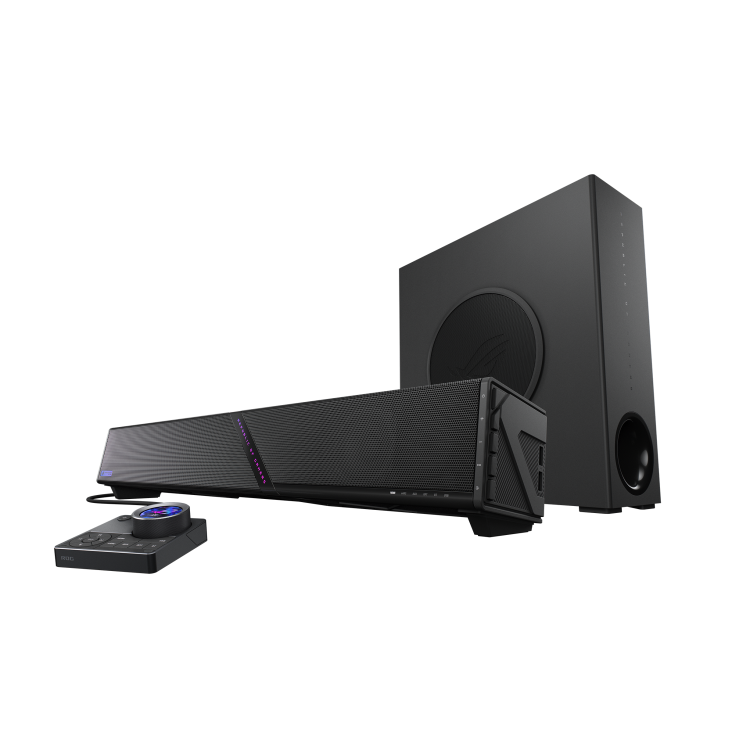
ASUS announced the ROG Gjallar on July 9, 2026. Pricing hasn’t been confirmed yet. That’s the first honest thing to say about it and it’s also the reason this article exists now rather than waiting for a full review. The Gjallar is the most significant gaming audio product announcement of the week, it fills a genuine gap in the PC gaming audio market, and most people reading about it right now are trying to figure out whether it’s worth caring about before a price tag exists to make the decision easy.
Here’s what the Gjallar asus rog gjallar gaming soundbar actually is, what it’s competing against, and the honest assessment of whether a gaming soundbar belongs in a PC setup at all.
What ASUS built
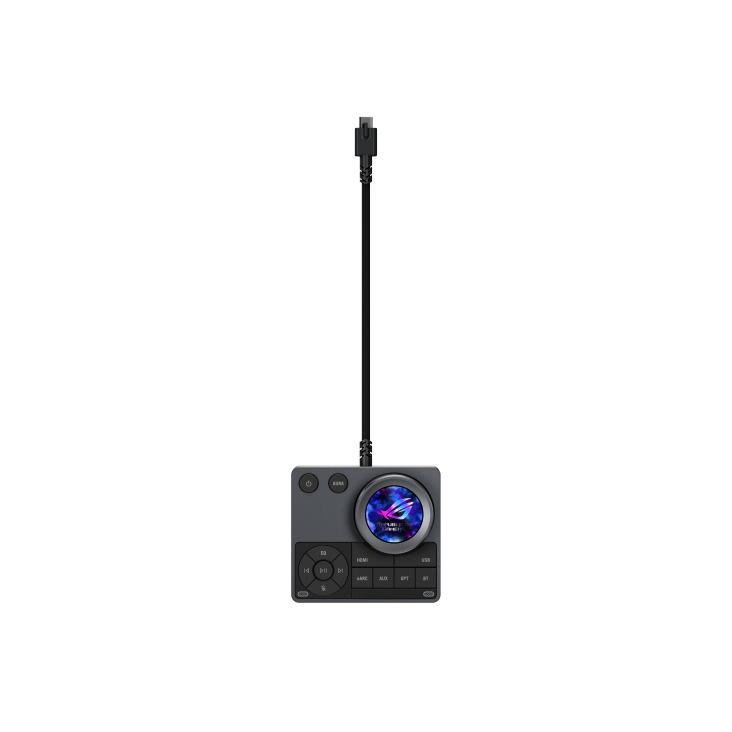
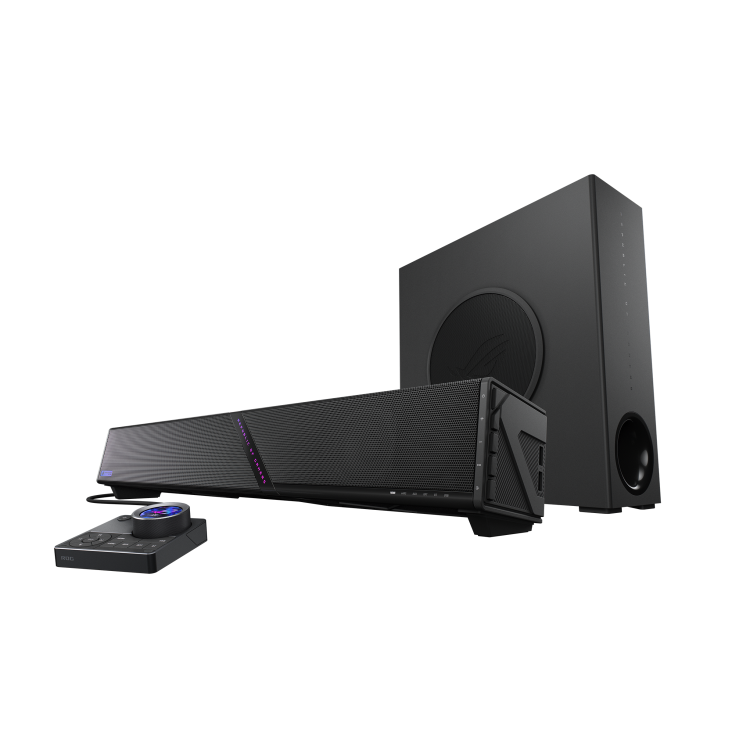
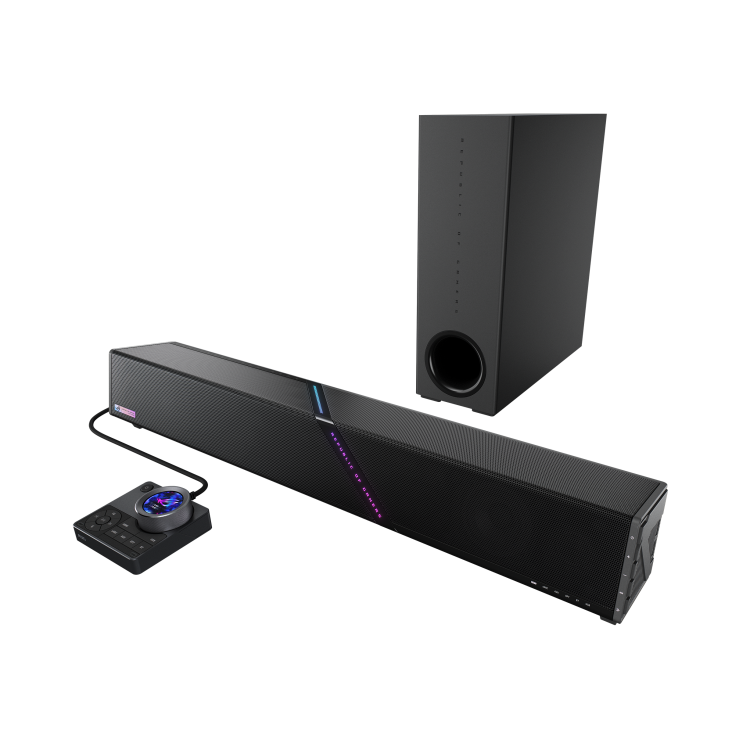
The ROG Gjallar is ASUS’s first standalone gaming audio system the company has never released a dedicated gaming soundbar before. It’s a 2.1.2-channel Dolby Atmos system consisting of three components: a compact soundbar, a wireless subwoofer, and a separate audio control hub.
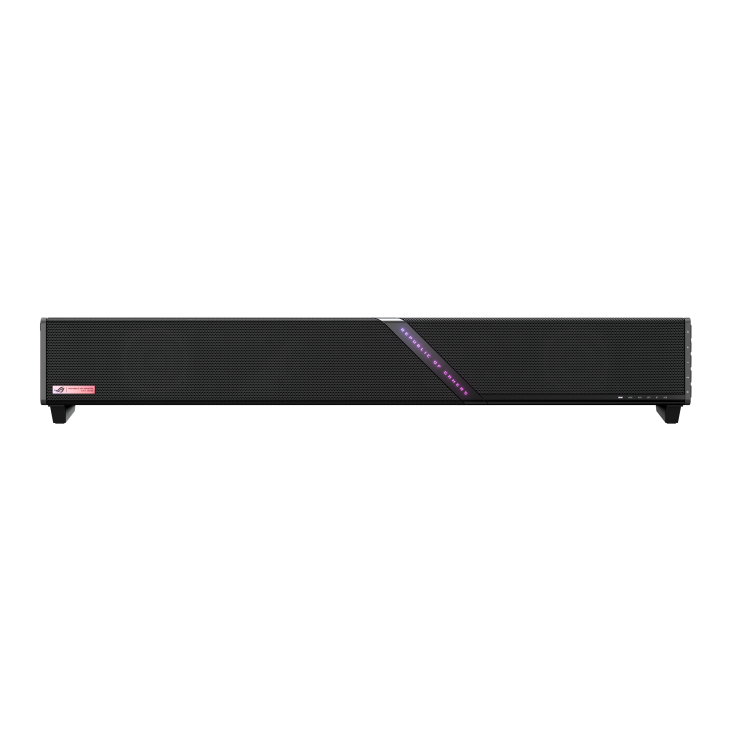
The soundbar measures 607mm wide, 92mm tall, and 82mm deep compact enough to sit under most gaming monitors without blocking the display or requiring a dedicated shelf. It weighs 2.4kg. The wireless subwoofer is a 6.5-inch driver rated at 65W, measuring 125 x 315 x 356mm, and uses a 5GHz wireless connection for low-latency bass transmission. The name comes from Gjallarhorn the mythological horn of Norse legend and ASUS says it’s pronounced “ga-lar.”
Inside the soundbar are four 50mm full-range drivers, two 27mm tweeters, and two upward-firing channels for Dolby Atmos height effects. The 2.1.2 channel configuration means two channels of height audio on top of the standard 2.1 left-right-sub arrangement giving you the vertical dimension that Dolby Atmos uses to place audio above and around you rather than just beside you.
The audio control hub is a separate desktop unit that handles volume, EQ profile switching, input source selection, microphone adjustments, and RGB lighting. It houses the built-in beamforming microphones two of them, with Acoustic Echo Cancellation technology for voice communication during gaming. You speak toward the hub rather than the soundbar itself.Best Gaming Headset Under $100 2026
The connectivity is genuinely comprehensive
HDMI 2.1 with eARC and 4K 120Hz passthrough means you can connect the Gjallar between your PC and monitor video signal passes through to the display while audio is handled by the soundbar. This is the correct way to connect a soundbar to a PC setup and eliminates the need for separate audio cables. Two USB-A ports on the side of the soundbar handle wireless dongles, USB headsets, or external storage which reduces cable clutter on the desk considerably.
Additional connections cover USB-C, optical, AUX, and Bluetooth 5.3. The multi-platform support is genuine PC, Mac, PlayStation, Xbox, Nintendo Switch, and mobile devices all connect without adapters. EQ settings, microphone adjustments, and RGB lighting are customisable through ASUS Gear Link via a web portal or mobile app without requiring software installation.
The category question do PC gamers actually need a soundbar?
This is where honest evaluation matters more than spec sheet enthusiasm.
Gaming soundbars occupy an awkward position between headsets and dedicated speaker setups. A quality headset delivers better positional audio for competitive gaming than any soundbar can you can’t fake the directional precision of drivers sitting millimetres from each ear with a speaker system on your desk. The Gjallar’s beamforming microphones and Dolby Atmos processing create a convincing spatial audio experience but the physics of room acoustics mean a headset will always have the competitive edge for positional cues.
What a soundbar like the Gjallar does better than headsets is everything else. Long gaming sessions without ear fatigue. Natural ambient sound during cutscenes and narrative games. Music and streaming audio that fills the room rather than being contained in your head. Shared listening when someone else is in the room. The ability to carry on a conversation without removing your headset.Best Gaming Monitor 2026
The honest use case for the Gjallar is a builder who wants better audio than their monitor’s speakers which essentially every gaming monitor has terrible built-in audio without the isolation of a headset for every session. Single-player gaming, RPGs, strategy titles, narrative games, movies, music playback. For competitive FPS players who care about hearing footsteps precisely, a headset remains the correct tool. The Gjallar isn’t replacing a headset it’s replacing the scenario where you reach for a headset because your only alternative is your monitor’s speakers.
The competition it’s going up against
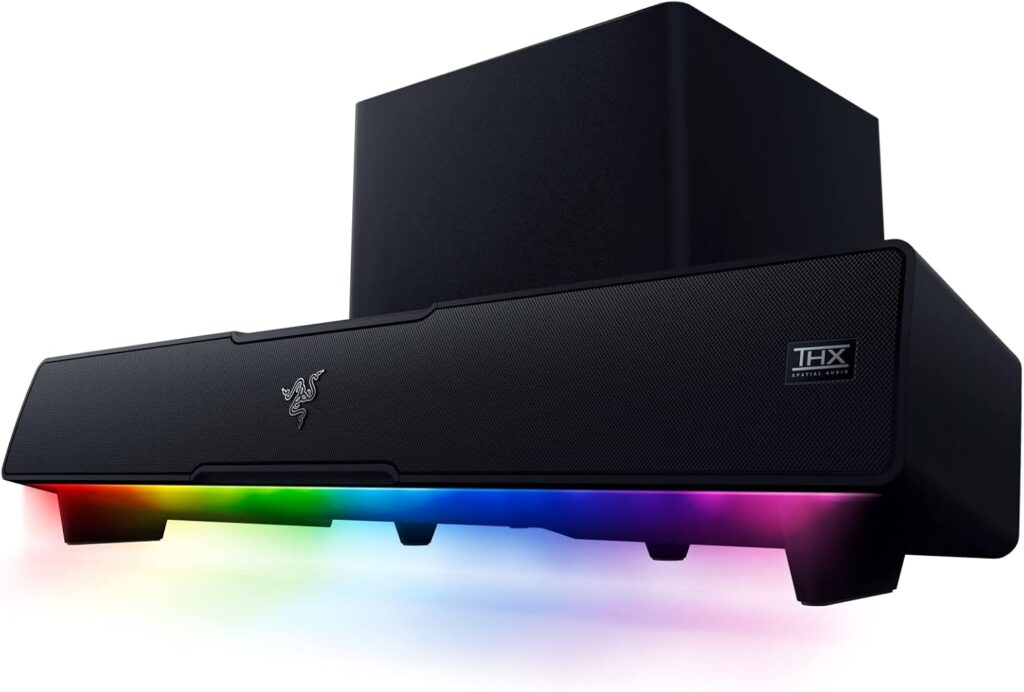
Razer’s Leviathan V2 Pro sits at around $197 and is the current benchmark for gaming soundbars it has similar Dolby Atmos ambitions, THX Spatial Audio support, and a longer track record on the market. Creative’s Sound BlasterX Katana V2 is another established option at a lower price point.
Without a price for the Gjallar, the competitive picture is incomplete. The 2.1.2 configuration with a wireless subwoofer and separate control hub suggests ASUS is positioning this above the Razer Leviathan V2 Pro likely $299 or higher based on the feature set and ROG premium pricing patterns. If it lands at $249, it’s aggressively priced and seriously competitive. At $349 or above it needs to justify the premium over the established competition in independent listening tests.
The Gjallar’s inclusion of HDMI 2.1 eARC and 4K 120Hz passthrough is a genuine differentiator neither the Razer nor Creative equivalents offer this at comparable price points. For a PC gaming setup where a single HDMI cable handles both video and audio routing, that’s a meaningful convenience advantage.
The TechPowerUp community concern worth addressing
TechPowerUp’s coverage of the announcement included a reader comment thread where several experienced audio community members expressed scepticism about gaming soundbars generally noting that Dolby Atmos spatial processing from a desktop soundbar often produces muddy positional audio rather than the precise imaging the spec sheet implies, particularly in small room environments.ROG Azoth Extreme Edition 20 and Harpe II Review
This is a legitimate concern. Dolby Atmos height channels in a soundbar work by reflecting audio off the ceiling which means ceiling height, room acoustics, and desk position all affect the result significantly. In a typical gaming room with 2.5m ceilings and mixed furniture, the height effect is modest rather than dramatic. The Gjallar’s upward-firing channels can also be turned off if the room doesn’t support them.
This doesn’t make the Gjallar a bad product. It means the experience will vary considerably by environment, and anyone expecting the Gjallar to replicate the positional precision of a surround speaker setup should calibrate expectations appropriately.
What to do right now
ASUS has confirmed the Gjallar is coming but has not confirmed pricing or a specific launch date beyond “coming soon.” Watch the ASUS ROG official newsroom and major retailer pages for availability announcements. When pricing is confirmed, check it against the Razer Leviathan V2 Pro at current pricing that comparison will immediately clarify the value case.
If you’re in the market for a gaming audio upgrade right now and can’t wait: the Razer Leviathan V2 Pro is the current recommendation while the Gjallar is unpriced. If the Gjallar launches at a competitive price with strong reviews, it’s worth switching to.
The Gjallar is the most feature-complete gaming soundbar announced in 2026. Whether it’s the best value gaming soundbar of 2026 is a question that only arrives with a price tag.