
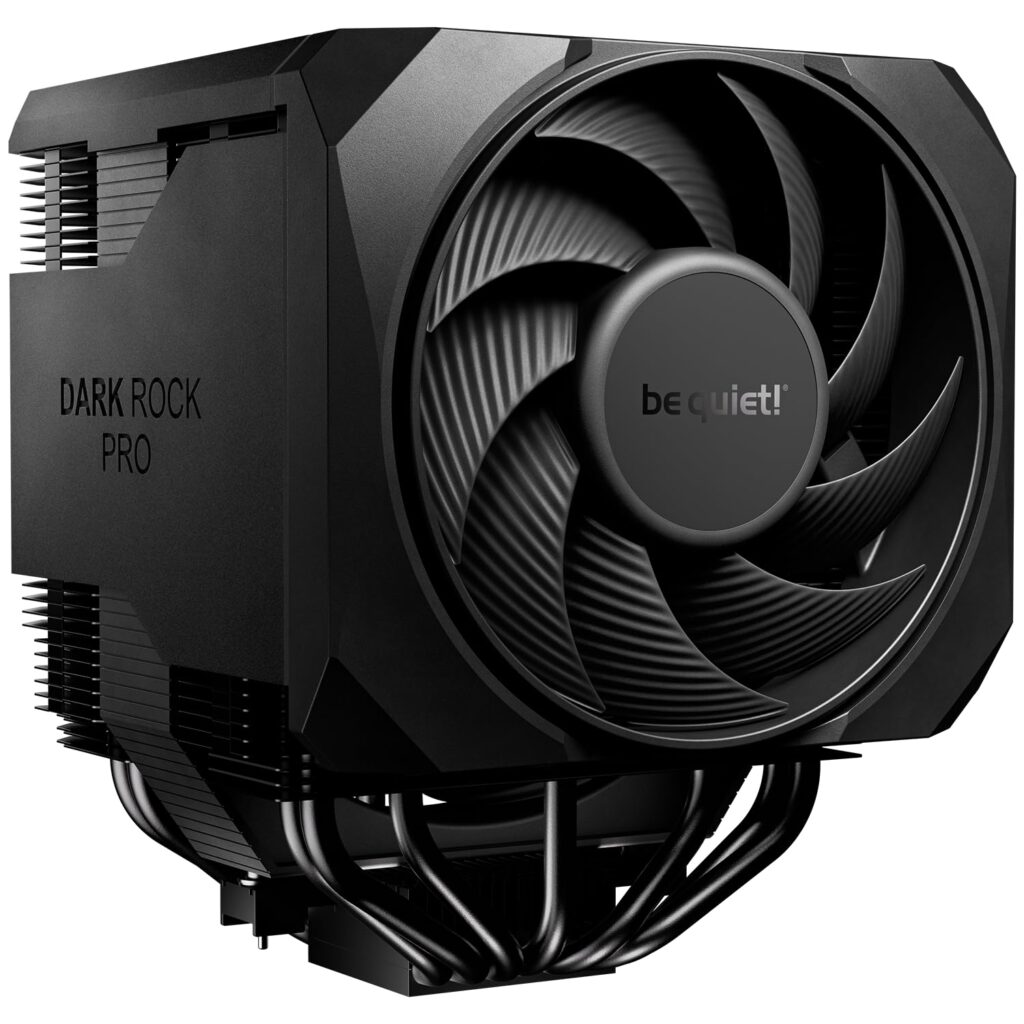
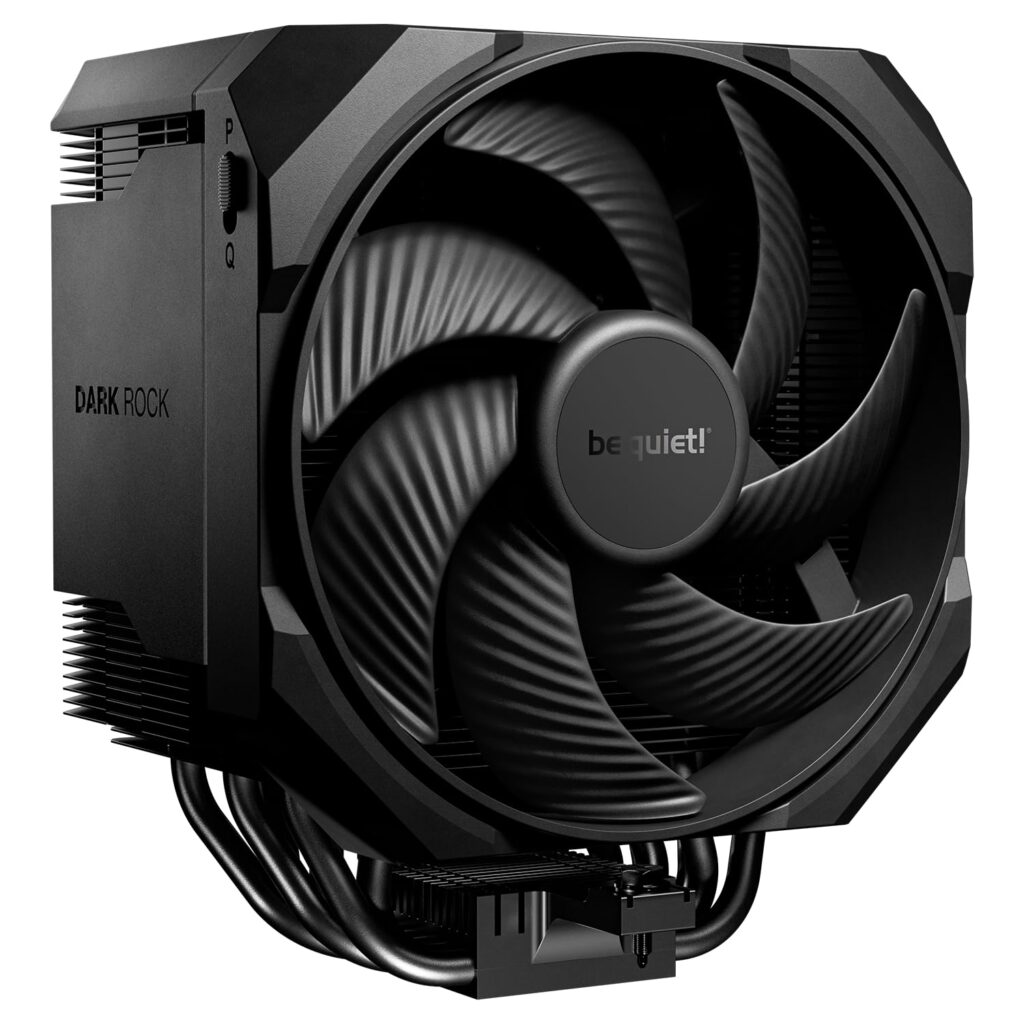
The Dark Rock series has been a reference point in premium air cooling for the better part of a decade. Not because it’s always the absolute performance leader the Noctua NH-D15 has held that position for years but because it consistently delivers serious thermal performance at acoustics that live up to the brand name, with a build quality that justifies the premium over budget alternatives.
The Dark Rock Pro 6 and Dark Rock 6 launched May 19, 2026 at $129.90 and $109.90 respectively. Both are available now. Here’s what actually changed and whether either is the right cooler for your build.
The headline feature — semi-passive mode
Every previous Dark Rock model ran its fans continuously. The be quiet dark rock 6 series introduces semi-passive operation through a hardware switch on the cooler body. In semi-passive mode, fans don’t spin at all during low-load scenarios browsing, light productivity work, video playback. They activate automatically when temperatures climb past a threshold and spin down again when the load drops.
This is a meaningful feature for a specific type of build. A home office PC that games in the evenings and sits idle during work hours produces zero fan noise from the CPU cooler for hours at a time in semi-passive mode. Silent Wings fans are already among the quietest fans available at any speed the ability to stop them entirely takes be quiet!’s acoustic credentials to their logical conclusion.
The hardware switch is the correct implementation. A software toggle in a BIOS menu would require adjustment per-system. A physical switch on the cooler handles it once at installation and stays set regardless of OS reinstalls, BIOS updates, or system changes.Air Cooler vs AIO CPU Cooler 2026
Dark Rock 6 — $105.57
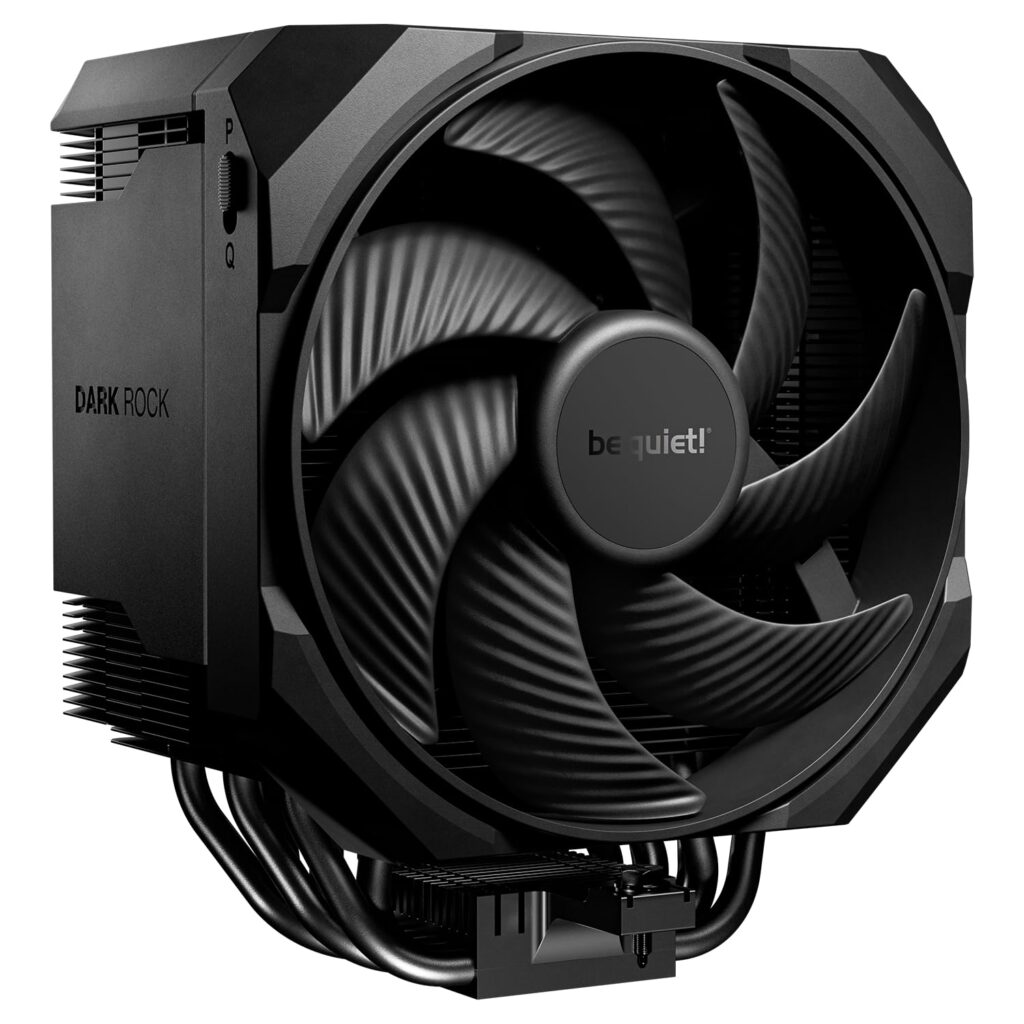
The standard Dark Rock 6 is a single-tower design. Six heat pipes, one 135mm Silent Wings PWM fan, asymmetrical heatsink layout with cutouts for RAM and VRM cooler clearance. The nickel-plated copper base is compatible with liquid metal thermal compounds an unusual specification for a cooler at this price that reflects be quiet!’s serious approach to thermal contact quality.
The asymmetrical layout is worth understanding. Single-tower coolers with symmetrical fin stacks frequently conflict with tall DDR5 heatspreaders on AM5 boards the cooler overhangs the first DIMM slot and prevents installation or requires removing the cooler to seat RAM. The Dark Rock 6’s cutouts and offset fin arrangement are designed to prevent this. TechPowerUp community discussion highlighted this as a specific improvement over the Dark Rock 5’s tighter clearance.
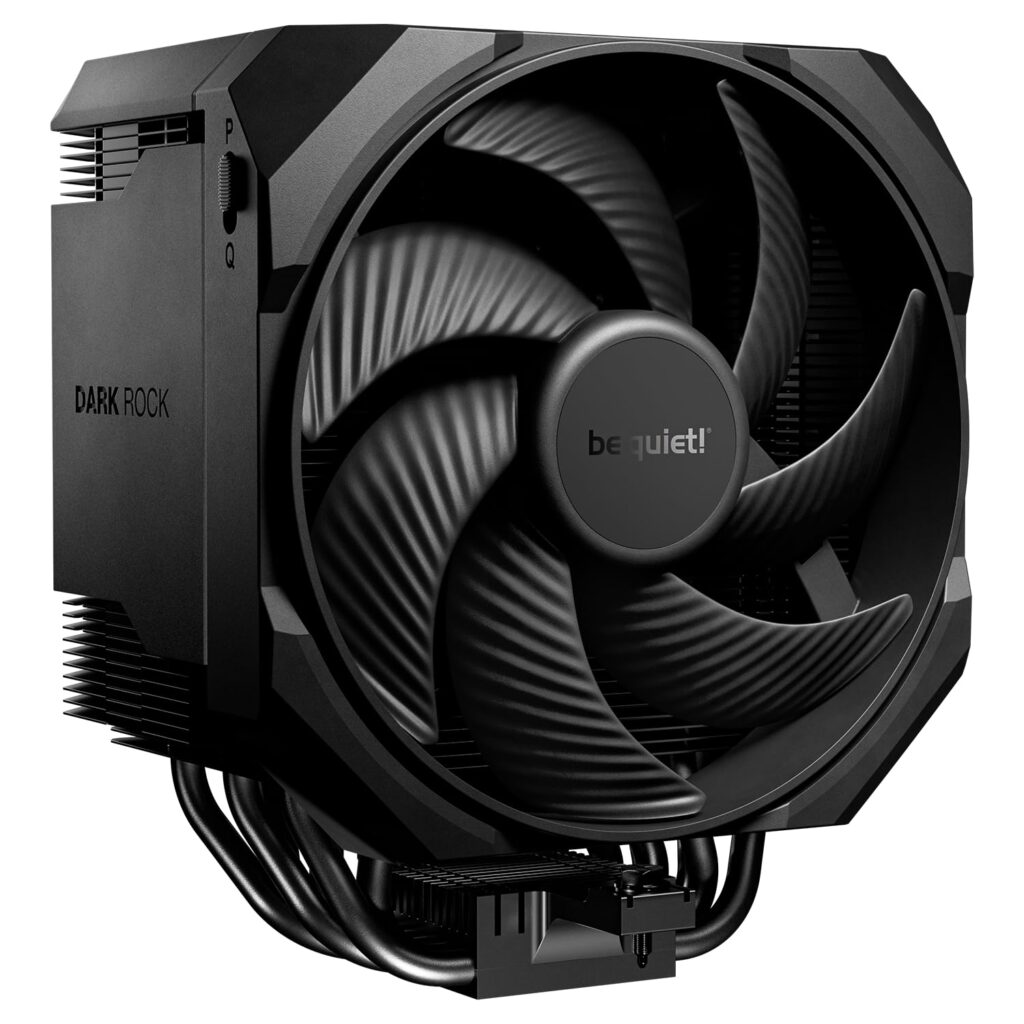
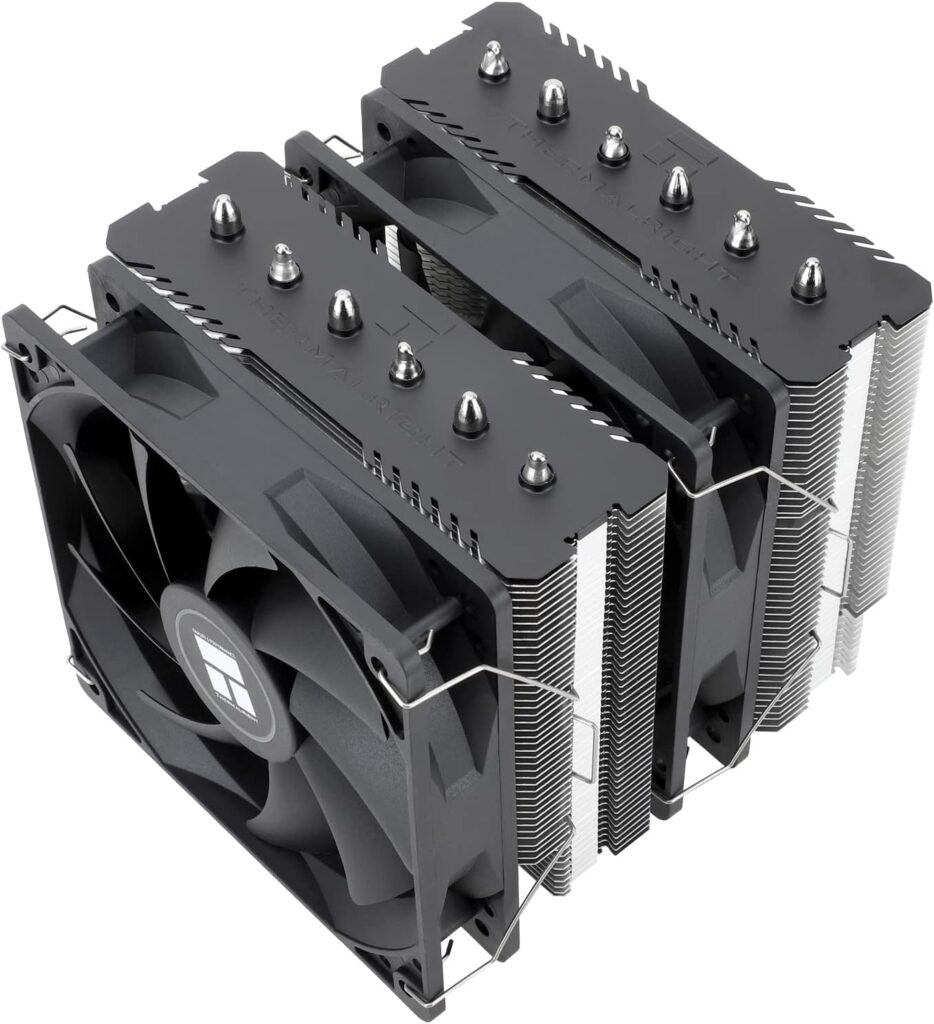
At $105.57 the Dark Rock 6 competes directly with the Thermalright Peerless Assassin 120 SE at approximately $39-$35 the cooler recommended throughout SpecClear’s build guides for its exceptional value. That comparison deserves an honest framing: the Peerless Assassin 120 SE’s thermal performance at $39-$35 is remarkable and the Dark Rock 6 at $109.90 needs to justify a $75 premium.
The justification exists in specific scenarios. The Dark Rock 6’s acoustics at equivalent thermal performance are measurably better Silent Wings fans are engineered for quiet operation at a level that Thermalright’s bundled fans don’t match. For a home office build where noise matters significantly, or a living room setup where fan noise is unacceptable at any load, the premium is justified. For a standard gaming build in a room where the monitor, GPU fans, and case fans already produce ambient noise, the $39-$35 Peerless Assassin delivers adequate acoustic performance at a fraction of the price.
Dark Rock Pro 6 — $152.34
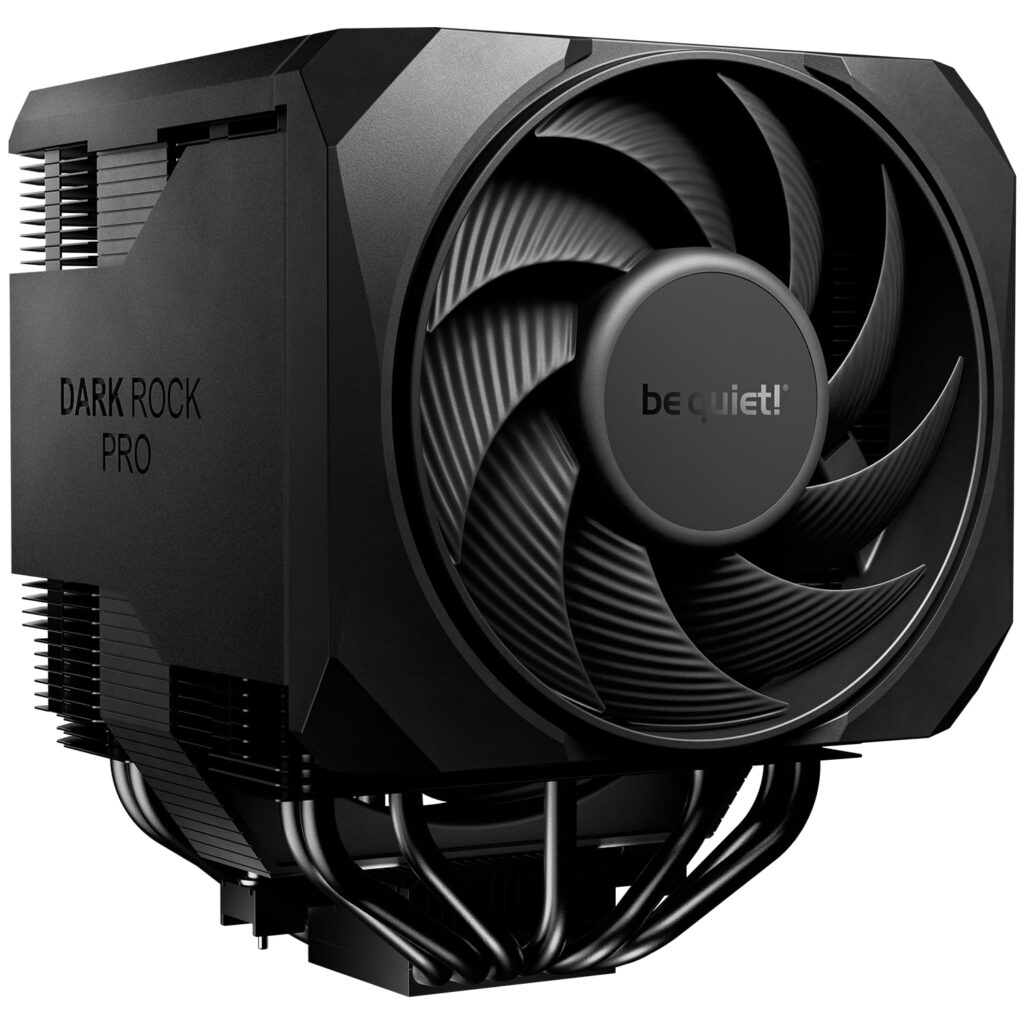
The Dark Rock Pro 6 is the dual-tower variant and the flagship of the new generation. Seven heat pipes versus the standard model’s six. Two Silent Wings fans a 135mm primary fan and a 120mm secondary fan positioned between the towers. The dual-tower configuration and additional fan allow the Pro 6 to dissipate more heat per unit of time, making it the correct choice for higher-TDP CPUs under sustained workloads.Noctua NL-LC1 AIO Review
The height-adjustable front fan is the Pro 6’s most practical new feature. The front Silent Wings fan can be moved vertically along the fin stack during installation a useful accommodation for tall DDR5 kits that would otherwise require repositioning the cooler or compromising fan positioning. It’s a small detail that saves real frustration during builds with tight RAM clearance.What Is Thermal Throttling and How Do You Fix It
The revised heatsink geometry is be quiet!’s claim to improved performance over the Pro 5 “redesigned from scratch for better heat dissipation” according to their materials. Independent benchmark data will confirm how much of that claim translates to measured temperature differences, but the Pro 5 was already a strong performer and this generation adds the semi-passive mode and compatibility improvements on top.
At $152.34 the Dark Rock Pro 6 sits $20 above the standard model and $20 below the Noctua NH-D15 G2 at approximately $159. The NH-D15 G2 remains the performance benchmark based on current testing data. Whether the Pro 6 closes the gap meaningfully depends on independent reviews that weren’t yet available at launch the May 19 release is recent enough that comprehensive testing data across a full CPU range hasn’t accumulated yet.
Liquid metal compatibility — what it means in practice
Both coolers ship with a nickel-plated copper base. Standard thermal paste bonds well to nickel plating. Liquid metal thermal compounds Thermal Grizzly Conductonaut being the most commonly used do not bond well to standard copper or aluminium and can cause galvanic corrosion over time on untreated surfaces. Nickel plating prevents this reaction, making liquid metal a viable option for builders who want to extract maximum thermal performance from a CPU with a known thermal paste headroom.
Liquid metal application is not recommended for most builders it’s electrically conductive, flows if not applied carefully, and the performance gain over premium paste is typically 3-5°C. The nickel-plated base is a specification that matters to a small percentage of users who already know what liquid metal is and have a reason to use it.
Which one to buy
Buy the Dark Rock 6 at $105.57 if: acoustics are a genuine priority in your build, you’re on a Ryzen 7 9700X or similar mainstream gaming CPU where the standard Dark Rock 6’s single-tower design is thermally adequate, and the $75 premium over the Thermalright Peerless Assassin 120 SE is justified by the acoustic improvement your specific environment requires.
Buy the Dark Rock Pro 6 at $152.34 if: you’re running a Ryzen 9 9950X3D or Intel Core Ultra 9 285K under sustained multi-core workloads, you want the dual-tower thermal headroom for a CPU that benefits from it, or acoustics are the primary priority and the dual-fan configuration’s noise-normalised performance advantage justifies the step up.
If your build is a standard gaming PC in a typical room monitor noise, GPU fans, case fans all contributing to ambient noise the Thermalright Peerless Assassin 120 SE at remains the correct value recommendation. The Dark Rock 6 series earns its premium for specific use cases. It doesn’t replace the value case for budget builds.