SpecClear earns a commission if you buy through Newegg links on this page, at no extra cost to you.
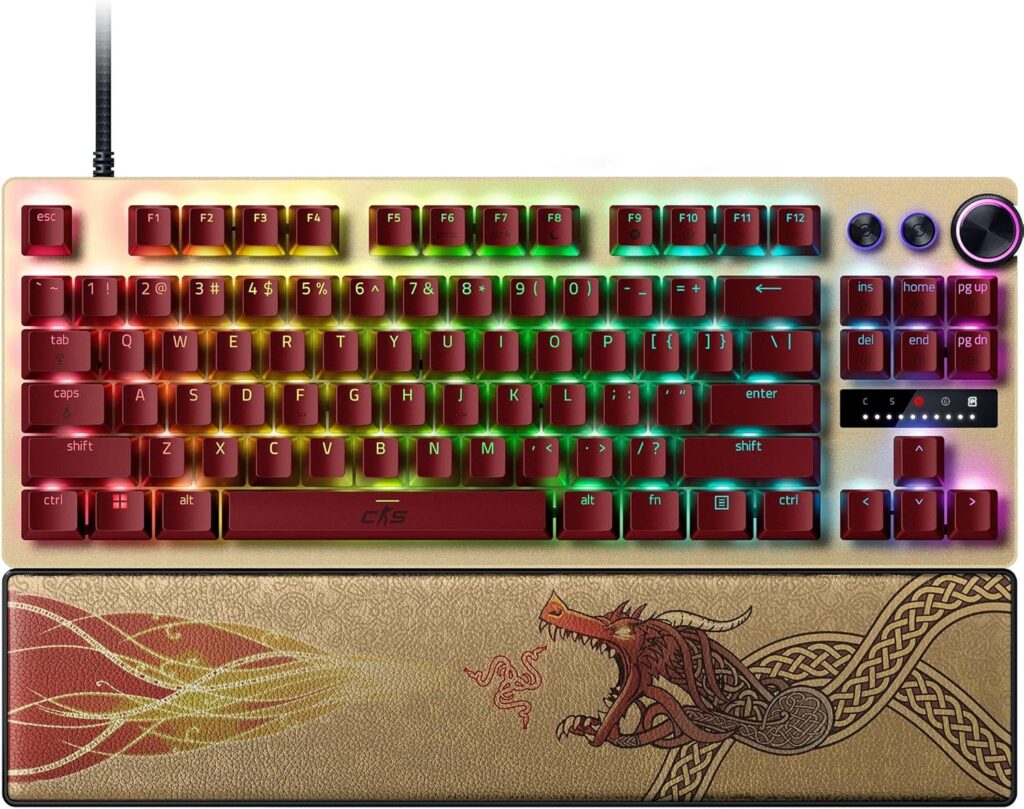
The Razer Huntsman V3 Pro TKL is the keyboard most competitive PC gamers end up reading about when they start researching Rapid Trigger keyboards in 2026. Analog Optical Gen-2 switches, 0.1mm Rapid Trigger, 8,000Hz polling, adjustable actuation from 0.1mm to 4.0mm, aluminum top plate, doubleshot PBT keycaps, a multi-function digital dial, and a magnetic leatherette wrist rest, all in a TKL layout at about $160 on Newegg or $219.99 at full list price.
It’s an impressive specification sheet, and it also has three documented problems any buyer should know about before ordering.
What Analog Optical switches actually do differently
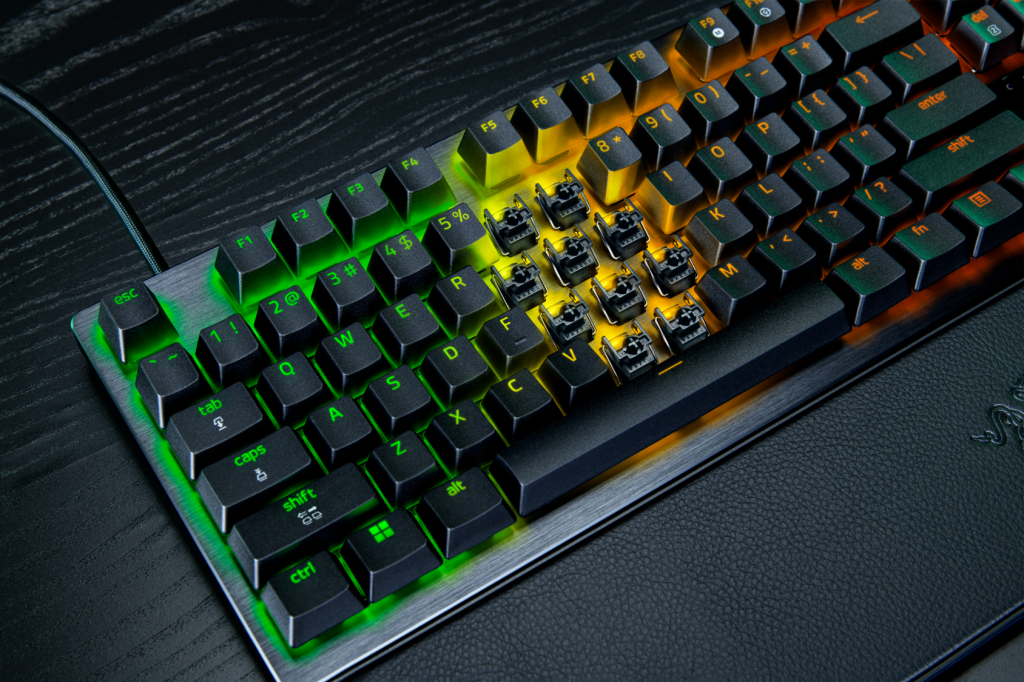
The keyboard market in 2026 splits between Hall Effect magnetic switches and Razer’s Analog Optical Gen-2 approach. Both technologies eliminate the fixed actuation point that defines traditional mechanical switches. Both support Rapid Trigger where the key resets immediately upon any upward motion rather than waiting for a fixed 1.8mm reset point. Both support adjustable actuation changing how far you press before the keystroke registers. Our best gaming keyboard guide compares both switch types.
The difference is the mechanism. Hall Effect switches use a magnet in the stem and a sensor that reads field strength. Analog Optical Gen-2 uses an infrared beam: when the stem descends, it interrupts the beam at a measurable position along the travel. Light-based sensing is not affected by magnetic interference, temperature-related changes in magnet strength, or the manufacturing variance in magnet positioning that creates the deadzone inconsistencies Hall Effect keyboards manage.
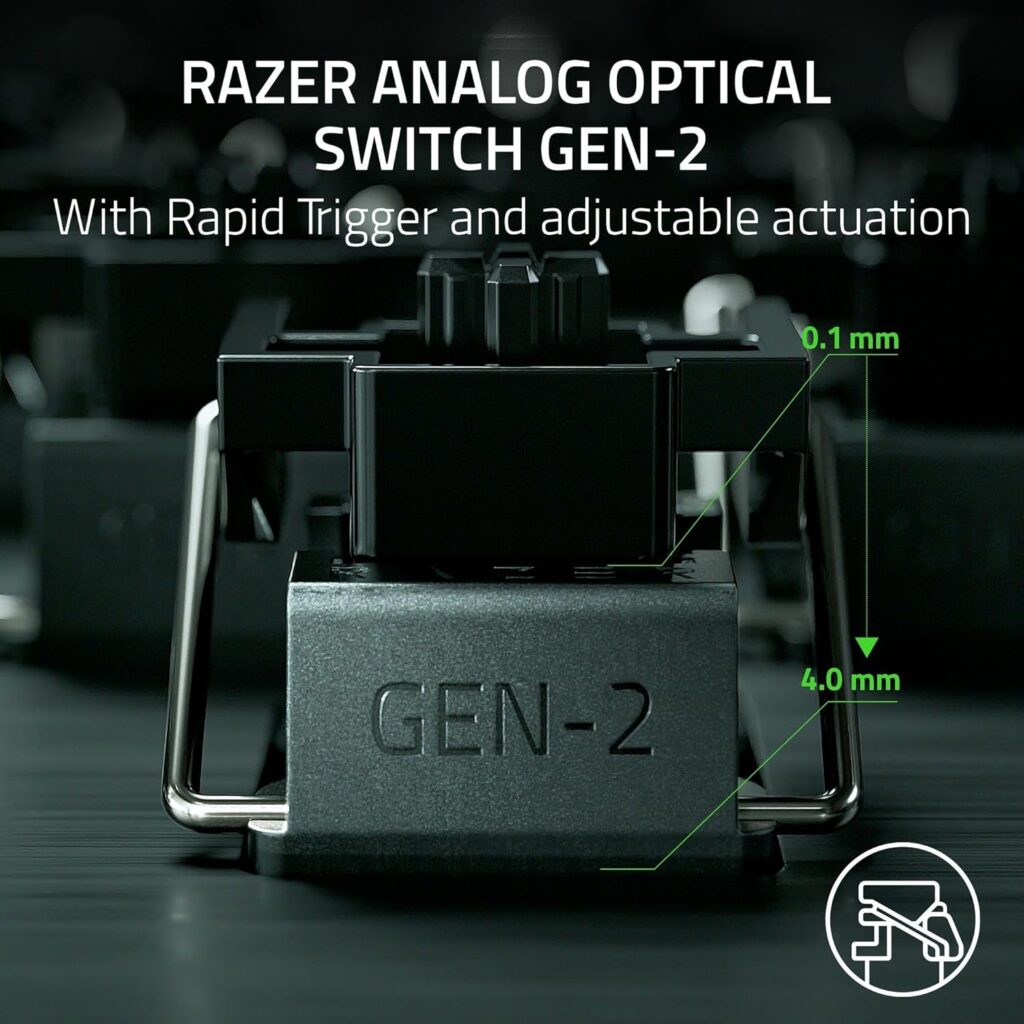
Razer claims Analog Optical Gen-2 achieves about 2.5x better top deadzone management than the closest Hall Effect competitor across 20 measurements, with the deadzone being the distance between the top of key travel and where the switch first responds. In practice this means the Huntsman V3 Pro TKL starts responding to keypresses marginally faster from the resting position than Hall Effect alternatives at equivalent sensitivity settings. If you play some games on a pad instead, our guide to setting up a gaming controller on PC covers that side.
Whether this translates to measurable competitive advantage depends on your sensitivity settings. At 0.1mm actuation the difference between optical and Hall Effect is a laboratory measurement. In real gameplay, consistency matters more, and the optical mechanism delivers even actuation across keys without the per-switch calibration variance some Hall Effect boards show.
What’s genuinely excellent
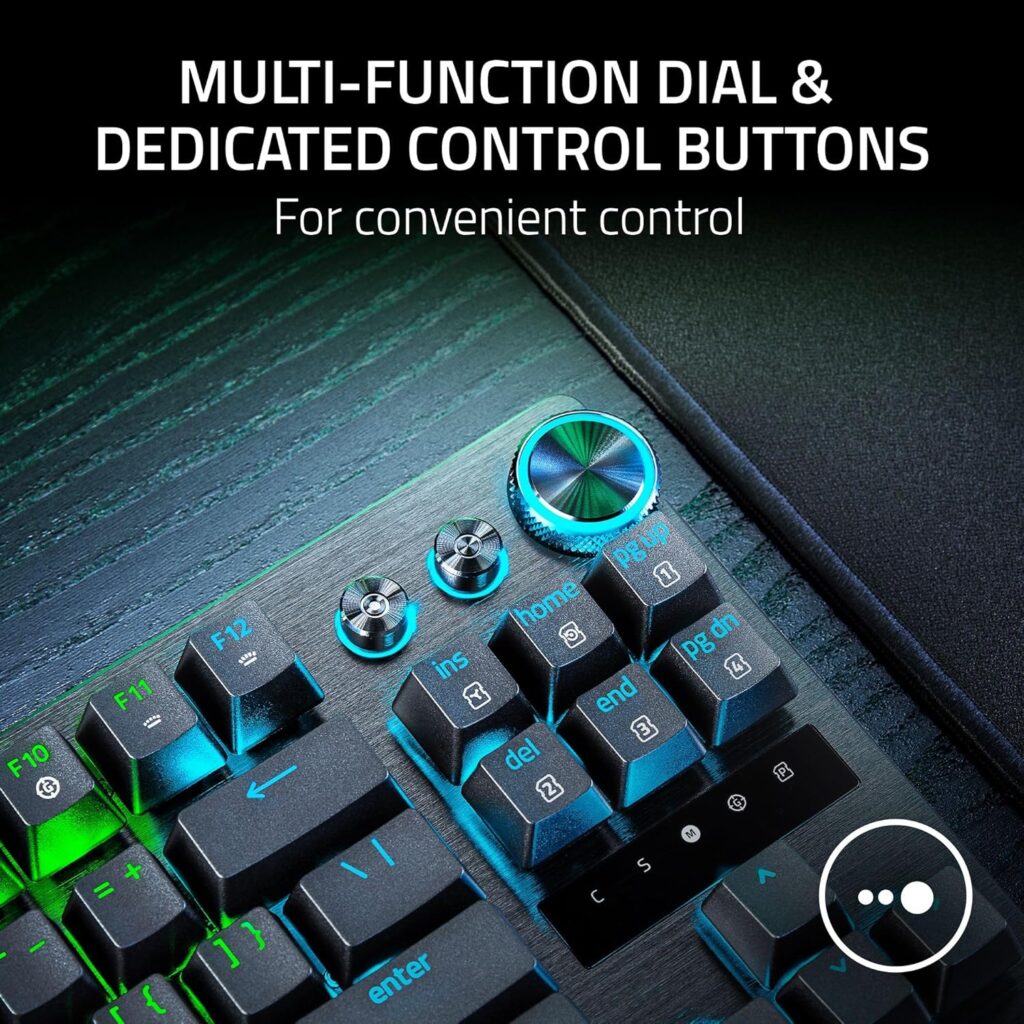
Build quality at this price is premium: brushed aluminum top plate, textured doubleshot PBT keycaps that resist shine, and solid construction throughout. The multi-function digital dial handles volume, media, scroll, and zoom with satisfying precision, a feature that sounds minor until it becomes part of daily workflow. The magnetic leatherette wrist rest attaches and detaches cleanly and is included in the box.
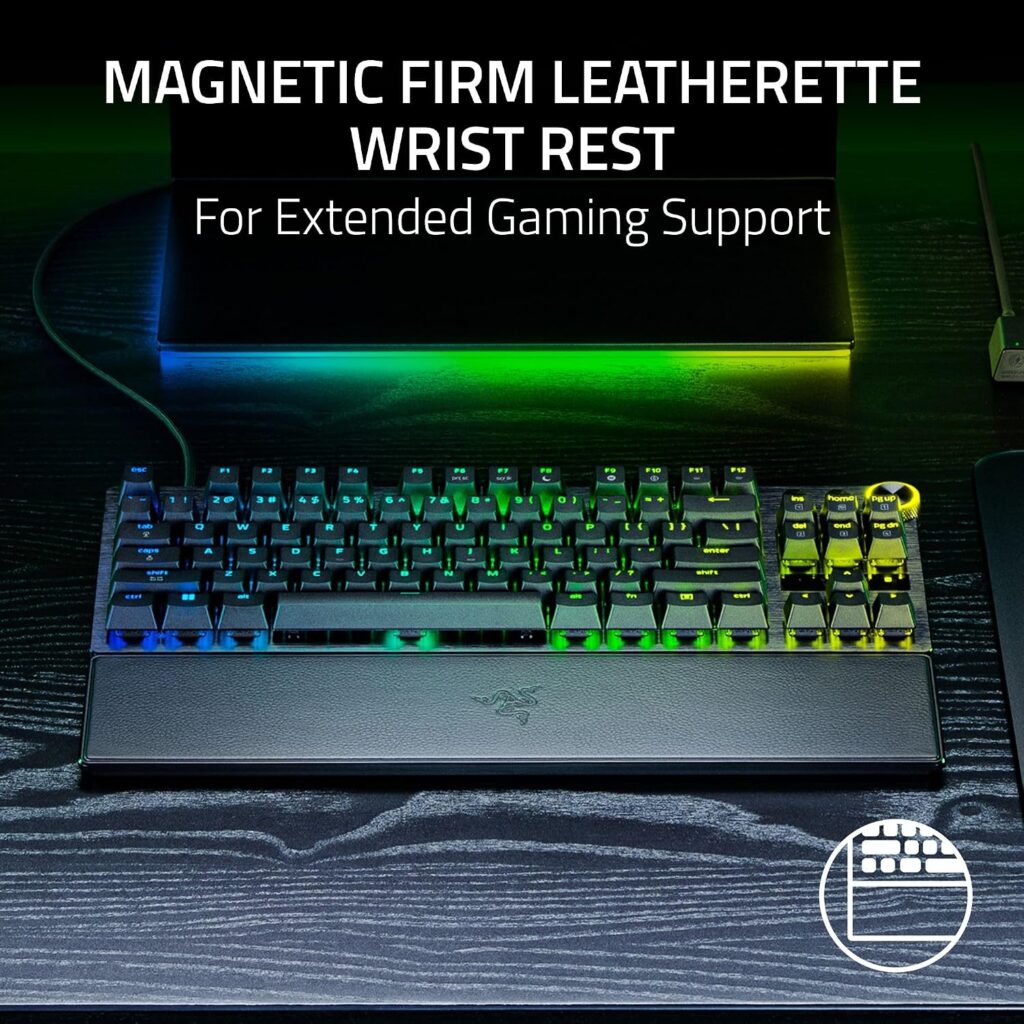
The actuation range is among the widest available: 0.1mm to 4.0mm in 0.1mm increments per key. Setting WASD to 0.2mm for faster movement input while parking ability keys at 1.5mm to avoid misclicks is the competitive use case, and the Huntsman handles that split more granularly than most rivals. You can check the current price of the Razer Huntsman V3 Pro on Newegg.
The CS2 Counter-Strike 2 Edition at $269.99 adds CS2-specific onboard profiles and keycap design, while the functional hardware stays identical.
The three issues that need stating clearly
First: RGB coil whine affects 15–30% of units according to independent analysis of 327 user reports. Coil whine is electrical noise from the keyboard’s RGB power circuitry at certain brightness levels, a high-pitched tone that gets maddening at a quiet desk with headphones off. The incidence rate is high enough to treat as a QC concern, not a freak defect. If you get coil whine, return it; don’t assume your unit is typical. Buy from a retailer with a straightforward return policy specifically because of this issue.
Second: Valve banned Snap Tap on CS2 servers, and that ban remains in effect as of September 2026. Snap Tap (Razer’s term for SOCD / Simultaneous Opposing Cardinal Directions handling that auto-resolves conflicting directional inputs) is treated as a gameplay advantage violation on CS2 official servers. If CS2 is your main game, that removes one of the keyboard’s headline competitive features for you. Valorant and Apex Legends have not banned SOCD handling as of this writing; check current status for your primary title before assuming the feature is usable.
Third: Synapse 4 has documented profile-wiping bugs affecting roughly 18% of users. Synapse 4 is required for per-key actuation, Rapid Trigger sensitivity, and onboard profiles, and a bug can wipe saved profiles after software updates. The workaround is exporting profiles manually before any Synapse update: inconvenient, but manageable. Razer has acknowledged it and patches have reduced the incidence, though reports through mid-2026 still show residual resets.
How it compares to the Wooting 80HE
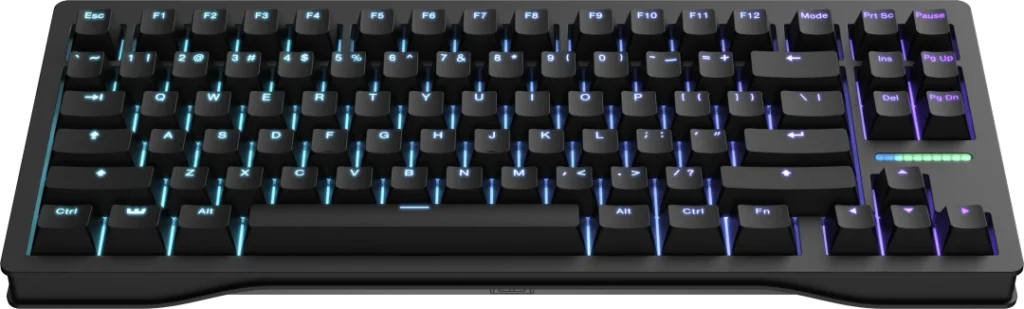
The Wooting 80HE at $199 is the direct comparison: the benchmark competitive keyboard from the established Hall Effect leader. Both support 0.1mm Rapid Trigger, 8,000Hz polling, and per-key actuation adjustment. The Wooting 80HE’s Lekker V2 switches are Hall Effect. The Huntsman V3 Pro TKL’s Gen-2 switches are Analog Optical.
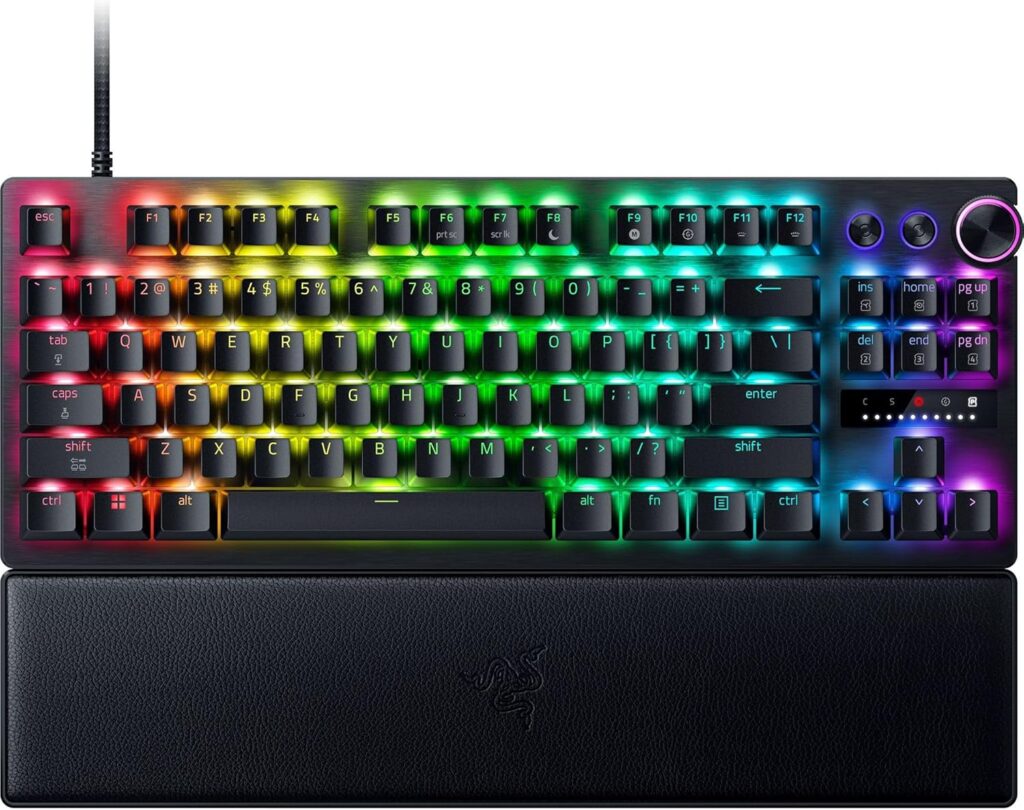
The Huntsman V3 Pro TKL’s build quality is higher: aluminum plate, PBT keycaps, included wrist rest, and digital dial make a more premium package than the Wooting 80HE’s plastic chassis. Wootility software is more polished and feature-complete than Synapse 4. At about $160 on Newegg (marketplace seller), the Huntsman now costs about $40 less than the Wooting 80HE at $199. The Huntsman has the coil whine issue; the Wooting doesn’t. The Razer Huntsman V3 Pro is listed on Newegg.
For pure competitive gaming on a solid budget, the Wooting 80HE wins on value. For builders who want the premium build quality and analog optical’s specific advantages and are buying from a returnable source in case of coil whine, the Huntsman V3 Pro TKL is the more complete product.
The verdict
The Razer Huntsman V3 Pro TKL is technically excellent. The Gen-2 Analog Optical switches deliver the finest actuation precision available in a competitive keyboard. The build quality justifies the premium. The coil whine issue and Synapse 4 bugs are real documented problems that affect a meaningful percentage of buyers.
Buy it from a retailer with a no-questions return policy, then test immediately for coil whine in a quiet room with RGB at various brightness levels. Export your profiles before every Synapse update. If your unit is clean, it’s one of the best competitive keyboards available. If it has coil whine, return it and order another or switch to the Wooting 80HE.
Don’t buy it specifically for CS2 Snap Tap; that feature is banned on official servers. Do buy it for Valorant, Apex Legends, or any competitive game where SOCD handling is permitted and 0.1mm Rapid Trigger precision is the goal.