SpecClear earns a commission if you buy through Newegg links on this page, at no extra cost to you.
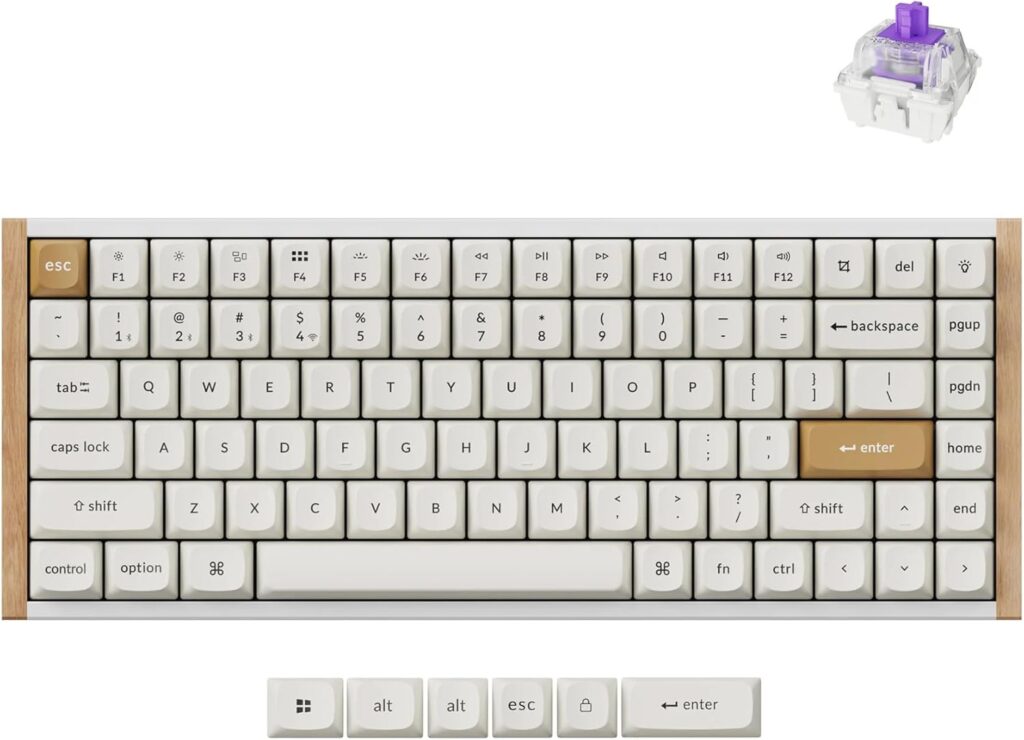
Three years ago, Hall Effect gaming keyboards were a niche product championed by one Dutch startup and priced out of most budgets. Today every serious keyboard manufacturer (Corsair, ASUS, Logitech, Razer, SteelSeries, Keychron) has a Hall Effect lineup, and the technology now starts at about $40 (the Redragon K617 HE on Newegg in October 2026). That changes everything about how to approach a gaming keyboard purchase in 2026.
This guide best gaming keyboard 2026 answers the question most keyboard articles dodge: do you actually need Hall Effect, or does a quality mechanical keyboard still do the job? Then it tells you which specific keyboards to buy.
Hall Effect vs mechanical: the honest answer
A traditional mechanical switch has two fixed points: an actuation point where the keypress registers and a reset point where releasing the key deregisters it. Both are physically hardcoded into the switch mechanism typically 2.0mm actuation and 1.8mm reset. After pressing a key you have to release it past the reset point before the keyboard recognises you let go. This is how mechanical keyboards have worked for decades and it’s fine for most gaming use cases.
Hall Effect switches use a magnet embedded in the switch stem and a sensor in the housing to detect exact position along the travel at any point. There’s no physical contact between components the sensor reads magnetic field strength rather than a spring-and-contact mechanism. This enables two features mechanical switches fundamentally cannot replicate.
Rapid Trigger adjusts the reset point dynamically rather than fixing it at 1.8mm. You can set the key to re-actuate after as little as 0.1mm of additional travel rather than waiting for full physical release. In CS2, counter-strafing requires releasing the movement key before the opposite direction registers with Rapid Trigger you can re-actuate in 0.1mm of travel rather than the full 1.8mm mechanical reset distance. The difference in counter-strafe speed is measurable and, at competitive levels, meaningful.
Adjustable actuation lets you change the actuation point per key setting WASD to a shorter actuation of 1.0mm for faster movement registration and ability keys to 2.0mm to prevent accidental presses. On a mechanical keyboard every key actuates at exactly the same depth regardless of what it does.
Who actually benefits from Hall Effect
Competitive FPS players who play CS2, Valorant, or Apex Legends at a serious level and care about movement mechanics. Rapid Trigger’s advantage is most pronounced in games where counter-strafing speed, directional input precision, and key release timing directly affect outcomes. A budget board like the Gamakay NS68 makes this accessible without financial risk if you play these games competitively and haven’t tried Rapid Trigger, that’s the correct entry point.
Single-player gamers, RPG players, strategy players, and anyone who types significantly at the same keyboard don’t need Hall Effect. A quality mechanical linear Gateron Yellow, Cherry MX Speed Silver provides a better typing experience for most people and costs less. The performance ceiling that Hall Effect provides is specifically about millisecond-level input timing that matters in competitive gaming and almost nowhere else.
The honest summary: Hall Effect for competitive FPS, mechanical for everything else, if you do both, Hall Effect is the correct call because it doesn’t hurt typing and it does help competitive gaming.
The keyboards worth buying
Budget: Gamakay X NaughShark NS68 ($49.99 list)
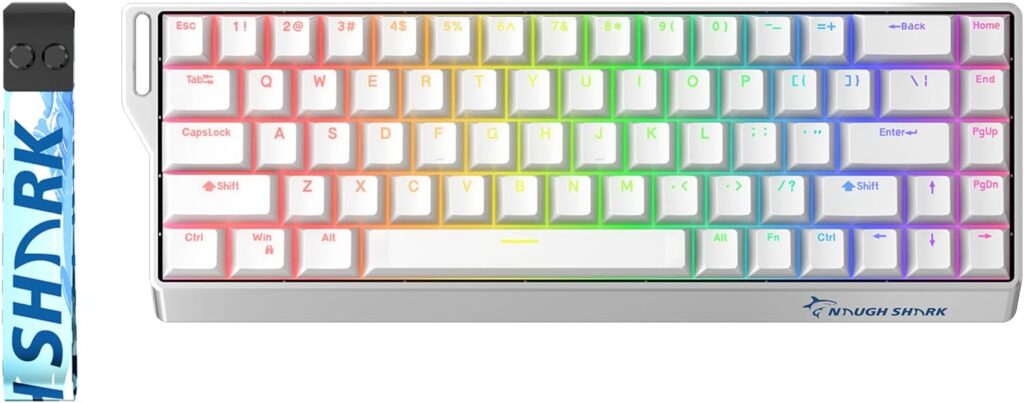
The keyboard that broke the Hall Effect price floor in 2026. Genuine Rapid Trigger, 8,000Hz polling, adjustable actuation per key, 65% layout with arrow keys. PC Gamer called it the new best budget gaming keyboard after testing. The trade-offs at this price are real: a plastic chassis with noticeable flex, stock switches that don’t feel as refined as Wooting’s Lekker units, and no wireless. The function adjustable actuation, Rapid Trigger, 8KHz polling works as advertised.
For a first Hall Effect keyboard or anyone who wants to try Rapid Trigger before committing to a premium board, the NS68 is the correct starting point. Don’t buy it if typing feel matters or if wireless is a requirement. Its full name is the Gamakay X NaughShark NS68. In October 2026 it’s sold out on Gamakay’s own store, where the wired version lists at $49.99, and unavailable on Amazon, so check stock before you plan around it.
Premium wireless: Keychron K2 HE (about $224, marketplace sellers only)
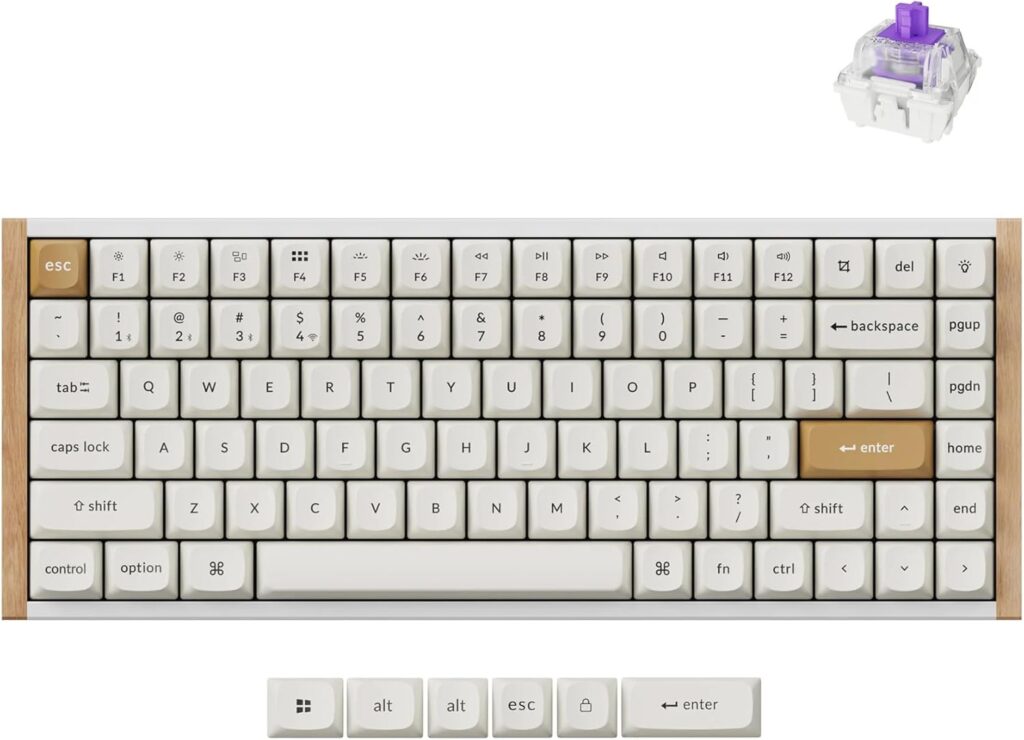
The best wireless Hall Effect keyboard at any price: 75% layout, 2.4GHz wireless at 1,000Hz polling plus USB-C wired, Keychron magnetic switches with 0.1mm Rapid Trigger, and about 110-hour battery life without lighting. The Keychron Launcher configuration tool is web-based and easy to use, second only to Wootility according to most reviewers. PC Gamer named it the best wireless Hall Effect keyboard they’ve tested. Our pick here is the Keychron K2 HE (about $224 from marketplace sellers on Newegg).
1,000Hz polling rather than 8,000Hz is the trade-off versus wired alternatives. For most competitive players this matters less than it sounds the advantage of 8KHz over 1KHz is measurable in controlled testing and imperceptible during actual gameplay for most people. If wireless freedom is the priority and you want Hall Effect performance, the K2 HE is the answer.
Best overall: Wooting 80HE (~$199)
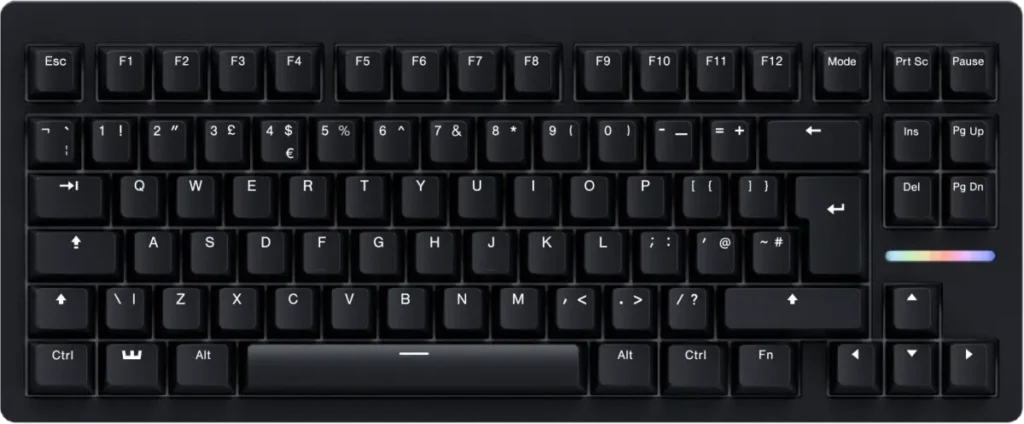
The keyboard that popularised Hall Effect for mainstream gaming and still leads the category in 2026. PC Gamer’s top pick in their March 2026 update. The most-used keyboard brand among professional esports players on Wooting’s Lekker V2 Hall Effect switches, Tachyon Mode 8,000Hz polling, Rapid Trigger adjustable from 0.1mm to 4.0mm per key in 0.1mm increments. Wootility software is the best in the Hall Effect category per-key actuation configuration, multiple profiles, Rappy Snappy SOCD handling, Dynamic Keystroke for four distinct actions per key at different actuation depths.
The plastic chassis is the honest weakness, for a $199 keyboard, some buyers expect premium materials and the Wooting 80HE delivers a functional rather than luxurious build. If build feel matters alongside gaming performance, the Keychron Q1 HE 8K at $229.99 (Keychron’s own store, October 2026) with its 6063 aluminium double-gasket chassis is the step up. If pure competitive performance is the priority, the Wooting is still the call.
Premium typing and gaming: Keychron Q1 HE 8K ($229.99 at Keychron)
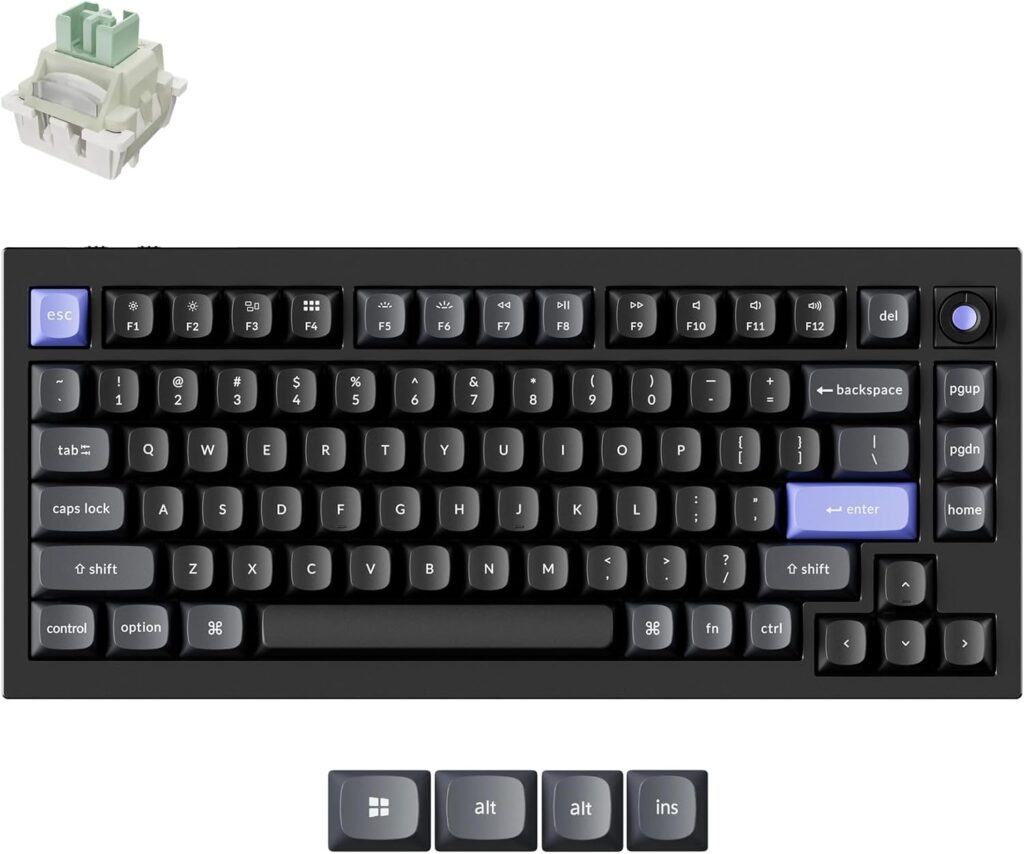
The answer for buyers who want Hall Effect gaming performance and a keyboard that feels exceptional to type on. 6063 aluminium double-gasket chassis, 8,000Hz polling, 0.01mm Rapid Trigger actually finer resolution than Wooting’s 0.1mm QMK/VIA open-source firmware support, and a sound profile GamesRadar described as one of the best among Hall Effect keyboards reviewed. It’s wired only, with no wireless option.
At $229.99 this competes with premium customs in build quality while delivering better competitive specs than most boards in its price range. The Keychron Launcher is capable but less polished than Wootility, so if software sophistication is the deciding factor, the Wooting 80HE at $199 is still the correct choice.
When mechanical still wins
If your gaming library is predominantly single-player games, RPGs, strategy titles, or anything where input timing in milliseconds doesn’t affect your outcomes, buy a quality mechanical keyboard. Gateron Yellow switches at 35g actuation force in a solid mid-range board like the Keychron V1 or Ducky One 3 deliver a better typing feel for daily use than most Hall Effect boards at equivalent prices, and the competitive advantage of Rapid Trigger is irrelevant for how you play.
The keyboard you enjoy typing on for eight hours is the correct keyboard. If that’s mechanical for you, buy mechanical. Hall Effect is not automatically better it’s better for a specific use case.
The quick decision
Budget competitive gaming: Gamakay NS68 ($49.99 list, check stock). Try Rapid Trigger on a cheaper board before spending more.
Wireless Hall Effect: Keychron K2 HE at about $224 (marketplace sellers only on Newegg). It costs more than the Wooting 80HE, so buy it only if you need wireless.
Best overall competitive pick: Wooting 80HE at $199, still the benchmark.
Premium build and gaming: Keychron Q1 HE 8K at $229.99 from Keychron. For buyers who want the full package, step up carefully and only for features you’ll use.
Typing-first with occasional gaming: Keychron V1 or Ducky One 3 with Gateron Yellow switches. Save the Hall Effect premium for competitive gaming use cases.