
Phanteks just reinvented what a PC case is supposed to do.
The Phanteks EX-Series cases announced at Computex 2026 are built around a fundamentally different idea about how air should move inside a PC. If they perform as advertised, they’ll force every other case manufacturer to rethink how they approach thermal design. If they don’t, they’ll be an expensive curiosity.
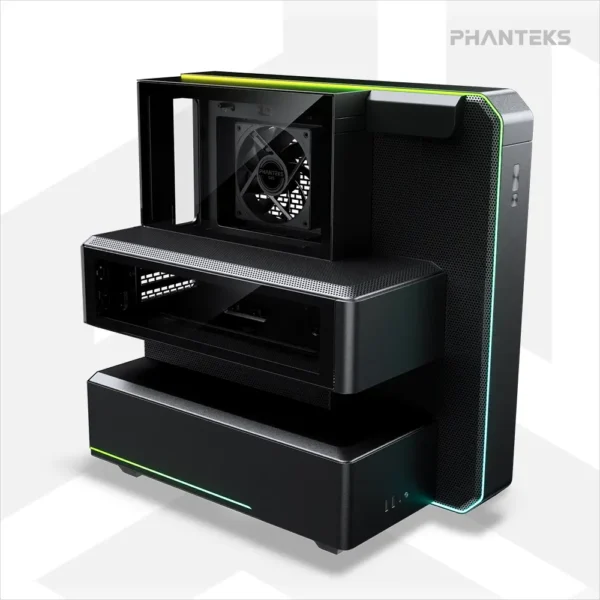
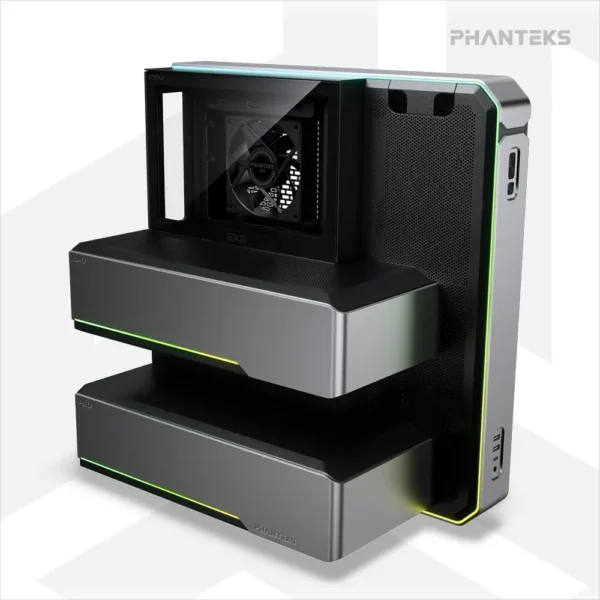
As of September 11, 2026, the EX5 family is available (Phanteks opened sales September 8). The aluminum EX6 and EX6 MAX remain on their September window at the Computex pricing. Independent thermal benches are still landing, so the big open question is still whether compartmentalized airflow beats a well-built conventional mid-tower once reviewers finish the hot-box tests.
This page covers the shipping EX5 family, the still-pending EX6 flagship tier, and the XT M5 budget mesh case if the EX platform is outside your budget.
The Phanteks EX5 and EX6: The Big Idea
Every conventional PC case works the same way, fans push air in from the front, it flows across components, and it exits out the back or top. The problem is that in a single shared air chamber, hot exhaust from the GPU mixes with air heading toward the CPU. The PSU sits in the same thermal environment as everything else. Air that’s already absorbed heat from one component gets pulled across another.
Phanteks’ solution is to stop treating the inside of a case as one big shared room.
The EX-Series divides the chassis into separate zones the CPU, GPU, and PSU each get their own isolated airflow path with fresh, non-recirculated air flowing directly to them. A single side-mounted fan handles the motherboard, VRMs, and M.2 storage separately. Nothing shares thermal exhaust with anything else.
The concept is called compartmentalized airflow, and the theoretical benefit is significant: each component runs cooler because it’s never breathing air that another component has already heated. Phanteks claims you can cool a serious system with fewer fans because the architecture is doing the work that extra fan count normally compensates for.
Whether real-world temperatures reflect the theory is what early EX5 benches still have to settle. The concept is sound. The execution remains to be proven across full review samples.
The EX5 Family: Steel, Accessible, Three Tiers
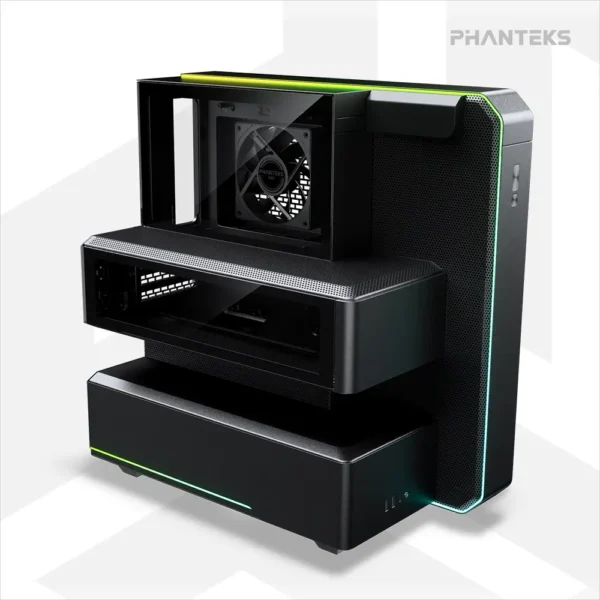
The EX5 is the entry point to the EX platform: steel construction instead of aluminum, same thermal architecture, and it is shipping now in black.
EX5: $109.99
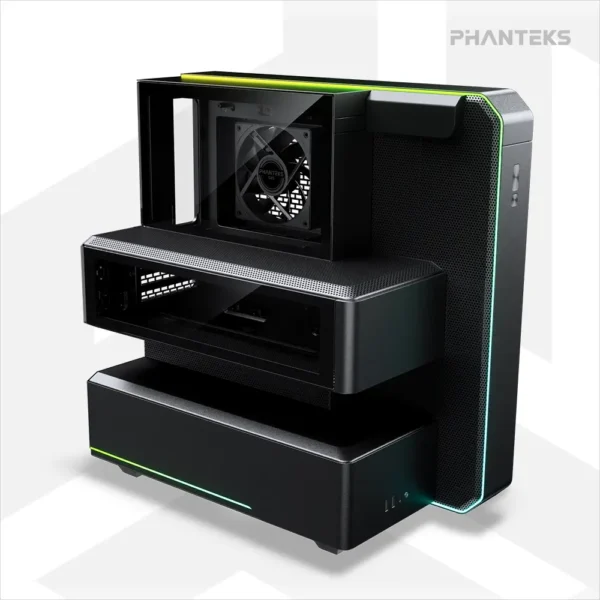
The base model chassis-only, no cooling included except You bring your own AIO. AIO tubing runs exposed although its visible rather than hidden behind panels. GPU chamber supports cards up to 358mm in length. Card thickness support is up to 3.5-slot in standard configurations, or 4-slot if your motherboard allows use of the top PCIe slot.
CPU cooler height is limited to 78mm in the liquid-cooling configuration. That rules out tower air coolers almost entirely, the compartmentalized design assumes you’re using an AIO, and the 78mm clearance reflects that. If you were planning to run a Noctua NH-D15 or a Be Quiet Dark Rock Pro, reconsider before buying this case. The NL-LC1 AIO that Noctua just launched is a natural pairing here.
Motherboard support covers standard ATX Phanteks hasn’t confirmed EATX compatibility for the EX5 at time of writing but with that in mind if you’re planning an EATX workstation board, verify before purchasing.
EX5 PLUS: $159.99
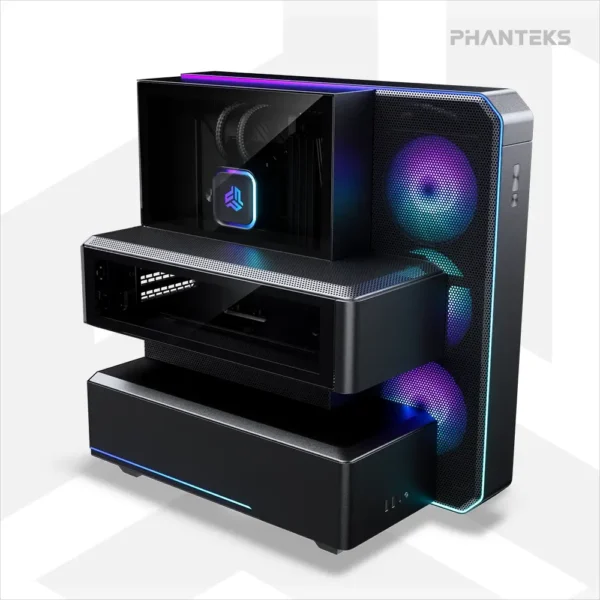
Adds an integrated 360mm AIO, the Phanteks 360S25-SE comes with 90-degree AIO tubing management that routes the tubes cleanly rather than leaving them exposed. The hidden tubing makes a significant visual difference and is the main reason to step up from the base model if you were going to buy an AIO separately anyway. Check current AIO pricing before deciding.Now depending on what you’d spend on a standalone cooler, the $50 premium may or may not make sense.
EX5 MAX: $229.99
Same integrated AIO as the PLUS, adds a 6-inch LCD display on the pump head. The display connects to Phanteks’ Nexlinq ecosystem for system monitoring temperatures, fan speeds, CPU and GPU load. If you want the monitoring display and were going to buy an AIO anyway, the price delta from the base model becomes more justifiable. If you’re indifferent to the display, the PLUS is the cleaner buy.
The EX6 Family: Aluminum, Flagship, September Window
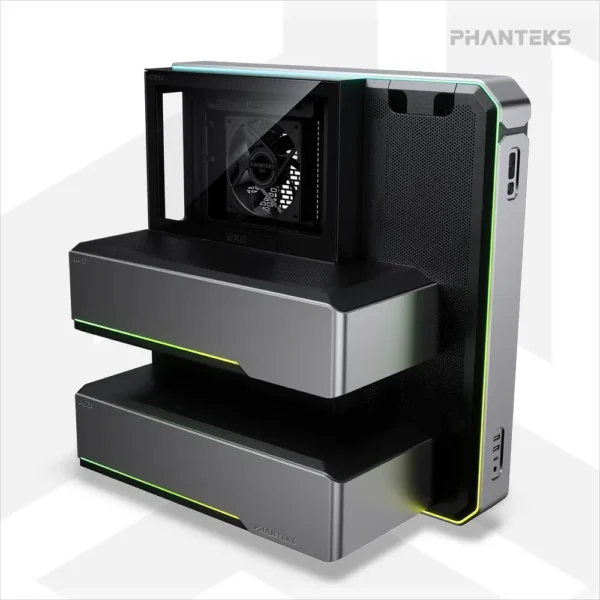
The EX6 is the premium version of the same platform: aluminum exterior panels instead of steel, expanded cooling compatibility, and additional thickness support for large GPUs. Phanteks still lists Stone Gray for a September window; treat it as announced-but-not-confirmed-in-hand until retailers show live stock.
EX6: $159.99
The base EX6 brings aluminum construction and tempered glass showcase presentation. The same compartmentalized airflow architecture as the EX5, with expanded AIO compatibility over the steel version. The EX6 is explicitly aimed at thicker GPUs relevant now that high-end cards like the RTX 5080 and 5090 are approaching four slots and behave more like small appliances than expansion cards. If you’re running a triple-slot or thicker card, the EX6 is the right tier to be looking at.
EX6 MAX: $329.99
This is Phanteks’ halo product. It includes:
- Premium X30 fans, Phanteks’ new 30mm-thick aluminum-wrapped fan series
- Integrated 90-degree custom AIO with hidden tubing
- 10-inch IPS LCD display (1600×720 resolution) for system monitoring and custom visuals
- Built-in Nexlinq controller for lighting and monitoring integration
- GPU chamber sealed with a rubber gasket that minimises hot air recirculation between the top and bottom of the graphics card
That last detail is worth highlighting the rubber gasket around the GPU is a hardware. Solution to a real thermal problem is hot air coming off the top of the GPU recirculating back into the bottom intake. The EX6 MAX addresses this at the hardware level. The EX5 doesn’t.
The 10-inch display is the centrepiece of the EX6 MAX, it’s noticeably larger than the 6-inch display on the EX5 MAX and the 7-inch display on the XT V5-LCD. If you’re building a showcase system where the case itself is part of the display, this is what that looks like at the $329 price point.
What Build Sizes Do These Cases Support?
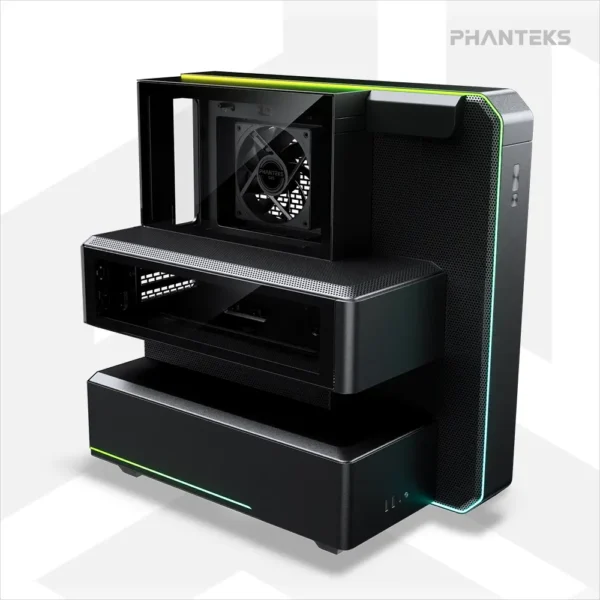
Motherboard form factors:
Both EX5 and EX6 families support standard ATX motherboards. This covers the vast majority of consumer motherboards allied to Asus, Gigabyte, MSI, and ASRock ATX boards all fit. Micro-ATX boards will also fit in an ATX case with no compatibility issues.
EATX (Extended ATX at 305×330mm) is not confirmed for the EX series at time of writing. If you’re running a workstation or high-end AMD Threadripper board, check Phanteks’ full spec sheet before committing. Mini-ITX boards will physically fit in ATX cases but the compartmentalized design of the EX series isn’t optimised for small form factor builds although you’d be paying for features you can’t fully use.
GPU length:
Both families support cards up to 358mm long, Current high-end GPUs that fit within this:
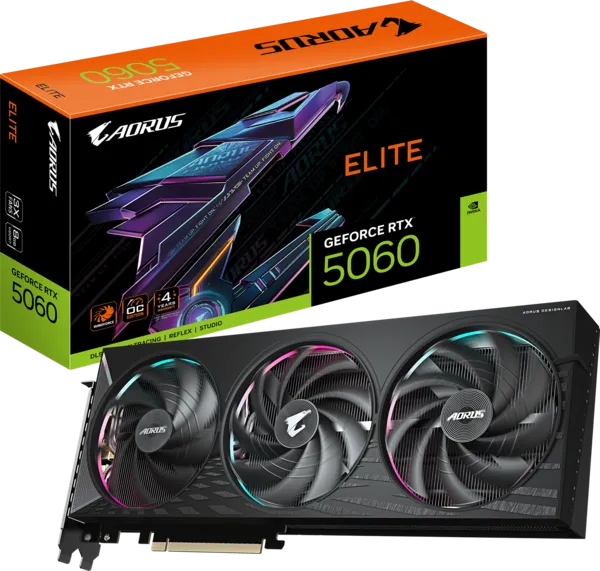
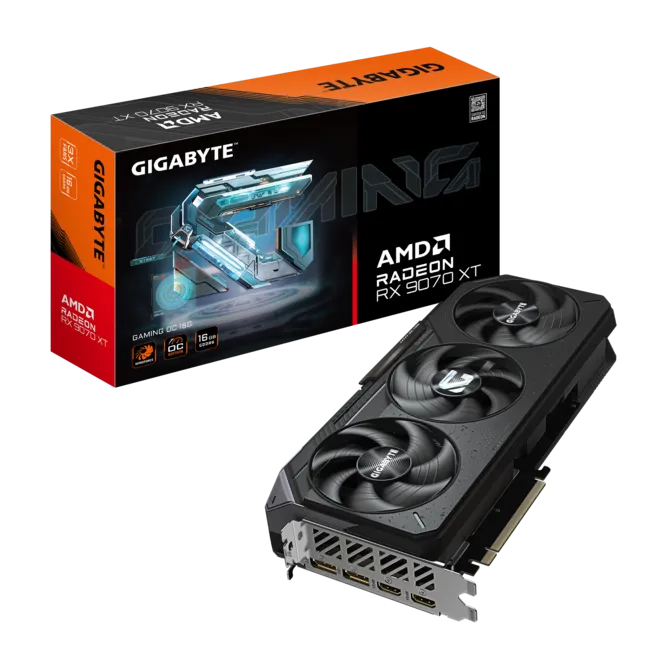
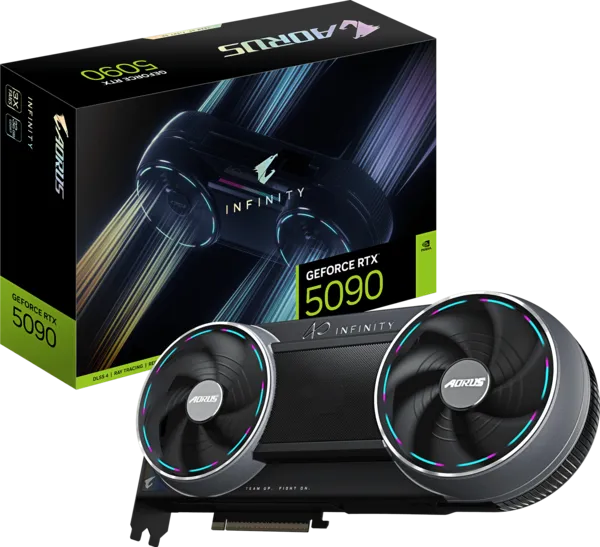
- RTX 5090 Founders Edition: 336mm, fits
- RTX 5080: varies by AIB partner, typically 310-340mm, fits
- RTX 5070 Ti: typically under 330mm, fits
- RX 9070 XT: typically 300-320mm, fits
GPU thickness:
EX5: up to 3.5-slot standard, 4-slot with top PCIe slot available EX6: expanded thickness support, specifically positioned for the thicker cards now common at the high end.
CPU cooler clearance:
78mm maximum in the liquid-cooling configuration on EX5. This rules out tower air coolers, if you want to use an air cooler, these cases are the wrong choice. The compartmentalized design fundamentally assumes AIO liquid cooling.
The XT M5: $79.99, Launched July
A completely different product from the EX series, but worth covering here because it answers the question “what if I want a Phanteks case but don’t want to spend the EX5 $109.99 entry?”
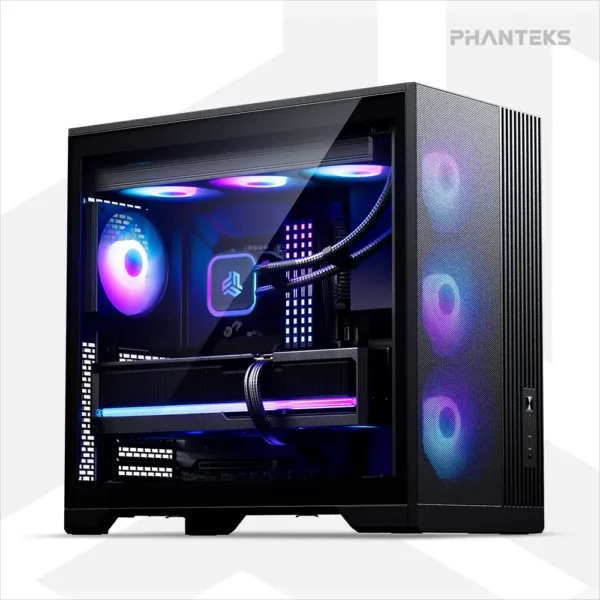
The XT M5 is a conventional compact ATX mid-tower with a full-mesh front panel, up to 10 x 120mm fan positions, and 360mm top radiator support. It ships with pre-installed S25 ARGB fans (a 360mm fan array plus a 120mm rear fan) and USB 3.2 Gen2x2 Type-C on the front panel. Phanteks opened the XT Series 5 on July 22, 2026; US street is $79.99 for the M5 and V5, with the V5-LCD at $109.99.
$79.99 with fans included and a 360mm radiator mount is still competitive. The NZXT H5 Flow starts at $99.99 without fans. The Montech Air 903 Max runs similarly. For a budget build where the case money is better spent on GPU or RAM, the XT M5 is the honest recommendation in the Phanteks lineup.
It doesn’t do anything architecturally novel: front-to-back airflow, conventional layout, mesh front for maximum intake. Nothing surprising, which for $79.99 with fans included is exactly what you want.
The Real Questions

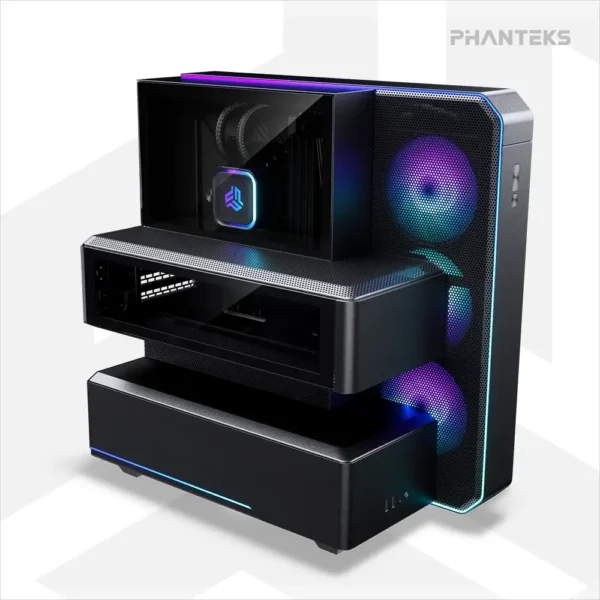
The EX-Series cases are the most conceptually interesting PC cases announced in years. But three legitimate questions remain unanswered until reviewers get production units:
1. Does the natural convection approach actually work?
The thermal theory is sound. Isolated zones, non-recirculated air, dedicated paths for each component. But “sounds right on paper” and “delivers measurably better temperatures” aren’t the same thing. GPU temperatures in a sealed chamber with one cooling path are the number to watch. If the GPU runs hotter than a comparable conventional case, the architecture needs rethinking regardless of how elegant it looks.
2. What happens to builder flexibility?
The compartmentalized design constrains what you can put where. The 78mm CPU cooler clearance effectively mandates AIO cooling. EATX compatibility isn’t confirmed. Builders who want to run a tower air cooler, or who have specific hardware that doesn’t fit the assumed layout, may find the EX-Series less flexible than a conventional mid-tower at the same price.
3. Is the ecosystem lock-in a problem?
The EX5 PLUS and EX5 MAX ship with Phanteks’ own AIO. The EX6 MAX ships with Phanteks’ own AIO and fans. The Nexlinq monitoring ecosystem ties the display to Phanteks software. If everything in the ecosystem works well, this is convenience. If any component underperforms, you can’t easily swap it out without losing integration.
The Verdict: EX5 Is Shipping, EX6 Still Waiting
The EX-Series is a genuine architectural departure from how PC cases have worked for twenty years. The XT M5 is a competent budget option that doesn’t overpromise.
Buy the XT M5 if: You want maximum airflow at $79.99, you’re building on a budget, and you don’t want to spend case money on architectural experiments.
Consider the EX5 if: The compartmentalized airflow concept appeals to you, you’re planning an AIO build, and you’re fine buying before the full independent thermal pile-on is finished.
Consider the EX6 or EX6 MAX if: You’re running a thick, high-end GPU and want the rubber gasket sealing, you want the larger LCD display, or you’re building a showcase system where the EX6 MAX’s aesthetic is specifically what you’re after at $329.
Wait if: You want more thermal benches before spending $159-$329 on the aluminum EX6 tier, or you want broader third-party EX5 data before committing. That is still a reasonable position. EX5 is buyable now; EX6 remains a September stock watch.
SpecClear participates in affiliate programmes. When you purchase through links on this site we may earn a commission at no additional cost to you.