
ASUS’s 20th Anniversary Flagship GPU. The ROG Astral RTX 5090 Edition 20 is not a GPU you buy because you need more performance. The standard RTX 5090 already does everything. This card exists for a different reason entirely.
ASUS built it to mark twenty years of the Republic of Gamers brand, and they didn’t hold back. What you’re looking at is the fastest consumer GPU on the planet wearing a curved AMOLED display, a transparent glass back plate, a black and gold anniversary colourway, and a dual power subsystem capable of pulling 800 watts. It’s part showcase piece, part collector’s item, part engineering statement. Knowing which of those things matters to you is the key to whether it belongs in your build.
ROG Astral RTX 5090 Edition 20 — What Makes It Different
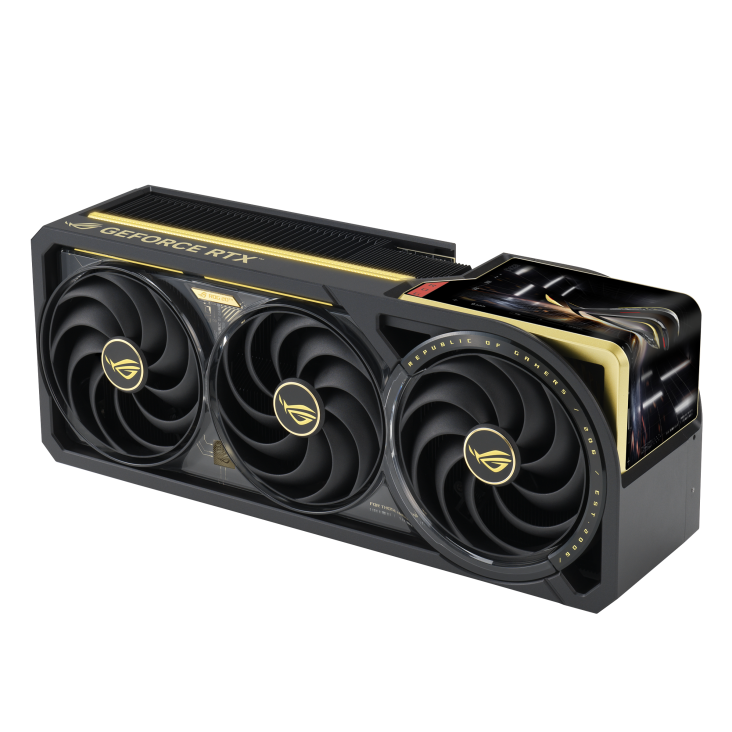
On paper the RTX 5090 silicon is identical across every AIB variant — 21,760 CUDA cores, 32GB of GDDR7 on a 512-bit bus, 3,352 AI TOPs. That doesn’t change between cards. What ASUS has done with the Edition 20 is take the ROG Astral platform which is already their most aggressively specced RTX 5090 and pushed it further in three specific ways.
The boost clock sits at 2,760 MHz in OC mode and 2,730 MHz in default. That matches the ROG Matrix RTX 5090, which was previously the fastest-clocked RTX 5090 ASUS made. The standard Astral OC runs at 2,467 MHz. That’s a meaningful gap, not a marketing rounding error.
Power delivery is the other upgrade that actually matters. The standard Astral is a 3.8-slot card. The Edition 20 is 4.7 slots and runs a dual-input power architecture, the GC-HPWR BTF hidden connector pulls from the motherboard side, while a standard 12V-2×6 cable from the PSU supplements it. Together they deliver up to 800 watts to the card. Nvidia’s reference TDP for the RTX 5090 is 575 watts. ASUS is giving the card significant headroom for sustained boost under load.
Everything else on the cooling side is consistent with the Astral family quad-fan design, vapor chamber, liquid metal compound on the GPU die. ASUS claims the four-fan configuration improves airflow and air pressure by 20% over a three-fan setup. The denser fin stack that only fits because of the fourth fan is where most of that benefit comes from.
The curved AMOLED display
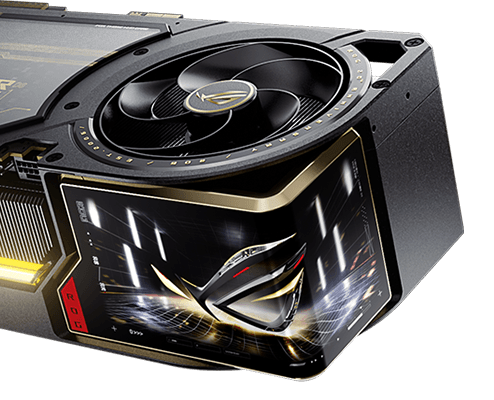
This is the feature that makes the Edition 20 immediately recognisable from across a room. A curved AMOLED panel wraps around the rear corner of the card, sitting at an angle that makes it visible through a side-panel window from multiple angles simultaneously.
The display is detachable. You don’t have to run it. But if you do, it supports dynamic 3D visuals, custom content, and real-time hardware data includes GPU temp, clock speed, load. ASUS has also confirmed it can sync with compatible ROG AIO cooler LCD displays, meaning both screens can show matching content inside the same build. Whether you find that useful or excessive depends entirely on what you’re building and why.
It’s worth being direct about what the display isn’t. It’s not a performance feature. It doesn’t improve thermals, clocks, or gaming output by a single frame. It’s an aesthetic and personalisation feature for the kind of build where those things matter. If you’re building in a windowless case or you don’t care how the inside looks, the display adds nothing to your experience.
The glass back plate and physical footprint
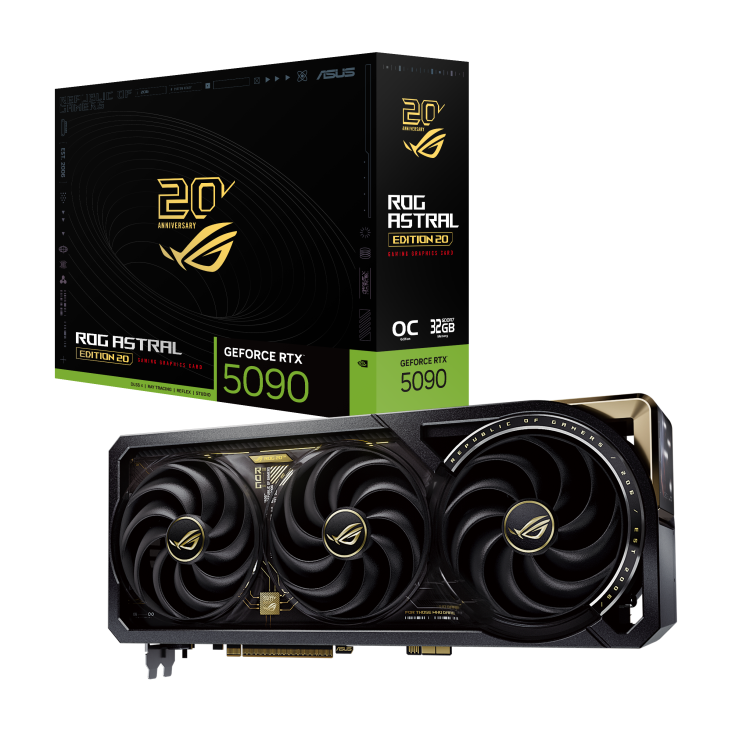
The transparent glass backplate is also detachable and also purely visual although it exposes the PCB and the anniversary-themed design underneath instead of hiding it behind a metal panel. Gold accents run through the shroud, the display housing, and the backplate. The overall presentation is striking if you’re into that aesthetic, and invisible if you’re running it facing the wrong way.
What’s not invisible is the size. At 4.7 slots wide and 361mm long, this card will physically not fit in every case. Check your GPU clearance and slot count before anything else. It also needs a 1,200W PSU minimum this is why its ASUS’s recommendation, not a suggestion. The dual-input system is designed to work with a BTF-compatible motherboard and an ASUS ROG Thor PSU for the cleanest cable routing. You can run it with a standard motherboard using the adapter included in the box, but the BTF setup is the intended configuration.
Specs at a glance
| GPU | NVIDIA GeForce RTX 5090 (Blackwell GB202) |
| CUDA Cores | 21,760 |
| Boost Clock (OC) | 2,760 MHz |
| Boost Clock (Default) | 2,730 MHz |
| VRAM | 32GB GDDR7 |
| Memory Speed | 28 Gbps |
| Memory Interface | 512-bit |
| AI Performance | 3,352 TOPs |
| Power Draw | Up to 800W (dual-input) |
| Power Connector | 1x 16-pin GC-HPWR gold finger (BTF) |
| Recommended PSU | 1,200W+ |
| Slot Width | 4.7 slots |
| Dimensions | 361 x 139.3 x 93.9mm |
| Display Outputs | 2x HDMI 2.1b, 3x DisplayPort 2.1b |
| Max Resolution | 7680 x 4320 (8K) |
| PCIe | 5.0 |
| Cooling | Quad-fan, vapor chamber, liquid metal |
| Special Features | Curved AMOLED display, glass backplate, BTF hidden connector |
Who it’s actually for

This card has three audiences and they don’t overlap much.
The first is the enthusiast building a showcase PC where the hardware is as much the point as what it does. An open-frame case, matching ROG Edition 20 components throughout, a build you photograph and display. For that person, this GPU is the centrepiece it’s designed to be.
The second is the collector. The ROG Matrix RTX 5090 was ASUS’s previous flagship limited edition throughout the time it was produced in a run of 1,000 units. The Edition 20 lineup has been described as limited throughout 2026. If hardware collecting is something you do, this is the 2026 item to have.
The third is the buyer who simply wants the fastest, most aggressively specced RTX 5090 ASUS makes and doesn’t mind paying for it. The 2,760 MHz clock and 800W power ceiling represent the highest ROG will push this silicon. If you want the card that leaves the most room on the table, this is it.
If you’re none of those three this means if you’re buying an RTX 5090 to game at 4K and you want the best performance per dollar on the standard ROG Astral RTX 5090 OC does everything you need. The Edition 20 charges a premium for design, exclusivity, and a display that doesn’t affect your frame rate. That’s a legitimate thing to buy. It’s just not a performance upgrade.
What to know before you buy
- This requires a 1,200W+ PSU. A 1,000W unit is not sufficient for ASUS’s rated configuration.
- At 4.7 slots wide, verify your case can accommodate it before ordering. Most full-tower cases are fine. Mid-towers vary.
- The BTF hidden connector requires a BTF-compatible motherboard for the intended setup. An adapter is in the box for standard boards, but you lose the clean cable routing.
- The AMOLED display syncs with ROG AIO LCDs. If you’re building an all-ROG system, that integration is seamless. If you’re mixing brands, the display runs standalone.
- Retail pricing has not been confirmed. Given ASUS’s history with premium limited Astral variants, expect to pay significantly above the RTX 5090 reference MSRP. Wait for confirmed pricing before committing.
Honest summary
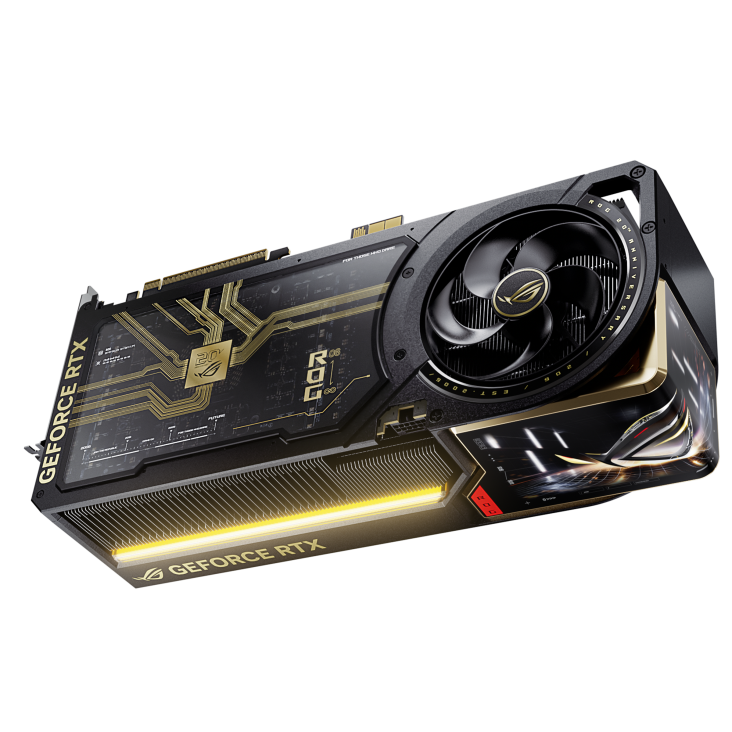
The ROG Astral RTX 5090 Edition 20 is exactly what ASUS says it is a 20th anniversary flagship, built to make a statement. The engineering is real: 2,760 MHz clocks, 800W power headroom, quad-fan cooling with liquid metal. This isn’t a standard card with a new skin.
But the honest question to ask yourself is whether you’re buying a GPU or a collector’s piece with GPU capability. The answer changes the calculus completely. If you’re building something to be seen, this is the card. If you’re building something to play games, the standard Astral OC at a lower price point does the same job.
before you decide. Pricing is not yet confirmed at time of writing, and numbers for limited-edition ROG hardware can move significantly between announcement and availability.
SpecClear participates in affiliate programmes. When you purchase through links on this site we may earn a commission at no additional cost to you. We only recommend hardware we would use ourselves.