
SpecClear earns a commission if you buy through Newegg links on this page, at no extra cost to you.
The RX 9050 exists because of the DRAM crisis. AMD launched the RX 9050 with 8GB of GDDR6 on July 28, 2026, the same year the RX 9060 XT 16GB landed at a $349 MSRP, because memory costs are so high that a truly adequate entry-level VRAM kit would blow the price bracket. That tension still defines the card in September 2026. Our report on the AMD GPU price hike covers the wider pricing picture.
It’s $279 SEP. It’s RDNA 4. It draws 92W under load, the most power-efficient discrete AMD card in years, and it’s still hard to recommend at that sticker outside the narrow cases where efficiency is the whole point.
Here’s the complete picture as of September 2026.
What the RX 9050 Actually Is
The Radeon RX 9050 is AMD’s entry into the sub-$300 GPU market with its RDNA 4 architecture. The specs tell the story of a card that’s half the chip of the RX 9060 XT in almost every dimension.
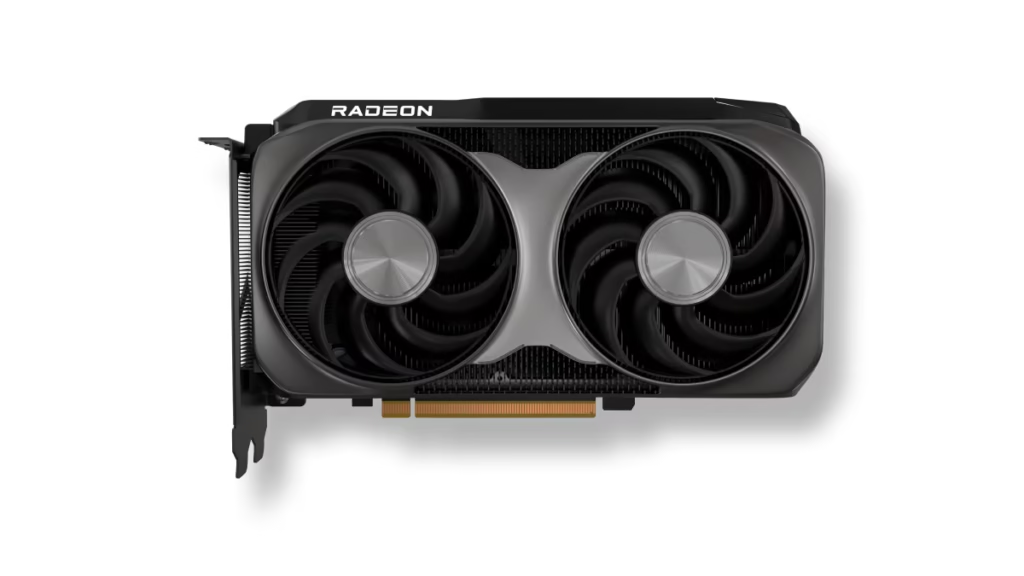
The RX 9050 runs on RDNA 4 architecture with 16 Compute Units and 1,024 stream processors, 8GB of GDDR6 on a 128-bit bus providing 288 GB/s of bandwidth, a boost clock of 2.60 GHz, and a 92W total board power.
For comparison, the RX 9060 XT has 32 Compute Units, 2,048 stream processors, and 150-182W TDP. The RX 9050 has 42% fewer cores than the RX 9060 XT, it’s effectively half that card, but not half the price.
The 92W TDP is the specification that stands out. At 92W under full gaming load, the RX 9050 draws less power than almost any other discrete GPU currently available. It runs cool enough for compact ITX builds, HTPCs, and small form factor systems where power delivery and thermal headroom are genuine constraints. It’s the right card for those use cases, if the price and performance make sense, which is the entire question.

The First Review: And Why You Should Read It Carefully
The first independent benchmark of the RX 9050 came from Japanese outlet Hermitage Akihabara. Their conclusion: the card performs at roughly RTX 3060-equivalent levels and is approximately 75% as fast as the RTX 5050 in their testing.
That sounds damning. It mostly is, but the methodology has a specific problem worth understanding before taking the numbers at face value.
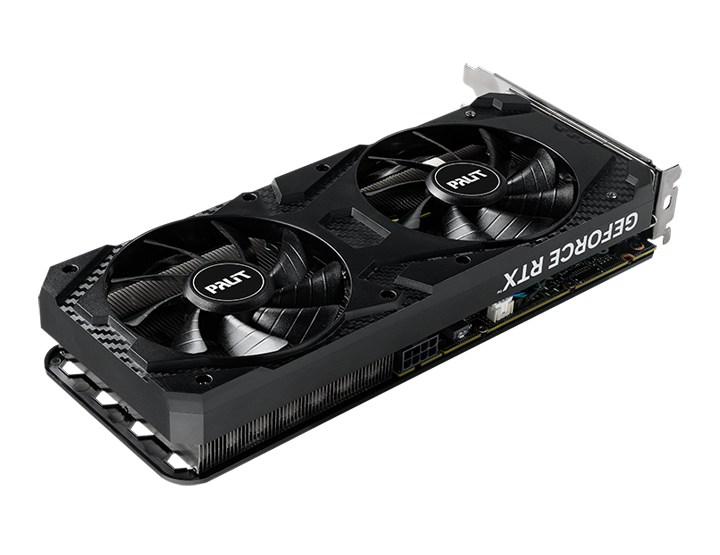
The testers ran the RTX 5050 at 4x or 6x Multi Frame Generation in some cases, whereas the AMD GPU used standard FSR, so this clearly isn’t a level playing field. Multi Frame Generation is Nvidia’s AI-driven frame interpolation that multiplies displayed frame rates by generating artificial frames between rendered ones. It doesn’t reduce actual rendering load. Comparing an AMD card running standard upscaling to an Nvidia card running at 6x frame generation and presenting the result as a straight performance comparison is misleading. The RTX 5060 vs RX 9060 XT comparison looks at the tier above.
The honest takeaway from the Hermitage testing: in raw rasterisation without frame generation applied to either card, the RX 9050 and RTX 5050 are closer than 75% versus 100%. How much closer requires western benchmark coverage that wasn’t available at the time of writing. Wait for Gamers Nexus, Hardware Unboxed, and Tom’s Hardware reviews before making a purchasing decision.
There’s a second concern from the same review that’s more troubling. The RX 9050 benchmark results showed 32 ROPs on the card, which is half of the advertised 64 on AMD’s own specs page. Render Output Units affect pixel fill rate and output performance. Half the ROPs would explain performance landing well below what the Compute Unit count alone would predict. This may be a defective review unit, an early production issue, or a silicon-level binning decision AMD hasn’t disclosed. Either way it’s not resolved. A card with 32 ROPs performing like a 32-ROP card might simply be a correctly functioning card that was incorrectly specced on AMD’s marketing materials, or it might indicate a problem that affected only the early review sample.
This ambiguity needs resolution from multiple independent tests before the performance picture is clear.
The Availability Problem
The RX 9050 launched July 28, 2026 in Asia-Pacific, Japan, and Latin America markets. Not North America. Not Europe. It is still limited to Asia-Pacific, Japan, and Latin America as of September 2026. AMD has not announced a North American or European retail date.

If you’re in the US, UK, or Europe looking to buy an RX 9050 right now, you can’t. It isn’t available on Newegg, Amazon, or at any major US retailer at the time of writing. When and whether a global rollout happens hasn’t been confirmed by AMD.
This is directly relevant to whether the article needs to exist at all for SpecClear’s predominantly English-speaking audience. The honest disclosure: the RX 9050 is currently a non-option for most SpecClear readers. This review covers it as an analysis of what the card is and whether AMD’s entry-level RDNA 4 strategy makes sense, not as a current buying recommendation.
The 4GB Version: Don’t
AMD confirmed a 4GB version of the RX 9050 exists. It’s OEM-only, meaning it will appear inside pre-built systems from manufacturers, not as a standalone retail GPU.
In 2026, 4GB of VRAM is dead. A 64-bit bus with 144 GB/s of bandwidth is borderline for games from 2024 at medium settings. Any pre-built system you’re considering that contains an RX 9050 4GB should be evaluated with this specific limitation in mind. The 8GB version is the minimum viable configuration for gaming use.
If a pre-built listing says “Radeon RX 9050” without specifying VRAM, confirm the VRAM before buying. OEM pre-builds can use either version.
The Value Proposition: Is $279 Right?
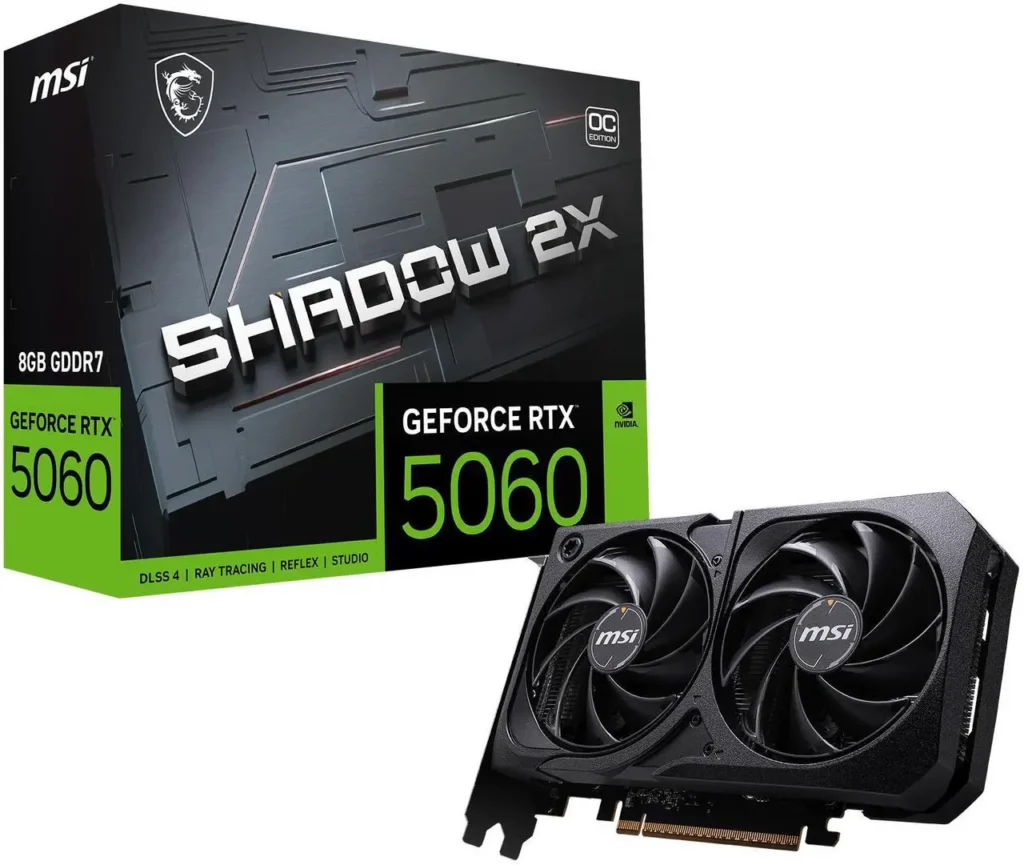
The pricing situation is uncomfortable. The RTX 5060 launched at $299 and sits near ~$449 street in early September 2026. The RX 9050 at $279 SEP sits $70 under the 9060 XT 16GB’s $349 MSRP and well under today’s 9060 XT 16GB price of about $520, while being roughly 40% slower. That is not a good value relationship for most builds.
The direct Nvidia competitor is the RTX 5050 at $249 MSRP, which still trades above that floor on most storefronts. The RX 9050 at $279 SEP lands in the same awkward band. The early benchmark data, despite its methodology problems, suggests the RTX 5050 is faster, around 20-30% faster according to the initial data, though that figure is suspect given the frame generation comparison issue. The actual gap in raw rasterisation is likely smaller. There is also Intel’s option, covered in our Arc B580 in 2026 article.
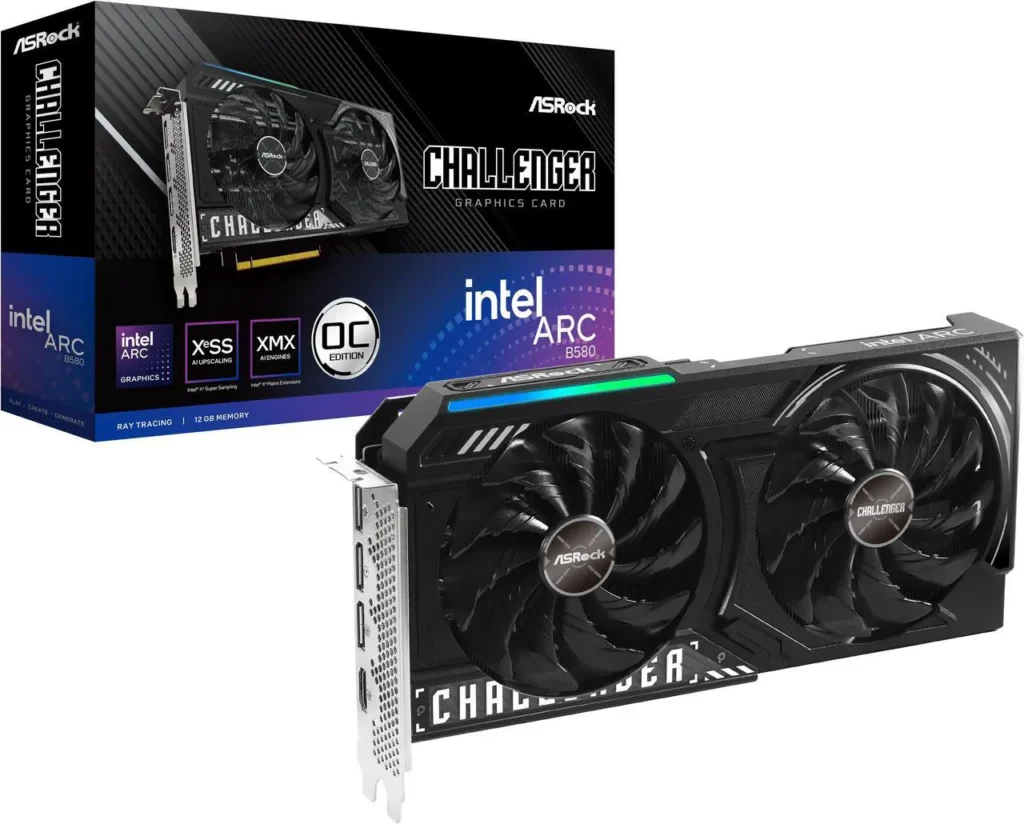
The Intel Arc B580 at ~$309 street provides 12GB of GDDR6 and strong 1080p performance with more VRAM than either the RX 9050 or RTX 5050. Paying roughly $30 over the 9050’s SEP for 4GB more VRAM still strongly favours the B580 if you game at 1440p or plan to keep the card more than two years. Newegg lists the Intel Arc B580 ($309) if you want to compare.
Who It’s Actually For
The RX 9050 makes sense for a specific and narrow use case: a 1080p gamer in a supported region who needs the most power-efficient discrete GPU currently available for a compact or thermally constrained build, an ITX system, an HTPC, a small desk PC, and whose game library is primarily esports titles and older AAA games where 8GB VRAM isn’t a ceiling.
The card targets medium 1080p gaming in AAA titles and high-FPS esports. CS2, Valorant, Apex Legends at 1080p high settings, it handles those. Kingdom Come Deliverance 2 at 1080p ultra settings, it doesn’t. If your budget is fixed, our guide to the best used GPUs shows what the same money buys secondhand.
At 92W it’s genuinely impressive from an efficiency standpoint. In a compact build where heat and power are the constraints, the RX 9050 fills a real gap that no other card currently occupies at this price.
For everyone else, anyone building a standard ATX mid-tower at 1080p or 1440p with a normal power supply, the Intel Arc B580 at ~$309, the RTX 5060 near ~$449, or a used RX 6800 XT in the roughly $240-$340 band all represent better value than the RX 9050 at $279. None of them are as efficient, but efficiency is not the priority in a standard gaming build. Performance per dollar is. RTX 5060 ($449)
Verdict
The RX 9050 is AMD’s honest attempt to put RDNA 4 in the sub-$300 bracket during a memory crisis, and the result is a GPU that exists because it has to, not because AMD wanted to build it. Half the compute units of the RX 9060 XT at 83% of its original launch price, with early benchmark data that’s inconclusive due to methodology problems, limited to certain regions at launch, and with an unresolved ROP discrepancy that may or may not reflect production issues. For the alternatives at this price, see our budget GPU guide.
In regions where it’s available, for the specific use case of low-power compact builds at 1080p esports, it earns its place. For most builders in most situations, spend $20 more on the Arc B580 and get 4GB extra VRAM that will matter within twelve months of purchase.
Wait for multiple independent western reviews before buying. The Hermitage data is early and methodologically imperfect. The full picture requires Gamers Nexus and Hardware Unboxed runs before the card’s actual rasterisation performance versus the RTX 5050 is clear.