


Mini ITX cases outsold full-size ATX towers for the first time in 2026, and that is not surprising. Apartment living, smaller desks, LAN party portability, and the simple appeal of a powerful PC that doesn’t dominate a room have been pushing the SFF market upward for years. The component supply has caught up too, current-gen GPUs with full RTX 50-series and RX 9000 support, Mini ITX AM5 motherboards with full feature sets, and SFX PSUs at prices that no longer feel like a tax on small builds.
The problem with most Mini ITX case buying guides is that they recommend too many cases without telling you when each one is the right choice. This guide does the opposite. Five cases, clear use cases for each, and the specific constraints you need to know before buying.Mini ITX PC Builds 2026
What Makes Mini ITX Building Different
Before the case recommendations, the constraints that make SFF building different from standard ATX are worth understanding. Some of them are annoying, and none of them are dealbreakers if you plan ahead.
PSU type: most quality Mini ITX cases require SFX or SFX-L power supplies rather than standard ATX PSUs. SFX units are physically smaller, the same components in a reduced footprint. They cost $20-$60 more than equivalent ATX units at the same wattage. If you already own a quality ATX PSU, check whether your target case supports it before buying, some cases like the JONSBO C6-ITX accept ATX PSUs and save you the upgrade cost.
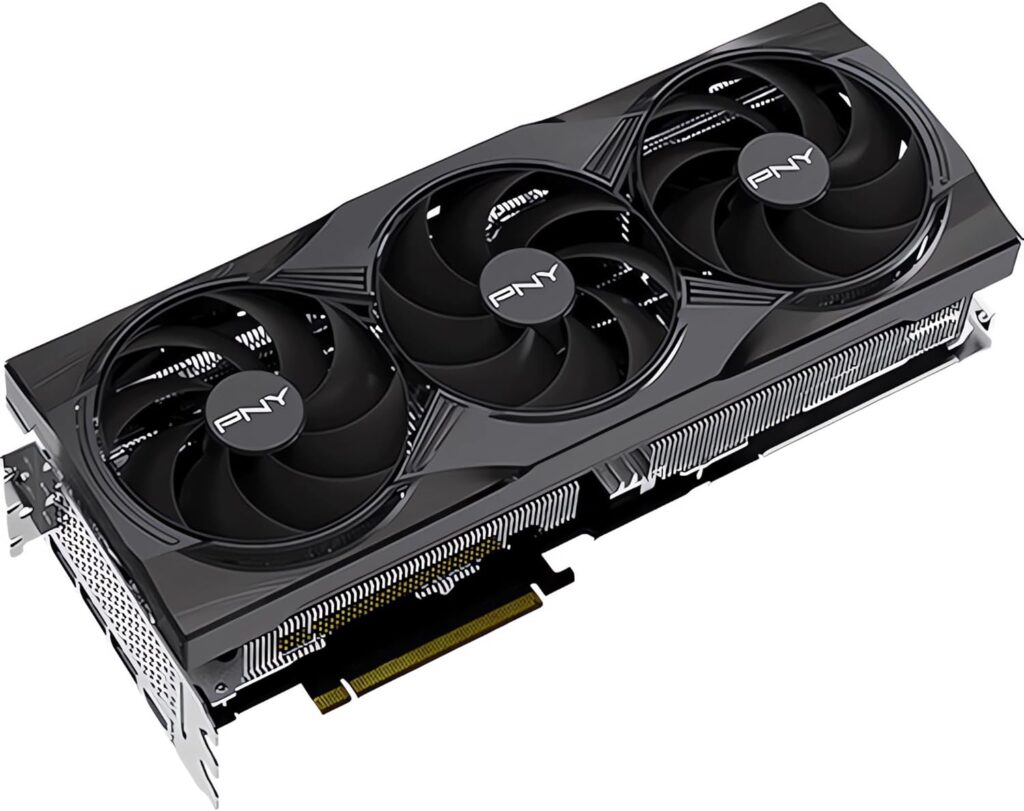
GPU length clearance: some compact ITX cases cap GPU length at 250-280mm. Modern flagship GPUs, RTX 5080, RTX 5090, RX 9070 XT, frequently exceed 300mm. Check GPU length against case clearance before buying both. This is the number one assembly mistake in SFF builds.
CPU cooler height: ITX cases typically clear 55-65mm for coolers. That’s low-profile territory, standard tower air coolers don’t fit. Your cooling options are low-profile air coolers (limited thermal performance), slim AIOs (240mm or 280mm where supported), or in some cases a standard AIO mounted creatively.
Build difficulty: ITX cases are harder to build in than ATX mid-towers. Cable routing is tighter, component access during assembly is more limited, and the margin for error with airflow is smaller. First-time builders should choose the most forgiving cases in this guide, the NR200P V2 specifically, and expect the assembly to take longer than a standard ATX build.
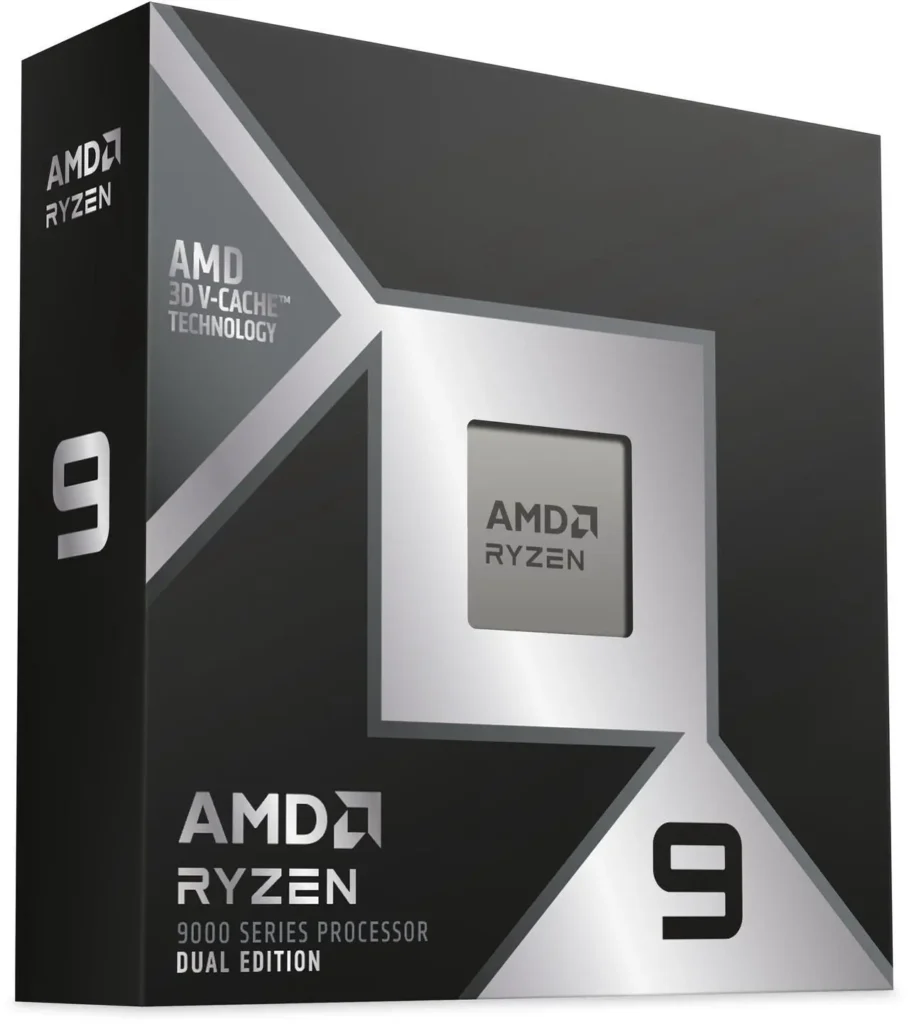
Thermal management: less case volume means less air volume for cooling. High-TDP components run warmer in ITX cases than in large mid-towers with the same cooler. If you’re pairing an RTX 5090 with a Ryzen 9 9950X3D2 in a 10-litre case, you’re fighting thermodynamics. Match component TDP to case size honestly.
The Cases
Best Overall: Cooler Master NR200P V2 (~$84 on Newegg)
The NR200P V2 is the case most people building their first ITX system should buy. Cooler Master shipped this version with RTX 5090 compatibility printed on the box, 330mm GPU clearance covers every current-gen card including the largest triple-fan designs. It accepts a 280mm AIO for CPU cooling, which is the correct choice for any chip above 125W TDP in an ITX build. The volume is 18.4 litres, larger than the ultra-compact options but significantly more forgiving to build in. Cooler Master NR200P V2 ($84)

The dual-panel system is the NR200P V2’s most practical feature. The case ships with both a tempered glass side panel and a mesh side panel, swap between them depending on whether you prioritise aesthetics or airflow. The glass panel looks better for display purposes. The mesh panel drops GPU temperatures by 5-8°C under sustained load. Both panels are included in the box. No other ITX case at this price offers that flexibility.Best PC Cases for Airflow 2026
Build quality is predominantly plastic with steel structural elements. It doesn’t feel as premium as the Fractal Terra or the Lian Li Q58 but the build process is straightforward, clear component access, good cable routing channels, and an ITX community large enough that build guides and compatibility questions have answers within minutes of posting.
PSU requirement: SFX or SFX-L only. Budget $80-$130 for a quality SFX unit, the Corsair SF750 or SeaSonic Focus SGX 650 are the standard community recommendations. Corsair isn’t on Newegg yet until CJ approves, so check SeaSonic or Silverstone SFX options on Newegg.
The alternative: The original NR200 (non-P) at ~$84 on Newegg drops the glass panel option and some finishing quality but retains the 330mm GPU clearance and 280mm AIO support at a lower price. If you’re using the mesh panel exclusively anyway, save the money and buy the NR200 standard.
Best Aesthetics: Fractal Design Terra (~$199 on Newegg)
The Terra is the Mini ITX case that gets posted on r/battlestations rather than r/buildapc. The front panel is real walnut wood, not a texture, not a print, actual wood, in a neutral tone that sits on a desk and looks like a design object rather than a gaming rig. The aluminium side panels and compact 10.4L volume make it genuinely small. Next to a premium monitor on a clean desk, it looks exceptional. Fractal Design Terra
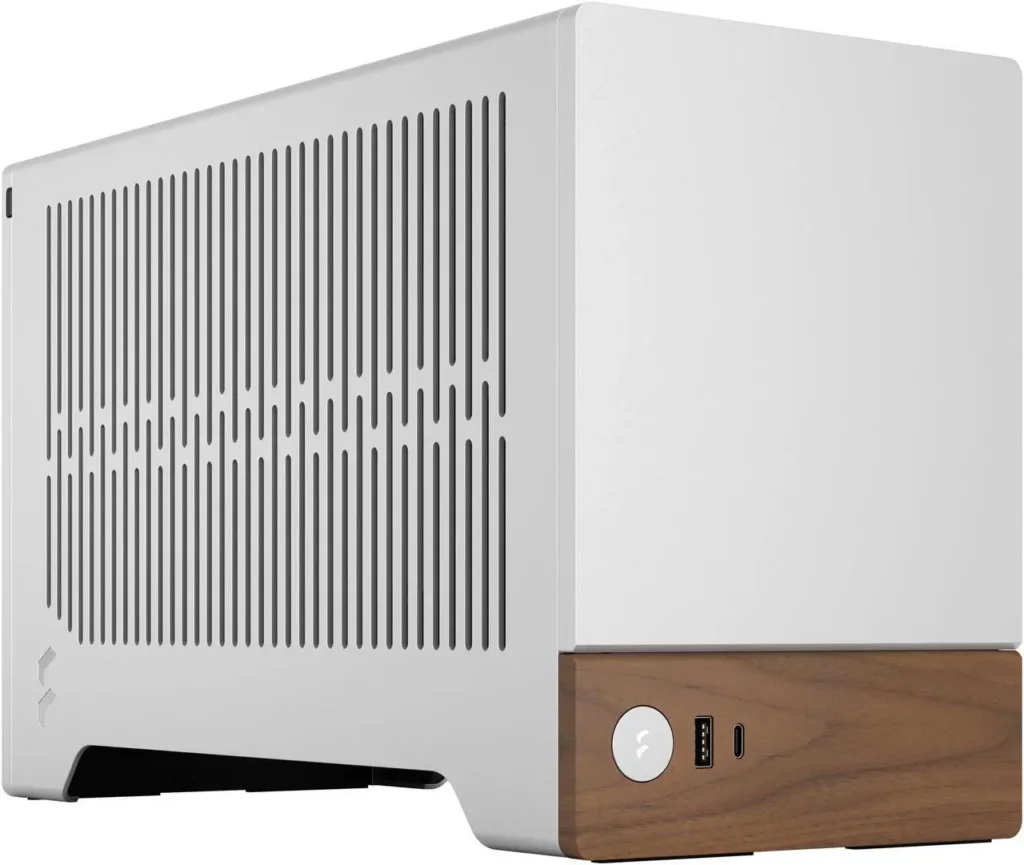
Practically, it’s a more demanding build than the NR200P V2. The adjustable central spine that defines the Terra’s layout separates the GPU and CPU/PSU into two zones, smart design that improves airflow routing but requires planning before assembly. GPU clearance reaches 322mm in the larger configuration, fine for most current-gen cards. The CPU cooling options are more limited than the NR200P V2: the Terra supports a 240mm radiator or a low-profile air cooler. If you’re running a 9800X3D, a 240mm AIO handles it adequately. If you’re running a 9950X3D or a Core Ultra 9, the thermal constraints become real.
PSU requirement: SFX only, no SFX-L. The shorter form factor is necessary to fit the Terra’s compact layout.How to Set Up PC Fan Airflow
The Terra costs more than the NR200P V2 for a case that’s harder to build in and more thermally constrained. That’s a legitimate trade-off if desk aesthetics are the primary goal. The walnut panel is genuinely beautiful. If you want a conversation-piece build rather than a performance-first build, the Terra earns its premium. If performance and versatility are the priority, the NR200P V2 is the better buy.
The Terra Noir variant: same case, black aluminium with a darker wood tone, runs at similar pricing and suits builds where the lighter walnut is too warm a colour for the overall aesthetic.
Best Airflow: NZXT H2 Flow (~$149 on Newegg)
NZXT redesigned the H1 into the H2 Flow for 2026 and the result is the thermally best-performing Mini ITX case available. The hybrid glass-mesh front panel passes significantly more air than the old H1’s solid panel design, GPU temperatures under sustained load drop 8-12°C versus similarly sized cases with solid panels. GPU clearance hits 331mm. The 280mm AIO support handles high-TDP chips comfortably.NZXT H2 Flow ($149)

The H2 Flow’s volume is 20.7 litres, larger than the Terra or the ultra-compact options, but the SFF community generally accepts slightly more volume in exchange for genuinely good thermals. This is the case for builders who want an ITX build primarily because of its smaller footprint versus ATX, not because they’re chasing the absolute smallest possible volume. At 20.7L it’s meaningfully smaller than any standard mid-tower while retaining the cooling headroom to run high-TDP components properly.
NZXT’s clean cable management design is a practical advantage here. The H2 Flow routes cables more cleanly than the NR200P V2 in independent builder comparisons, the case design makes the finished result look tidier with less deliberate effort. For first-time ITX builders who want good thermals and a clean outcome, the H2 Flow edges out the NR200P V2 on both counts at the cost of slightly more volume and slightly higher price.Air Cooler vs AIO CPU Cooler 2026
PSU requirement: SFX or SFX-L.
Best Ultra-Compact: Lian Li A4-H2O (~$154 on Newegg)
The A4-H2O is for the builder who genuinely wants the smallest possible capable gaming PC, 11 litres, full GPU support up to 322mm, and 240mm AIO support despite the minimal volume. The name references the water cooling focus, the case is designed around an AIO as the primary CPU cooling method rather than air cooling as an option. The tight internal layout makes fitting a CPU air cooler genuinely difficult. Lian Li A4-H2O ($154)

Building in the A4-H2O is challenging. The order of assembly matters, there’s a correct sequence for getting each component in without blocking access to the next one, and deviating from it means disassembling partially completed work. It’s not a beginner case. The ITX community has thoroughly documented the correct build order and every compatibility issue, search “A4-H2O build guide” on Reddit and r/sffpc before buying and read through two or three guides. Then decide if the size justification is worth the build complexity.How to Choose a CPU Cooler 2026
For portable gaming setups, LAN parties, travelling with a capable PC, moving frequently, the A4-H2O’s 11-litre volume and manageable weight make it genuinely practical. For a permanent desk build, the NR200P V2 or H2 Flow are less punishing to build in for similar or better thermal results.
Best Budget: JONSBO C6-ITX (~$62 on Newegg)
The C6-ITX is the budget ITX case that doesn’t compromise on the specifications that actually matter. 255mm GPU clearance, adequate for mid-range GPUs including the RTX 5060, RTX 5060 Ti, RX 9060 XT, and Intel Arc B580. Mesh front panel. ATX PSU support, the critical budget advantage that lets you skip the SFX premium entirely. If you own an existing ATX PSU or are building a budget system where saving $50-$80 on the PSU matters, the C6-ITX is the only Mini ITX case at this price that makes ATX PSU reuse practical.JONSBO C6-ITX ($58)
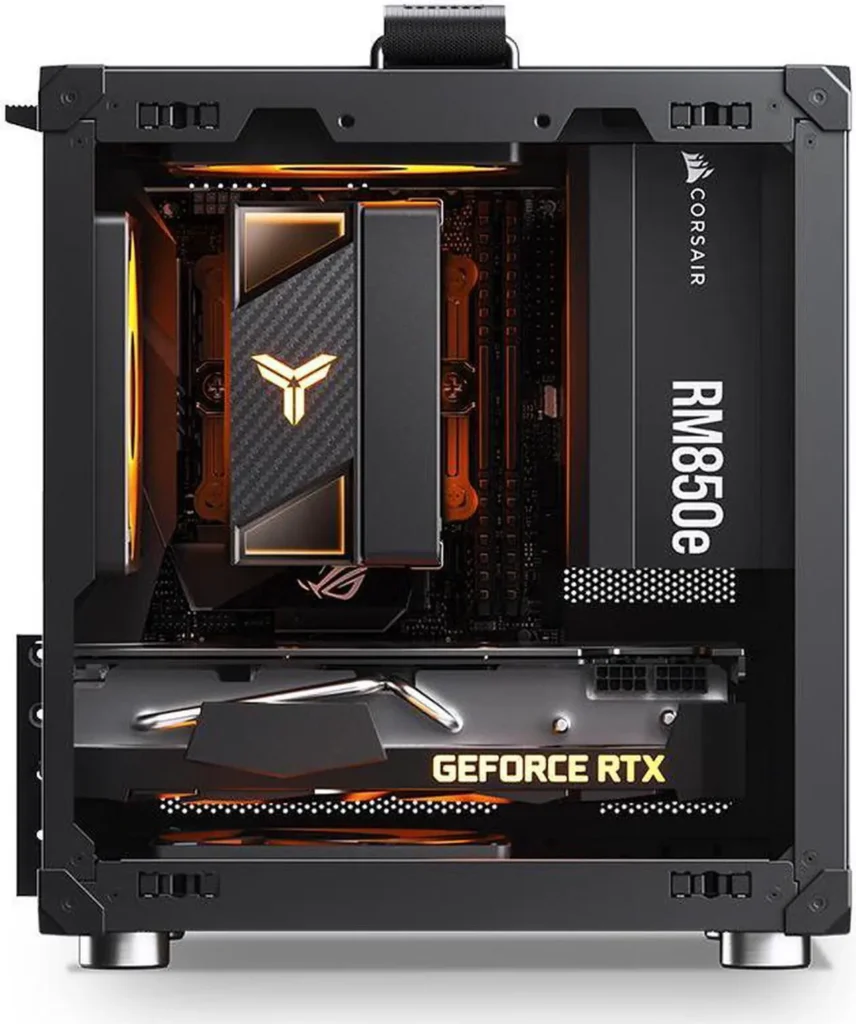
The 255mm GPU clearance is the limitation. It rules out triple-fan GPUs and any card above 260mm. The RTX 5070, RTX 5070 Ti, RTX 5080, and RTX 5090 don’t fit. For a budget 1080p or entry-level 1440p build pairing a 9600X with an Arc B580 or RTX 5060, the GPU length constraint never matters. For anyone building toward mid-to-high-end GPU performance, the C6-ITX forces the wrong GPU choice and the NR200P V2 is the correct case.How to Cable Manage Your PC
Build quality is adequate rather than impressive, the steel construction feels thinner than Cooler Master or NZXT products, and the finish is plainer. For a $65 ITX case, neither complaint is unreasonable. It works, it fits the components it’s designed to fit, and it costs $65.
The Constraint to Check Before Buying Any of These
GPU length is the one that bites builders who skip the research.
Measure your specific GPU model from the PCIe bracket plate to the end of the shroud, not the length printed on the product page, which sometimes measures differently. Add 10-15mm for the power connector and cable clearance. That’s your actual required GPU clearance. Cross-reference it against the case’s stated clearance before buying.
The NR200P V2’s 330mm clearance handles every current mainstream GPU. The H2 Flow’s 331mm does the same. The Terra’s 322mm handles most current GPUs with minor exceptions. The A4-H2O’s 322mm is similar. The C6-ITX’s 255mm is the constraint that requires advance planning.
If your GPU is over 280mm and you’re not sure whether it fits a specific case, look up your exact GPU model plus your target case on the r/sffpc subreddit. Someone has already tried the combination and documented whether it fits.