
SpecClear earns a commission if you buy through Newegg links on this page, at no extra cost to you.
You’ve looked at two budget PC cases from different brands, noticed they looked almost identical, and wondered if they were the same product. They might have been. Or they might be two different products built on the same chassis from the same Shenzhen factory. Or one might be a legitimate design that the other copied months later.
This isn’t a coincidence. It’s how the PC hardware industry works at the budget end, and understanding it makes you a significantly better buyer.
What OEM Actually Means
OEM stands for Original Equipment Manufacturer. In PC hardware, it describes a company that designs and manufactures a product that another company then sells under their own brand name.

The Taiwanese or Chinese manufacturer makes the physical product. The brand that sells it puts their logo on it, sets the price, handles the marketing, and provides the customer support. The factory may be selling the same chassis to five different brands simultaneously. Each brand adds their own fans, their own front panel design variations, their own colour options, but the structural chassis, the steel stamping, the tempered glass panel dimensions, and the mounting hole patterns are shared.
This isn’t unique to PC hardware. It’s how most consumer electronics work at the budget end. The same happens with power banks, monitors, mechanical keyboards, and audio equipment. The question worth asking before any budget hardware purchase isn’t “is this OEM?”, nearly everything at this price tier is, but “is this a good OEM chassis with a responsible brand attached to it?” Is Redragon Worth Buying
The Gamdias and Skytech Example: Confirmed on the Floor at Computex 2026
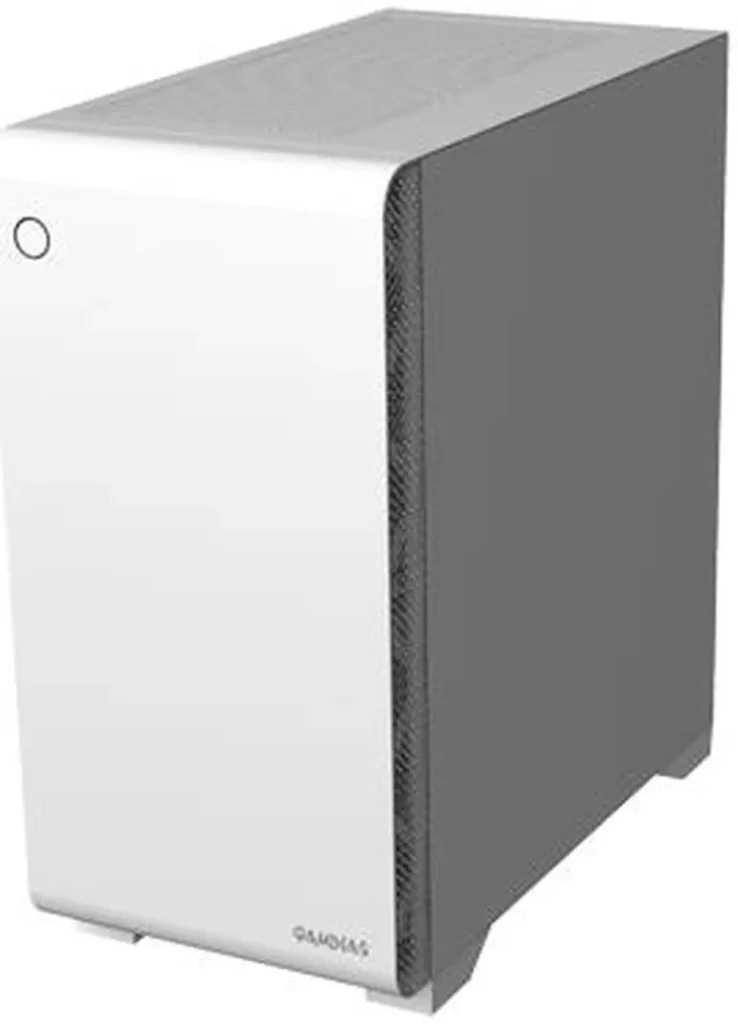
The most explicit recent confirmation of how this works came from Gamdias’s own Computex 2026 booth in June. Gamdias explicitly showed that the design of their ATLAS P6 CG case was being offered as an OEM product to integrators, specifically naming Skytech Gaming as a client who uses their case design with their own fans installed.
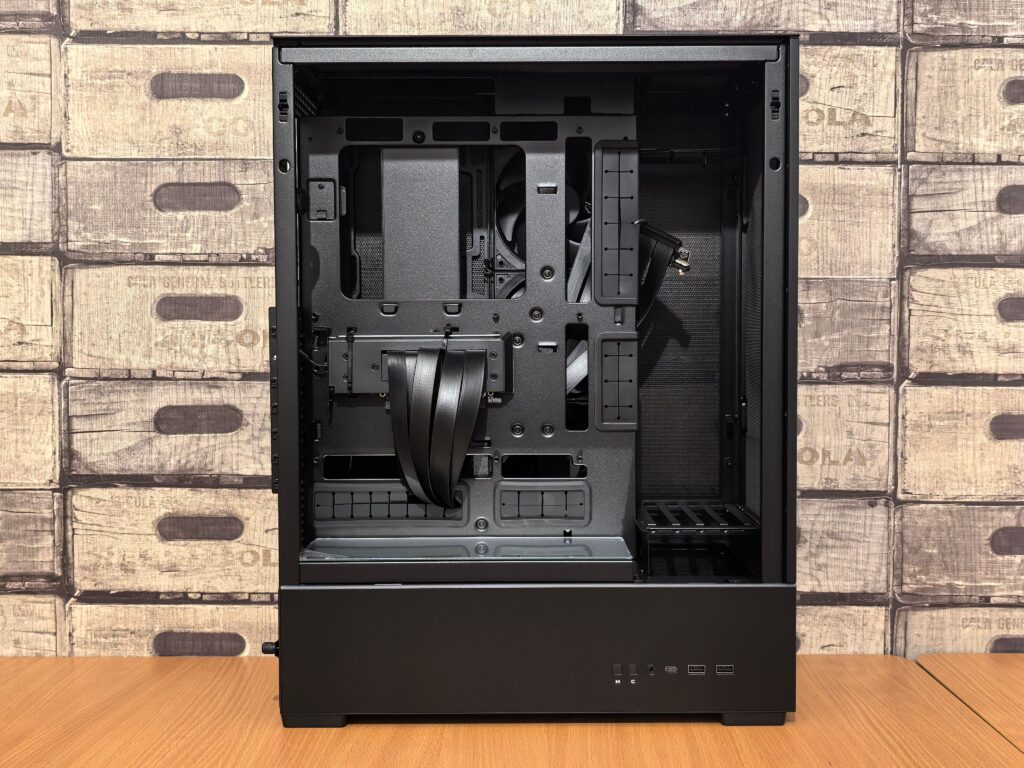

That’s a major brand PC builder, Skytech, using a Gamdias case design as the chassis for their prebuilt systems, with Skytech’s own components and branding applied. The case Skytech ships their prebuilts in is structurally a Gamdias case. The CPU, GPU, RAM, and PSU inside are standard components from other manufacturers. Skytech’s value-add is the assembly, quality control, software setup, and warranty.
This is not a scandal. It’s how the industry works. Skytech doesn’t have a case factory. Neither do most PC builders. Buying case manufacturing capacity from an OEM and focusing on the assembly and service side is sensible business.
What it means for the buyer: the case your Skytech prebuilt arrives in may look familiar if you’ve browsed Gamdias’s product lineup. That’s because it is familiar. The performance of that case depends on the Gamdias design quality, not on whether Skytech or Gamdias printed the badge.
How OEM Manufacturing Actually Works at Scale
PC case manufacturers operate on OEM and ODM business models. High-volume OEM and ODM manufacturers serve budget to mid-range gamers and DIY PC builders worldwide, supplying well-known brands in North America and Europe.
OEM (Original Equipment Manufacturer) means the factory makes a product to another company’s specification. The brand comes to the factory with design requirements, the factory produces it, the brand sells it. The same idea applies to complete systems, which our prebuilt vs custom build comparison looks at.
ODM (Original Design Manufacturer) goes further, the factory designs the product itself and offers it to multiple brands to sell. The brands may request minor customisations, different fan colours, front panel texture variations, different I/O configurations, but the core design belongs to the ODM.
The budget PC case market is predominantly ODM. A factory in Guangdong or Shenzhen designs a competent mid-tower chassis, good airflow, tempered glass side panel, 360mm radiator support, standard clearances. They offer it to twenty brands. Some brands take it as-is with their logo. Some request fan colour changes. Some request a different front panel texture. The steel stamping, the glass dimensions, and the mounting pattern are identical across all twenty.
This is why a $45 MUSETEX case and a $59 Gamdias case and a $69 VETROO case can look structurally identical, because they may have come from the same ODM. This is also why a $45 case from any of those brands can perform comparably to a $45 case from another, while a $45 case from a brand that selected a poorly designed ODM chassis performs noticeably worse.

What Changes Between Brands Using the Same Chassis
If the chassis is identical, what is the buyer actually choosing between when they select Brand A over Brand B? Our Corsair 3200D RS ARGB review is a good example of what a known brand adds.
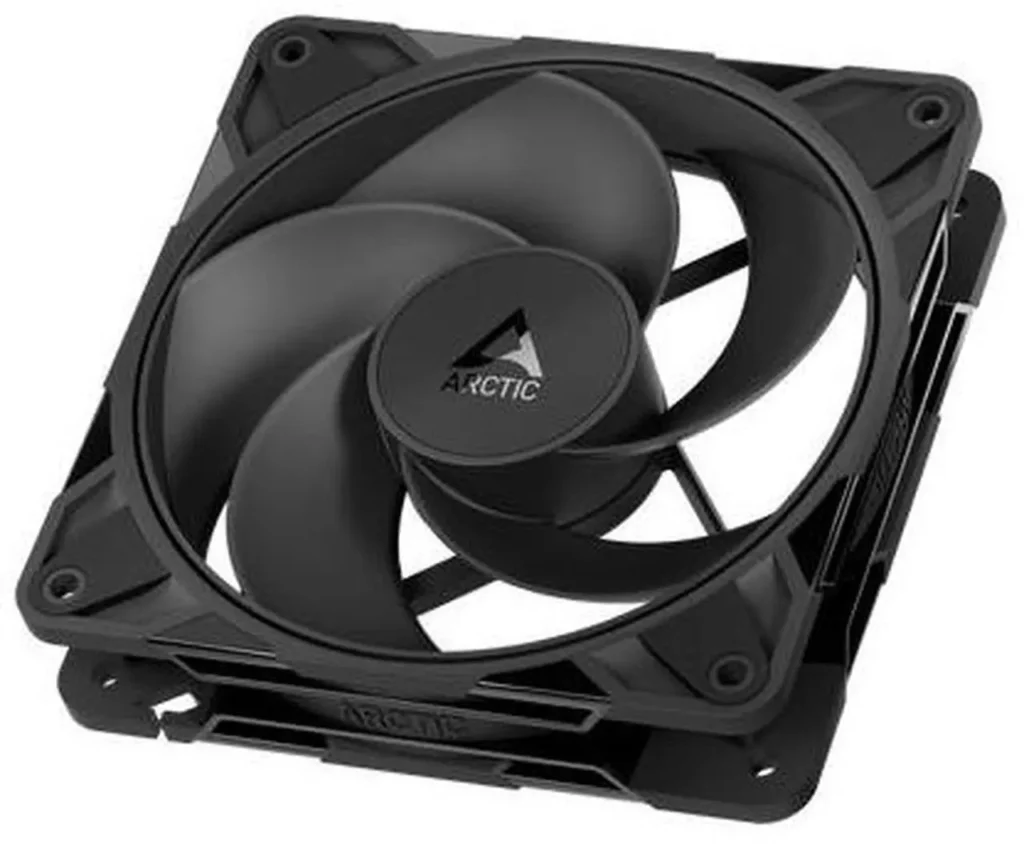
Fan quality. The biggest variable in most budget cases is the bundled fans. Two cases built on identical ODM steel can produce meaningfully different temperatures if one ships with decent 1200 RPM fans and the other ships with 800 RPM fans with weak static pressure. This is where brands differentiate, Corsair ships RS120 fans with their budget cases. Generic brands ship generic fans. Same chassis, different thermal results. A good example of a decent fan is the Arctic P12 Pro Reverse (about $10).
Quality control and finishing. The same ODM factory produces products at different quality tiers for different price points and brands. A brand paying more per unit gets tighter panel gaps, more consistent paint finish, and components that have been better inspected. A brand minimising cost gets whatever leaves the line without additional quality passes. Both may be structurally the same product.
Customer support. This is where established brands earn their premium most clearly. If a Corsair case arrives with a cracked panel, Corsair replaces it without requiring you to fight a returns process. If a no-name brand case arrives damaged, the support path is unclear at best.

Warranty terms. Corsair offers two-year warranties on most cases. Generic ODM brands offer 30-day return windows at best. For budget hardware that may have higher variance in component quality, warranty coverage is the risk management decision.
Why Some Budget Brands Are Worth Buying and Others Aren’t
The ODM system means brand recognition is a weak signal of product quality at the budget tier. A well-known brand using a mediocre ODM chassis can produce worse hardware than an unknown brand using a quality ODM chassis. The reverse is also true. Cooler Master Q300L V3 (about $45)

What the ODM system means practically for buyers: reviews and community testing matter more than brand recognition at the budget level. A Cooler Master Q300L V3 at $49-$55 earns its recommendation because independent reviewers tested it and confirmed the quality. A $35 no-name case with identical-looking specifications may be built on the same ODM chassis or may be a worse version. Without independent testing data, you’re guessing.
Redragon is a Chinese PC gear brand founded in 2012, dedicated to gaming peripherals. Known for affordability, Redragon specialises in the low to mid-tier budget segments, which are of good quality but relatively cheaper than the bigger brands. Redragon’s reputation is built on consistent quality from their chosen ODM partners across keyboards and mice specifically, the community has tested enough of their products over enough years to establish that the sensors and switches they source are legitimate rather than counterfeit or inferior.
Gamdias is a different case. Gamdias was founded in 2012 in Taiwan and describes itself as a world-renowned global manufacturer of high-quality gaming peripherals and technologies. The self-description is ambitious. The real-world product experience, as someone who has used several Gamdias products personally, is that the brand’s quality control is inconsistent and the build feel of their peripherals doesn’t match the spec sheets. Their cases have improved with the ATLAS P6 CG flagship, but their peripheral quality hasn’t consistently justified the price relative to alternatives at similar pricing from more focused brands.
GameMax is a separate Chinese company founded in 2001 with 500-1,000 employees and $28.8M revenue, not related to Gamdias despite visual similarities in some products. Those visual similarities exist because both companies source from overlapping ODM factories, not because they’re the same company. Thermalright Peerless Assassin 120 SE ($47)
How to Buy Budget Hardware Intelligently in the OEM System
Look for independent thermal or performance tests. A budget case with documented temperature results from TechPowerUp, Hardware Busters, or Tom’s Hardware tells you more than the spec sheet. If no independent outlet has reviewed it, assume the quality is unknown.
Check the fan specifications. The bundled fans determine the thermal outcome in most budget cases. If the listing doesn’t name the fan model or RPM rating, the fans are generic. Account for replacing them.
Buy from brands with reviewable warranty histories. Reddit’s r/buildapc and r/pcmasterrace both have records of how brands handle RMA and returns. A brand with consistent positive support history in community discussions is a meaningful signal at the budget tier where quality variance is real.
Treat visual similarity as a starting point, not a conclusion. Two cases that look identical may perform differently due to fan choice, manufacturing quality tier, and dimensional tolerances even on the same ODM chassis. Visual similarity tells you to investigate further, not that the products are equivalent.
At the budget tier, Newegg reviews combined with Reddit community experience is your best research tool. The volume of real-world feedback available on any product with meaningful sales history tells you far more than a manufacturer’s specification page.
The Brands Worth Knowing About
In the legitimate budget tier with consistent community respect: Redragon (keyboards and mice), Cooler Master’s budget lines (Q300L series), NZXT’s entry H-series, Montech (cases), Thermalright (coolers), Arctic (fans and coolers). All of these have been independently tested enough times across enough products to establish consistent quality at their price points. Thermalright Peerless Assassin 120 SE ($47)

Caution warranted: Gamdias (inconsistent quality, peripheral feel doesn’t match specs), GameMax (more common in UK/EU markets, limited independent testing in North America), MUSETEX (cases only, thermal performance adequate but fans are weak, budget for replacements), VETROO (coolers have community support, cases less tested).
Avoid entirely: unbranded products on Amazon and eBay with no manufacturer identity, products that don’t name their fan specifications, PSUs from brands without independent electrical testing documentation, particularly at the budget end where an undersized PSU can damage everything connected to it.
The OEM system isn’t a problem to solve. It’s the reality of how affordable hardware gets made and sold. Understanding it makes you better at navigating it.