
SpecClear earns a commission if you buy through Newegg links on this page, at no extra cost to you.
The original Corsair SABRE v2 PRO Ultralight launched in late 2025 at 36 grams and immediately became one of the most talked-about gaming mice in the FPS community. Thirty-six grams. A flagship sensor. Eight thousand hertz polling. For a mouse built from standard polycarbonate plastic, those numbers were remarkable.
Three months later, Corsair shadow-dropped two more versions of the same mouse at CES 2026. Same sensor, same polling rate, same symmetrical shape, but built from magnesium alloy and carbon fibre respectively, at significantly higher prices and with a detail that most of the marketing glossed over. Both new versions weigh 56 grams. That’s 20 grams heavier than the Ultralight they sit above in the lineup.
The question is whether that trade-off makes these better overall, or simply different. Here’s the complete picture.
The Three Versions: Understanding What You’re Choosing Between
Before the individual reviews, the lineup needs explaining because Corsair’s naming creates genuine confusion.
SABRE v2 PRO Ultralight (~$99): 36 grams, polycarbonate shell, no Bluetooth, up to 70 hours battery life at 1kHz polling. The original. The lightest. SABRE v2 PRO Ultralight ($99)
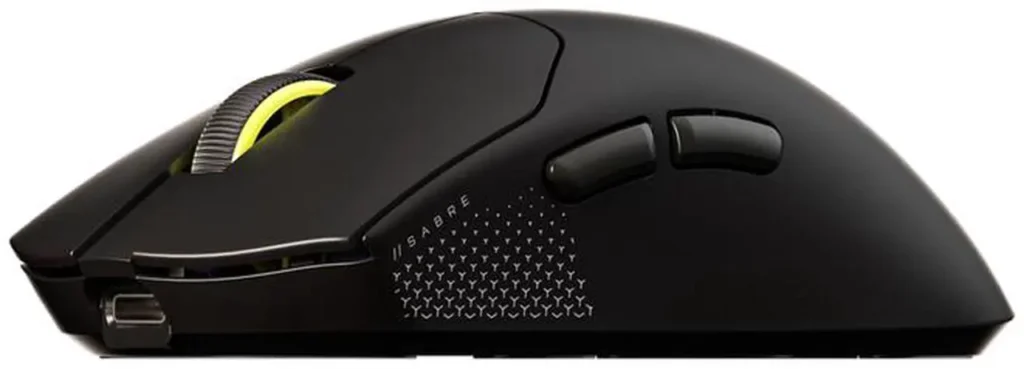
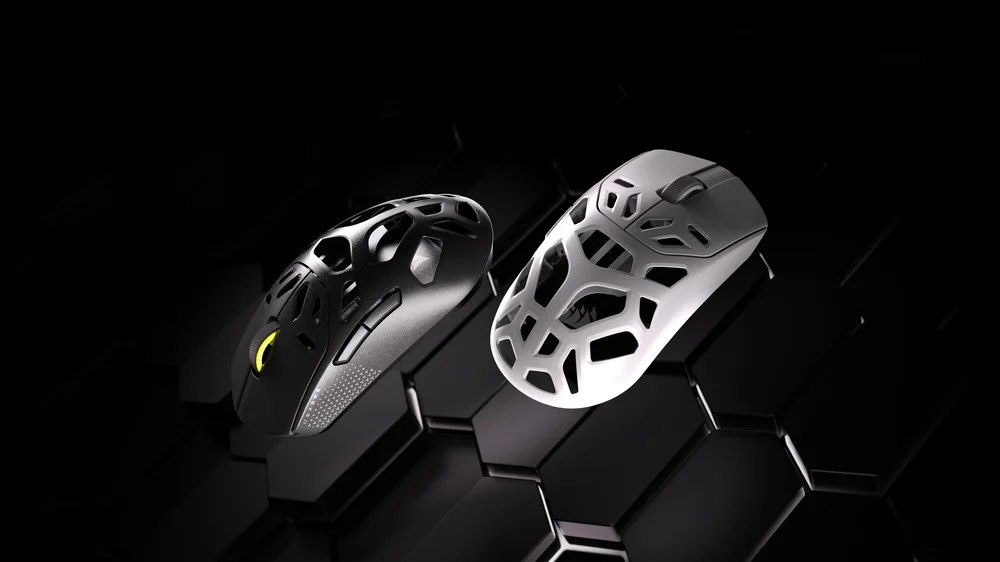
SABRE v2 PRO Wireless MG (~$139): 56 grams, magnesium alloy full shell, Bluetooth added, up to 120 hours battery at 1kHz polling. More expensive. Heavier. Better build quality.
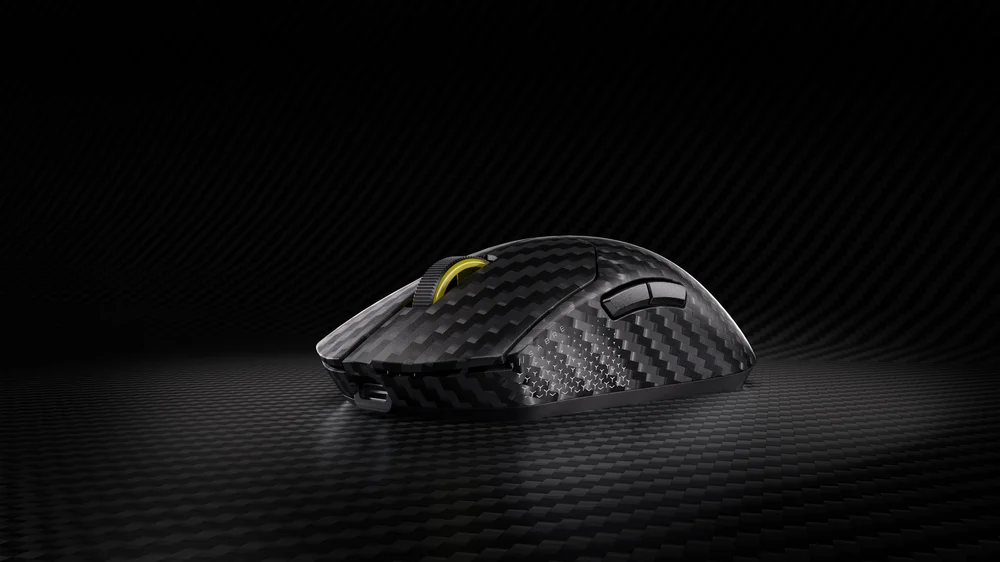
SABRE v2 PRO Wireless CF (~$147): 55±2 grams, carbon fibre unibody, Bluetooth added, up to 120 hours battery at 1kHz polling. Most expensive. Similarly heavy. Different aesthetic.
All three use the same MARKSMAN S sensor at 33,000 DPI, the same 8,000Hz hyper-polling rate, the same 750 IPS tracking, the same 50G acceleration, and the same symmetrical shape. The differences are material, weight, and price, not performance at the component level.
The SABRE v2 PRO MG: What Magnesium Actually Means
The CORSAIR SABRE v2 PRO Wireless MG is the first CORSAIR mouse to feature a full magnesium-alloy shell, a material prized in aerospace and performance automotive design. Its natural heat-dissipating properties keep the mouse cool under pressure, while its micro-textured metallic surface provides a uniquely confident grip even during extended play. For other options, see our best gaming mouse picks.
That description from Corsair is accurate as far as it goes. Magnesium alloy is a genuinely interesting material for a gaming mouse. It’s stronger than plastic per unit weight, dissipates heat from your palm during extended sessions, and produces a tactile feel that no plastic mouse can replicate. Picking up the MG and then picking up a standard polycarbonate mouse is immediately noticeable, the MG feels like precision engineering, not a consumer peripheral.
The SABRE v2 PRO MG is a symmetrical wireless mouse made for finger and claw grip gamers. The slightly heavier chassis helps maintain steadier crosshair placement and smoother micro-adjustments, especially for players who prefer a more grounded feel.
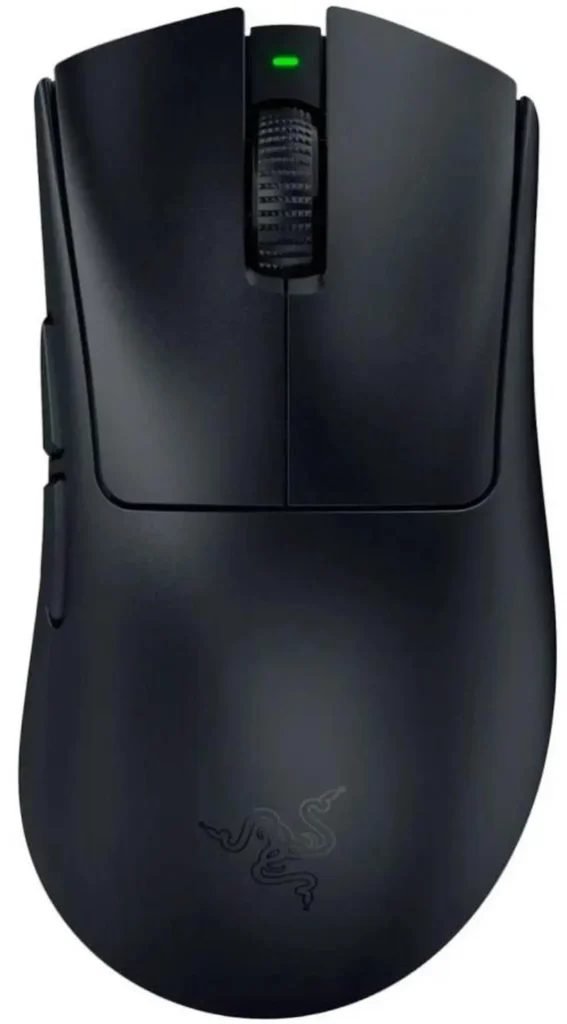
At 56 grams it’s not a heavyweight by any standard except the one Corsair set with the Ultralight. The Razer Viper V4 Pro weighs 50 grams. The Logitech G Pro X2 LIGHTSPEED weighs 60 grams. A 56-gram symmetrical wireless mouse with a flagship sensor is competitive with the best in the category. The issue is internal comparison, buying the MG over the Ultralight means paying $50 more and gaining 20 grams. For a lighter rival, see our Razer Viper V4 Pro review.
The battery improvement is real and significant. Up to 120 hours of battery life using 2.4GHz with 1kHz polling rate, compared to 70 hours on the Ultralight. The additional mass accommodates a larger battery cell without compromising the chassis dimensions. For players who forget to charge peripherals, the MG’s battery life advantage is a genuine daily quality-of-life improvement over the Ultralight.
Bluetooth is the other addition the Ultralight doesn’t have. Connecting the MG to a phone, tablet, or laptop via Bluetooth for productivity or casual use is a feature the Ultralight simply can’t offer. Not every gaming mouse buyer wants Bluetooth, but having it doesn’t hurt anything.
The honest caveat on the MG: The magnesium shell feels cold to the touch and the perforations are noticeable under the fingers in a way that smooth plastic isn’t. The MG’s micro-textured surface also requires grip tape if you prefer a softer feel, Corsair includes it in the box, which is the right call, but players who expect a traditional smooth-shell grip out of the box may find the transition takes adjustment. For another Corsair mouse with a different focus, read our Nightsword v2 Wireless SD review.
The SABRE v2 PRO CF: Carbon Fibre’s Specific Appeal
Every SABRE v2 PRO Wireless CF is engineered from aerospace-grade carbon fibre, a material that’s five times stronger than steel yet lighter than aluminum. The unibody shell isn’t just visually striking, it delivers exceptional structural rigidity that enhances long-term precision and competitive reliability.
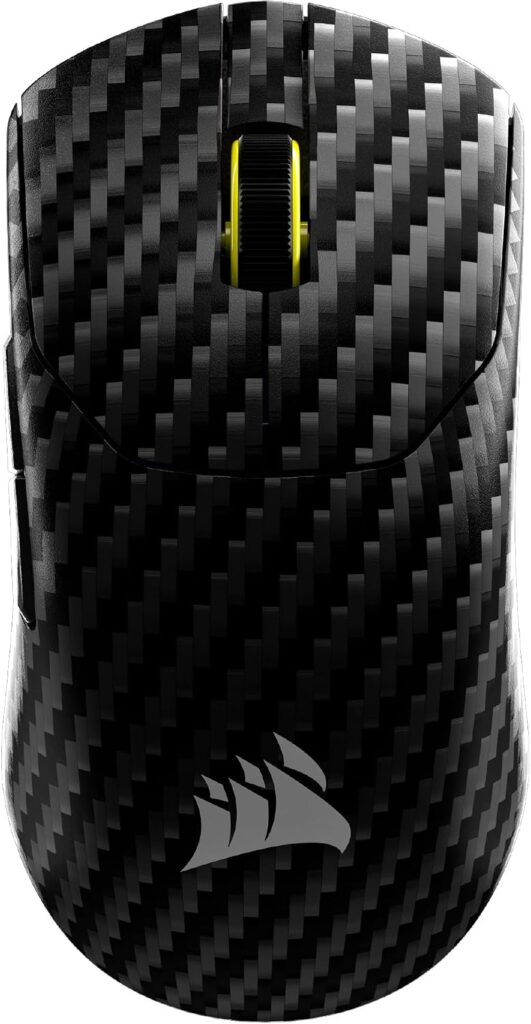
Carbon fibre in a gaming mouse is predominantly an aesthetic and feel choice rather than a weight advantage, the CF and MG are essentially the same weight at 55-56 grams. The carbon fibre finish is visually distinctive, the woven texture is immediately recognisable and has an understated premium look that neither standard plastic nor magnesium quite matches.
The structural rigidity argument has some practical merit. Carbon fibre’s stiffness-to-weight ratio means the shell doesn’t flex or creak under firm grip, which matters for claw grip players who apply significant lateral pressure during quick flicks. In daily gaming use the difference is subtle. In direct comparison with plastic shells under pressure, it’s perceptible.
The CF finish lacks the inherent grip texture of the MG’s micro-perforated magnesium surface. Players who prefer grip tape will find the CF’s smooth woven surface requires it from day one. The included grip tape in the box addresses this, but the CF’s smooth finish is more susceptible to palm sweat than either the MG or a standard textured plastic mouse.
The CF costs more than the MG at the same core specification. The premium is entirely for the material and the visual identity, there is no sensor performance difference, no polling rate difference, no meaningful weight difference. Buy the CF if the aesthetic specifically appeals or if you want the structural rigidity of a unibody carbon construction. Buy the MG if you want the material story at a lower price.
Sensor and Polling: Both Are Excellent
Both the MG and CF use the CORSAIR MARKSMAN S sensor, true 33,000 DPI, 750 IPS tracking speed, 50G acceleration, 99.7% resolution accuracy. These numbers are competitive with the PAW3950 used in Razer, Logitech, and ASUS ROG flagship mice. The MARKSMAN S has been independently validated in the SABRE v2 PRO Ultralight and earlier Corsair mice as a zero-acceleration, zero-smoothing optical sensor that performs accurately across any DPI setting.
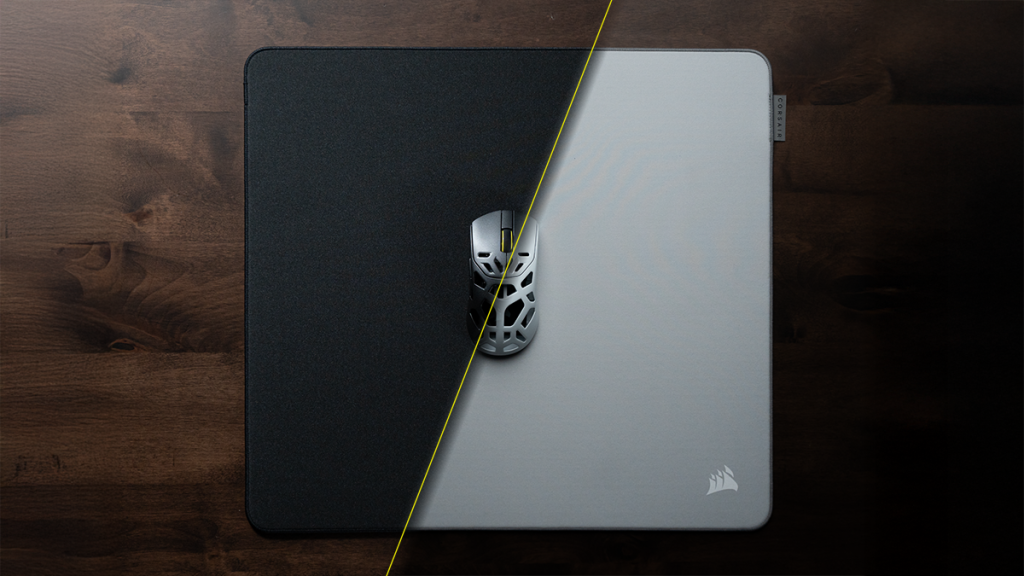
The 8,000Hz polling rate reduces input latency to 0.125ms, eight times faster than the 1ms of standard 1,000Hz mice. At 8,000Hz the mouse is sending input reports to the PC faster than your display can show them. The practical competitive advantage over 4,000Hz is measurable in professional tournament conditions. For regular gaming use, the difference versus 4,000Hz is imperceptible. The feature is there and costs nothing to enable, worth having.
Corsair Web Hub controls both mice through a browser interface with no software installation. DPI levels, polling rate, lift-off distance, Motion Sync, and button assignments all configurable from any browser on any system. For builders and gamers who run lean systems without third-party background software, Web Hub is the right approach.
Who Should Buy Which Version
Buy the SABRE v2 PRO Ultralight (~$99) if weight is the primary reason you’re considering the SABRE lineup. At 36 grams it’s in a different tier from the MG and CF, and the sensor and polling rate are identical. If you don’t care about Bluetooth, don’t need 120-hour battery life, and want the lightest mouse with this sensor, the Ultralight is the correct choice and $50 cheaper. SABRE v2 PRO Ultralight ($99)
Buy the SABRE v2 PRO MG (~$139) if you want premium build quality with a tactile metallic feel, Bluetooth connectivity, and extended battery life. The 56-gram weight is competitive with the best flagship mice in the category, the Ultralight comparison is only relevant if you were specifically shopping for sub-40-gram mice. The MG is an excellent all-round flagship gaming mouse that earns its price.
Buy the SABRE v2 PRO CF (~$147) if the carbon fibre aesthetic specifically appeals, or if the unibody structural rigidity under claw grip pressure is a priority for your play style. There is no performance advantage over the MG at the same price point, the premium is material and visual.
Don’t buy either premium version if you’re replacing a mid-range mouse and primarily want to improve your sensor. The Corsair Nightsword v2 Wireless SD at a lower price point covers competitive sensor performance without the materials premium. The MARKSMAN S sensor in all three SABRE variants is the same, the MG and CF premium is for the chassis, not the internals.
Specs Comparison
| Spec | SABRE v2 PRO Ultralight | SABRE v2 PRO MG | SABRE v2 PRO CF |
|---|---|---|---|
| Weight | 36g | 56g | 55±2g |
| Shell material | Polycarbonate | Magnesium alloy | Carbon fibre |
| Sensor | MARKSMAN S 33K DPI | MARKSMAN S 33K DPI | MARKSMAN S 33K DPI |
| Polling rate | 8,000Hz | 8,000Hz | 8,000Hz |
| Wireless | SLIPSTREAM 2.4GHz | SLIPSTREAM 2.4GHz + Bluetooth | SLIPSTREAM 2.4GHz + Bluetooth |
| Battery life (1kHz) | 70 hours | 120 hours | 120 hours |
| Price | ~$99 | ~$139 | ~$147 |