SpecClear earns a commission if you buy through Newegg links on this page, at no extra cost to you.

For almost thirty years, Crucial was the default answer to “what RAM should I buy?” Budget build, mainstream upgrade, first-time builder, Crucial fit every scenario. Reliable, well-priced, available everywhere, and backed by Micron’s manufacturing quality. The brand was boring in the best possible way.
Micron Technology announced its decision to exit the Crucial consumer business, ending nearly 30 years of Crucial-branded SSDs and memory products. Micron will continue Crucial consumer product shipments through the consumer channel until the end of fiscal Q2 in February 2026, after which the brand disappears.
The reason is blunt. Micron has determined it would rather make large amounts of money from AI infrastructure clients than smaller amounts over time from consumers and PC builders. The company is prioritising high-bandwidth memory for AI data centres, a strategic pivot that squeezes retail RAM and SSD supplies just as global demand explodes.
Crucial is gone. It’s not coming back. Here’s what to buy instead, and why the alternatives are genuinely good.
Why This Matters Beyond Brand Loyalty
Crucial wasn’t just a name. It was competition that kept RAM and SSD prices honest. For DIY PC builders, gamers, and desktop users, this removes one of the most recognised and accessible brands of RAM and SSDs from the market, reducing both competition and available options.
That reduction in competition arrives at the worst possible moment. DDR5 prices are already 4-5x their 2024 lows due to AI infrastructure demand consuming the same DRAM supply PC builders need. Micron’s exit isn’t about failure, it’s about opportunity cost. The explosion of generative AI has created an insatiable appetite for High-Bandwidth Memory (HBM), the specialised chips that power Nvidia’s GPUs and other AI accelerators. Producing HBM is resource-intensive, consuming significantly more silicon wafer capacity than standard consumer RAM.
The practical result: one less manufacturer competing for your budget means slightly less downward pressure on consumer RAM prices. It’s not catastrophic, Samsung and SK Hynix still serve the consumer market, but the long-term direction of consumer memory pricing just got marginally worse.
The RAM Alternatives: What to Buy Now
The good news is that every brand on this list has a longer track record than most people realise. None of them are second choices that exist because Crucial left. They were already there, already competing, and consistently performing well.
G.Skill: The Enthusiast Standard
G.Skill has been the go-to recommendation for performance-focused builders for over a decade. They don’t manufacture their own DRAM chips, no consumer RAM brand outside Samsung does, but they source from Samsung, SK Hynix, and Micron at the highest bin tiers and pair tight timings with aggressive XMP and EXPO profiles. The result is consistently the best-performing consumer DDR5 in independent testing.
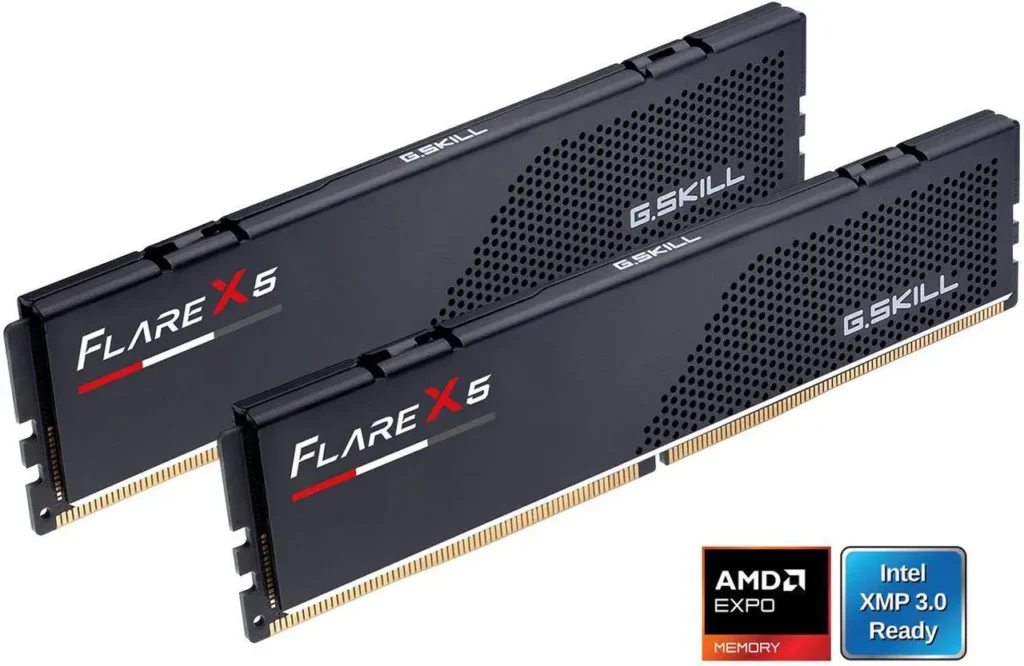
For AMD AM5 builds: The G.Skill Flare X5 32GB DDR5-6000 CL30 is the long-standing AM5 recommendation: CL30 at the Infinity Fabric sweet spot of 6000MHz, EXPO-certified, validated on AM5 boards. At about $660 on Newegg, though, it costs about $130 more than the Corsair Vengeance DDR5-6000 CL30 kit below, so it’s only worth it if the price drops. The Trident Z5 Neo RGB version is the same performance class with lighting, usually at a premium over the Flare X5 floor rather than a discount. G.Skill Flare X5 32GB DDR5-6000 CL30 (about $660)
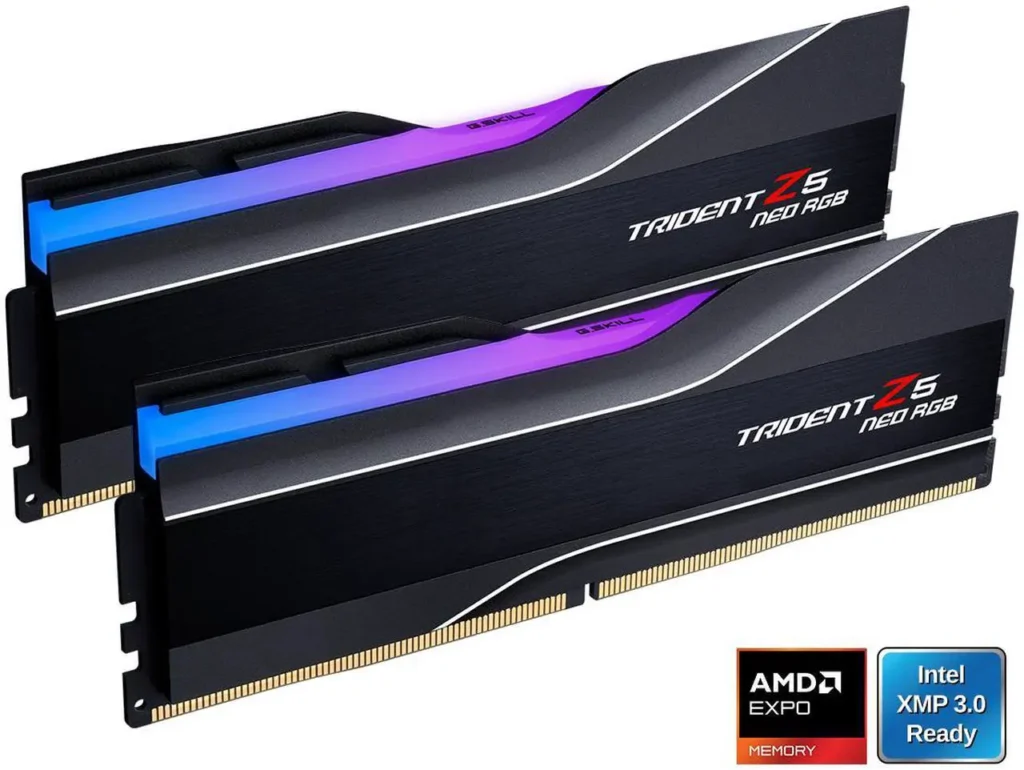
For Intel LGA1851 builds: The G.Skill Trident Z5 / Neo RGB DDR5-6000 class kits are XMP 3.0 certified and tuned for Intel’s platform, and they sit in the same elevated DDR5 street reality as AM5 kits (about $460 and up for a 32GB DDR5-6000 kit on Newegg, more for RGB and premium bins). On Newegg, look for the G.Skill Trident Z5 Neo RGB DDR5-6000 CL30 (about $670). Our best RAM for gaming guide compares more kits.
What G.Skill does well: Tightest available timings, best bin quality, comprehensive EXPO and XMP profile support across a wide range of boards. The Flare X5 specifically has been independently validated on more AM5 motherboards than any competing kit.
What to watch: G.Skill is premium-priced. You’re paying for the bin quality and timing validation, which is worth it if you care about eking out every bit of performance. If you’re equipping a budget build, Kingston or TeamGroup match the performance per dollar more accurately.
Kingston Fury: The Reliable Middle Ground
Kingston has manufactured memory since 1987. Their Fury Beast and Fury Renegade lines cover the DDR5 gaming market from budget to enthusiast, consistently deliver on their rated speeds, and carry the same lifetime warranty structure that Crucial offered.
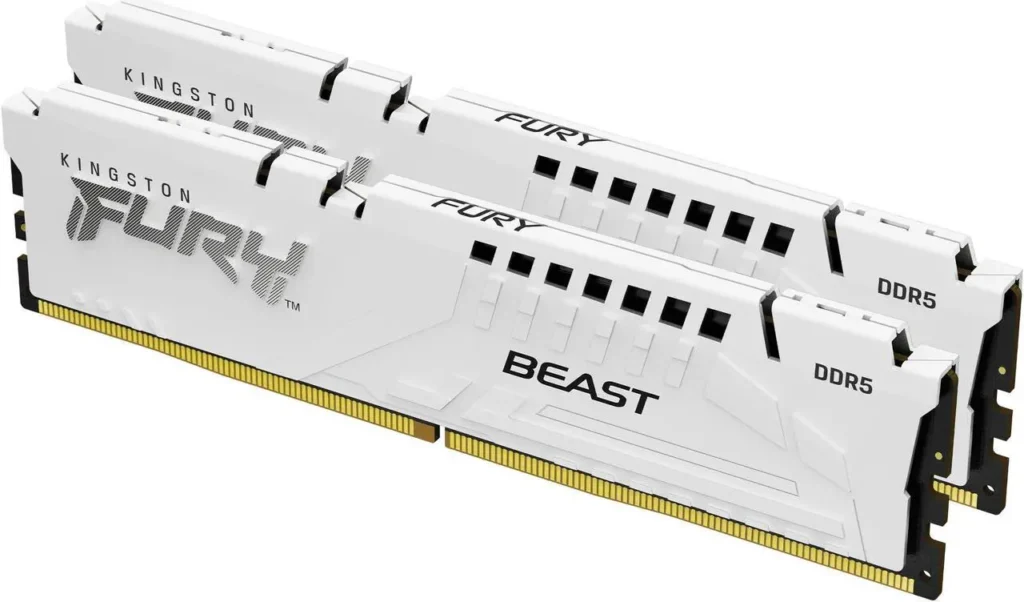
For AM5 builds that need low-profile RAM: Kingston Fury Beast DDR5-6000 CL36 32GB is about $560 on Newegg. That’s more than the T-Force Vulcan and Corsair Vengeance kits below, so pick it for cooler clearance rather than price. CL36 versus CL30 is a 1-2% gaming performance difference, statistically invisible in most gaming scenarios. The lower-profile heatspreader on the Fury Beast clears almost every CPU cooler including large dual-tower air coolers, which G.Skill’s taller Trident Z5 heatspreaders sometimes can’t. Newegg stocks the Kingston Fury Beast DDR5-6000 CL36 32GB (about $560).
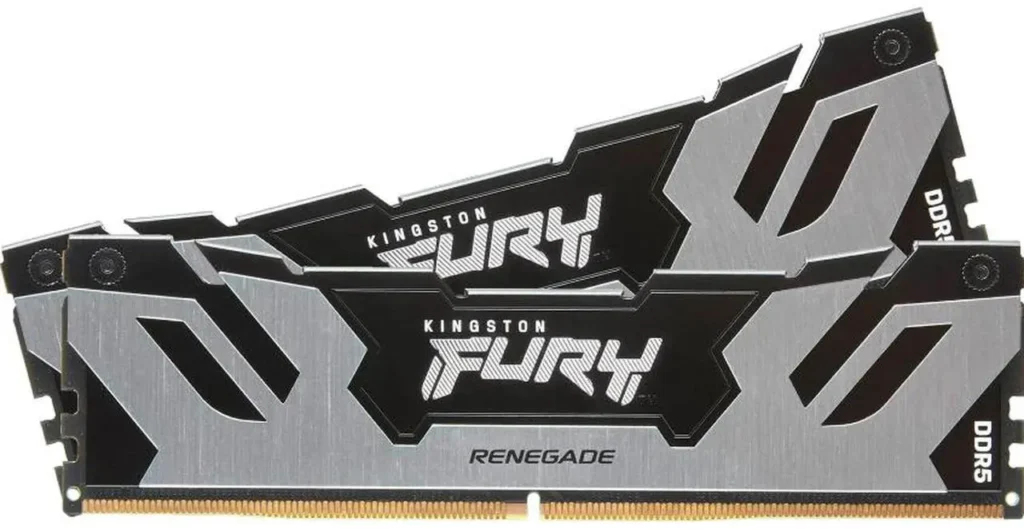
For performance AM5 builds: Kingston Fury Renegade DDR5-6000 CL32 32GB was last listed at about $500 on Newegg, which is below the Fury Beast, but it’s out of stock right now. Tighter timings than the Beast. A good middle-ground choice when it’s back in stock. Kingston Fury Renegade DDR5-6000 CL32 32GB (about $500, out of stock on Newegg)
What Kingston does well: Broad board compatibility, low-profile options that work with physically large coolers, lifetime warranty, and genuine value at the entry and mid tiers. Kingston is also the RAM brand most likely to be stocked at your local retailer, useful if you need a kit immediately. For why kits cost so much right now, see our explainer on RAM prices and the DDR5 shortage.
What to watch: Kingston’s top-end DDR5 isn’t quite as aggressively binned as G.Skill’s Trident Z5 Neo at the same price point. If you’re chasing sub-CL30 timings, G.Skill leads. For everything else, Kingston is excellent.
TeamGroup: The Budget Champion
TeamGroup has been making RAM since 1997 and is the brand that consistently wins the “best value per dollar” category in independent testing. TeamGroup is listed alongside Kingston and Samsung as one of the strongest Crucial alternatives. Their T-Force Vulcan DDR5 line specifically targets the AM5 sweet spot.
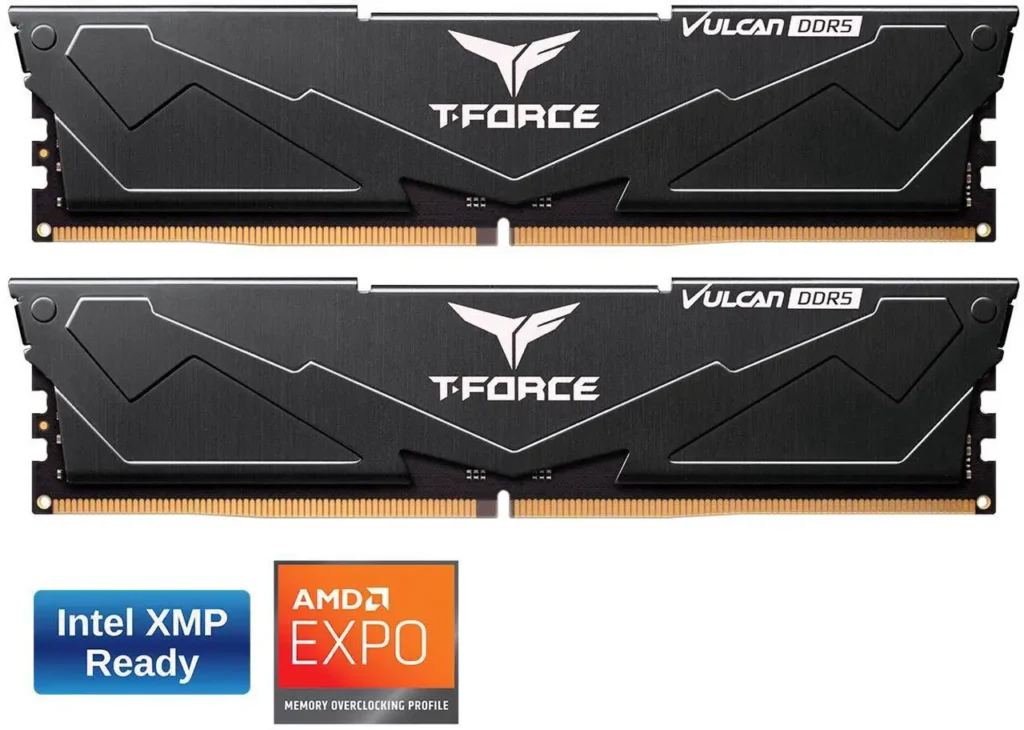
For budget AM5 builds: TeamGroup T-Force Vulcan DDR5-6000 CL38 32GB at about $490 is usually the most affordable way to hit the 6000MHz Infinity Fabric sweet spot. CL38 is looser than CL30 but the real-world gaming difference is 1-3fps in CPU-sensitive scenarios, effectively nothing in most gaming use cases. For a build where the GPU budget matters more than memory timing optimisation, this is the call. Newegg has the TeamGroup T-Force Vulcan DDR5-6000 CL38 32GB.
What TeamGroup does well: Price. Consistently undercuts every competitor at equivalent speeds and capacity. The T-Force Vulcan has both XMP and EXPO profiles, trains reliably on most AM5 boards, and delivers the performance its spec sheet promises.
What to watch: TeamGroup’s customer support and RMA process is less established in Western markets than Kingston or G.Skill. Their products work, the community track record is solid, but if something goes wrong, the support experience is less smooth than Kingston’s. For a budget build where the RAM is the least likely component to fail, this is an acceptable trade-off. For more on the wider memory market, read our report on the Samsung, SK Hynix and Micron DRAM lawsuit.
Corsair: The Ecosystem Play
Corsair Vengeance DDR5 is a strong option for builders already running a Corsair ecosystem: iCUE lighting, Corsair AIO, Corsair case. The lighting synchronisation across components from one software platform is cleaner than mixing brands.
For mixed Corsair builds: Corsair Vengeance DDR5-6000 CL30 32GB is about $530 on Newegg and the RGB version about $640, so treat the RGB listings as a premium ecosystem tax rather than the market baseline. The standard kit is also the cheapest CL30 option in this guide, which makes it the best-value pick for most AM5 builds, Corsair ecosystem or not. Good timings, reliable XMP/EXPO profiles, and Corsair’s iCUE integration for builders who want unified RGB control. Corsair Vengeance DDR5-6000 CL30 32GB (about $530)
What to watch: Corsair peripherals and PSUs aren’t available on Newegg, but Corsair RAM is. Also worth noting: reports surfaced in 2026 that some Corsair Vengeance DDR5 modules were using CXMT DRAM chips, a Chinese manufacturer rather than Samsung, SK Hynix, or Micron. CXMT chips perform adequately but are less proven long-term than the established three. Check the specific kit’s DRAM manufacturer reviews before buying if this matters to you.
The SSD Alternatives: Crucial’s Other Half
Crucial made excellent SSDs alongside their RAM, the T705 was the PCIe 5.0 reference SSD for over a year, and the P3 Plus was the budget NVMe default for thousands of builds. Here’s what fills those gaps.
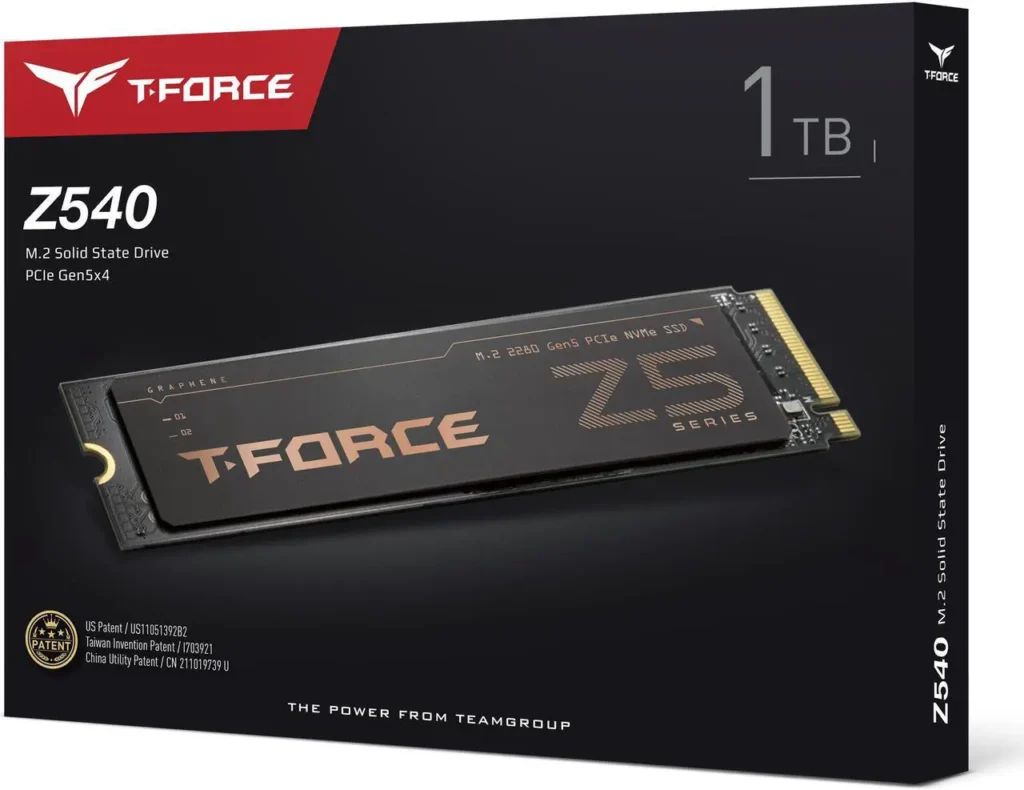
Replaces the Crucial T705 (PCIe 5.0 flagship): The TeamGroup T-Force Z540 PCIe 5.0. Newegg doesn’t sell the 2TB version new right now; the 1TB is listed at about $253 and is out of stock. The TeamGroup Z540 traded benchmark wins with the Crucial T705 and edges it on price, making it the new top pick for the PCIe 5.0 category. TeamGroup T-Force Z540 PCIe 5.0 (1TB, about $253, out of stock). For more drives, see our best SSDs for gaming.
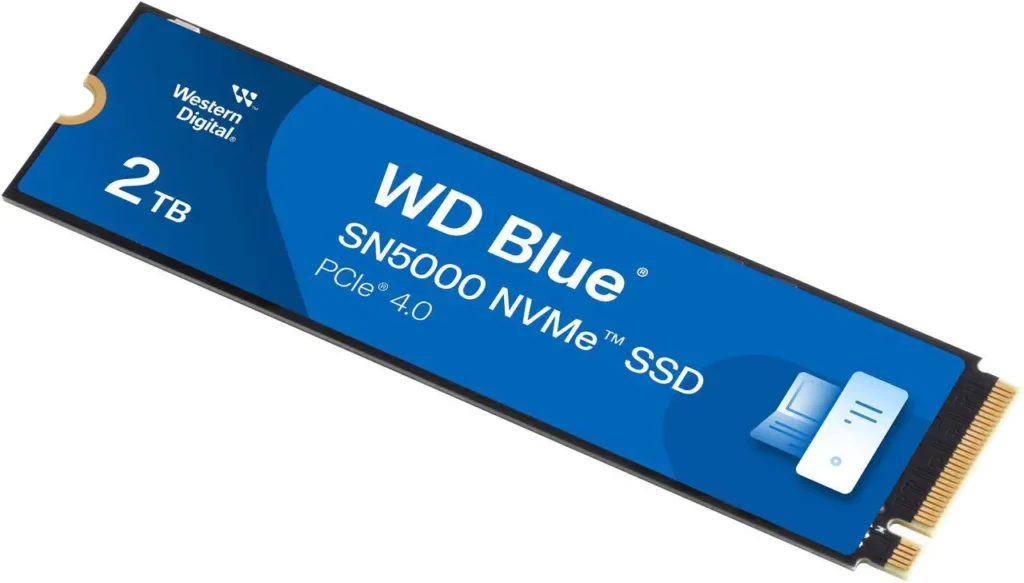
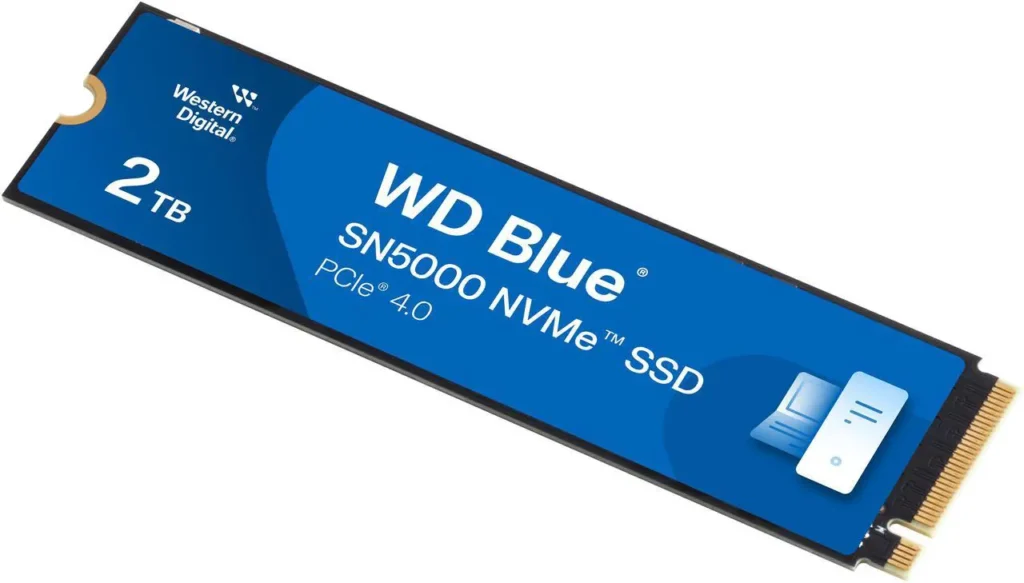
Replaces the Crucial P3 Plus (budget PCIe 4.0): The WD Blue SN5000 2TB at about $277 on Newegg and the Kingston NV3 1TB at about $157 are both direct replacements, sequential reads in the 6,000-6,500 MB/s range, reliable QLC NAND, no-drama daily performance. The Samsung 990 Pro 2TB at about $386 is the step up if you want DRAM cache and slightly better sustained performance. Newegg has the WD Blue SN5000 2TB (about $277) and the Kingston NV3 1TB (about $157).
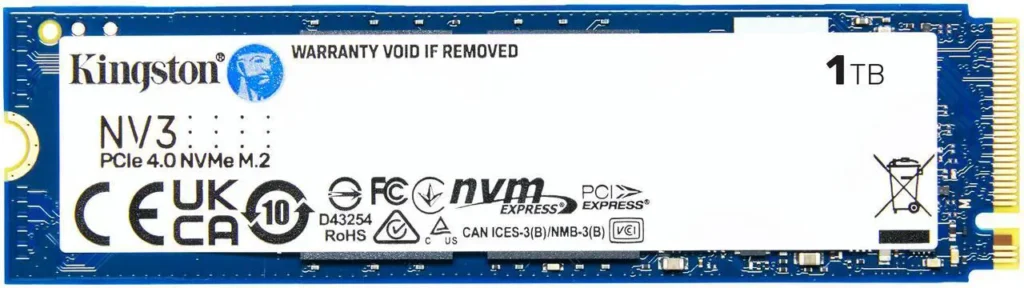
What about Corsair SSDs? Corsair MP700 Pro and MP600 Elite are both on Newegg and perform well in the PCIe 4.0 and 5.0 tiers respectively. Worth considering if you want a single brand across storage and case. If you’d rather not pay for Corsair, the Kingston NV3 1TB (about $157) is the cheaper route.
The One Thing Nobody Mentions
All consumer RAM brands source their DRAM chips from the same three manufacturers: Samsung, SK Hynix, and Micron. When Micron exited the consumer market it didn’t stop making chips, it stopped letting Crucial put its logo on them and sell to individuals. The chips in your G.Skill, Kingston, or TeamGroup kit are made by one of those three companies.
The brand matters for quality control, binning, timing validation, warranty support, and software integration. It doesn’t determine the fundamental quality of the underlying silicon. Crucial’s exit doesn’t mean you’re losing access to good memory, it means you’re buying it from a different box.
The alternatives are good. Some are better than Crucial was at specific tiers. Buy with confidence.