
SpecClear earns a commission if you buy through Newegg links on this page, at no extra cost to you.
Most keyboard announcements at Computex follow a predictable pattern. New switches. Updated polling rate. Different layout options. Premium materials. Occasionally something genuinely surprising happens.
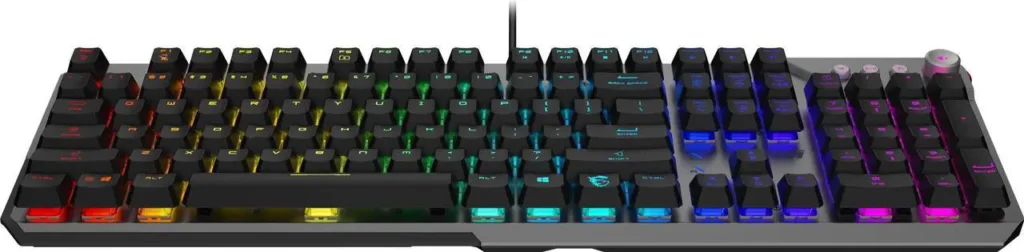
MSI brought a keyboard to Computex 2026 and submerged it in water while it was running. The keyboard kept working. That’s not the most important thing about the STRIKE ALLOY TMR, but it’s the most memorable demonstration of why the engineering behind it is worth paying attention to.
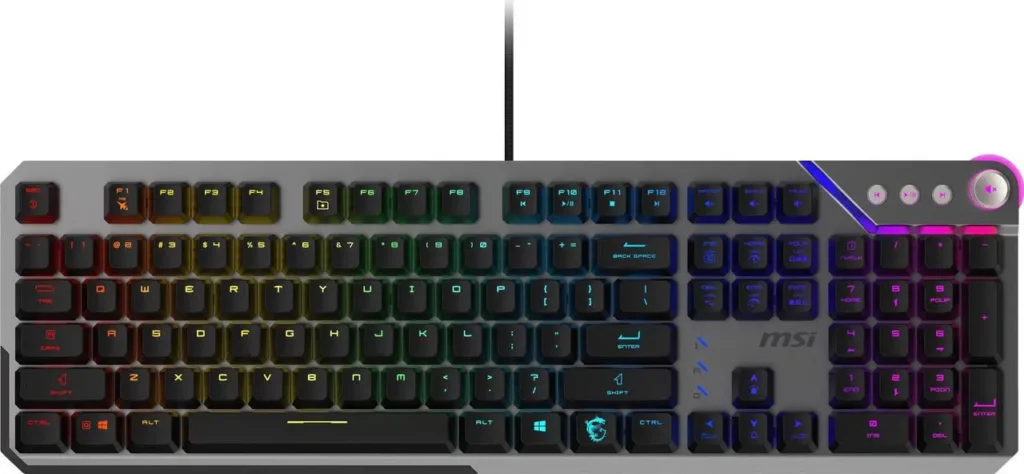
The MSI STRIKE ALLOY TMR uses Tunnel Magnetoresistance switches, a sensing approach that strips out the mechanical detection parts entirely, similar to what Valve used in the Steam Controller. The water demonstration wasn’t a gimmick. It was a consequence of the technology.
What TMR Actually Means
To understand why the STRIKE ALLOY TMR is interesting, you need to understand what makes TMR different from every other gaming keyboard switch, including Hall Effect, which has dominated the competitive keyboard conversation for the past two years. MSI STRIKE ALLOY TMR
Standard mechanical switches use physical contact. Two metal points touch to complete a circuit and register a keypress. Over millions of keypresses those contact points wear, producing inconsistency. Hall Effect switches replaced physical contact with a magnet moving past a sensor, no wear on the detection mechanism, adjustable actuation point, Rapid Trigger support. Hall Effect is a genuine upgrade over traditional mechanical for competitive gaming. Our gaming keyboard explainer goes through mechanical, Hall Effect and the other switch types in more detail.
TMR switches are more sensitive, use less power, and are faster than Hall Effect, with improvements to anti-interference. The technical distinction is the sensor type. Hall Effect sensors detect the strength of a magnetic field. TMR sensors detect resistance changes caused by quantum electron tunnelling through a thin insulating barrier, a measurement mechanism that’s more sensitive to small position changes and less susceptible to electromagnetic interference from nearby components.
The practical result: TMR can detect smaller movements more accurately than Hall Effect, making it theoretically better for analogue input, gaming features where the precise depth of a keypress controls how fast you move or how hard you accelerate, rather than just whether the key is pressed or not. For standard competitive FPS gaming where you want on/off input as fast as possible, the difference between a well-implemented Hall Effect switch and TMR is imperceptible in normal play.
The reason the keyboard works submerged is that TMR requires no physical contact between components to register a keypress. The sensing is entirely magnetic. Water between the keycap and the PCB doesn’t interrupt a circuit because there’s no circuit to interrupt. MSI demonstrated the keyboard working while submerged in water at its Computex 2026 stand, not as a practical waterproofing feature, but as a visual proof that no physical electrical contact is involved in key registration.
The Full Specification
The STRIKE ALLOY TMR features 8,000Hz polling for ultra-low-latency gaming, a hot-swappable design that lets you swap in either TMR switches or conventional mechanical ones, a magnesium-aluminum alloy chassis, and five layers of dampening for premium acoustics plus a gasket mount. For how it stacks up against boards already on sale, see our best gaming keyboard picks.

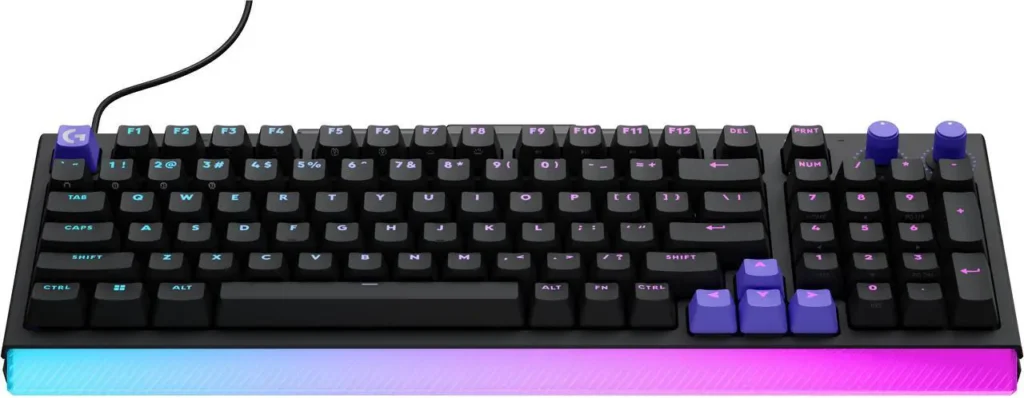
The hot-swap flexibility is the specification that stands out beyond the TMR switches themselves. Most keyboards lock you into the switch type they shipped with, changing switches requires desoldering every individual switch, which is a hours-long process most owners never attempt. The STRIKE ALLOY TMR accepts both TMR magnetic switches and conventional mechanical switches in the same sockets. Its switch beds are hot-swappable between TMR and mechanical switches, which is a neat level of flexibility reminiscent of the Logitech G512 X.
This means you could run the board with linear mechanical switches for typing-focused sessions and swap in TMR switches for competitive gaming without buying a different keyboard. In practice most buyers will choose one switch type and leave it, but the flexibility is a meaningful differentiator for enthusiasts who like to tune their hardware.
The five-layer gasket mount and acoustic dampening sit alongside the TMR technology as evidence that MSI built this as a genuine premium product rather than a switch-technology showcase in a budget chassis. Gasket mounting and multi-layer foam are what separate keyboards that sound like typing from keyboards that sound like expensive typing. The magnesium-aluminum chassis adds weight and rigidity without the manufacturing complexity of machined aluminium.
MSI walked away from Computex 2026 with a Best Choice Award for the keyboard-and-screen combo, specifically the STRIKE ALLOY TMR paired with the STRIKE NEXUS modular touchscreen.
The STRIKE NEXUS: The Accessory That Makes the Ecosystem
The STRIKE ALLOY TMR doesn’t exist alone. MSI announced it alongside the STRIKE NEXUS, a modular touchscreen that attaches magnetically to the keyboard chassis.
The NEXUS is a detachable touchscreen that functions as a system monitoring display, macro panel, and, in its most distinctive feature, contains a built-in M.2 SSD slot. The Strike Nexus is described as the numpad reviewer Ben Hardwidge of Club386 always wanted, with magnetic attachment to the keyboard chassis and an internal M.2 storage slot.
The M.2 slot inside a keyboard accessory sounds absurd until you think about what it solves. The NEXUS connects to the keyboard via magnetic rail. The keyboard connects to the PC via USB. The M.2 drive inside the NEXUS appears as a storage device on your PC, a portable SSD that’s always on your desk, always connected when you sit down, always ready without plugging in a separate cable. For streamers who transfer large video files between sessions, or for builders who keep game installations on a secondary drive, the convenience case is real.
The touchscreen surface handles the same functions as an Elgato Stream Deck, OBS scene switching, system monitoring, application shortcuts, macro triggers, through a physical display rather than physical buttons. Whether a touch interface or physical buttons is preferable for live stream management is a personal preference question the market is currently answering with mixed results. Turtle Beach’s Command Series keyboards are pursuing the same touchscreen-on-keyboard approach. MSI’s execution with the detachable NEXUS module is architecturally more elegant than most competitors.
The Honest Unknowns
As of mid-September 2026, no retail price or firm launch date has been announced. MSI is still pointing at a broad H2 2026 window, which now mostly means the remaining Q4 months rather than a useful calendar date for buyers trying to plan a peripheral purchase. If you can’t wait that long, our Razer Huntsman V3 Pro TKL review covers a rapid trigger board you can buy now.


Price is the critical unknown. TMR switch technology is more expensive to implement than Hall Effect, which is itself more expensive than traditional mechanical. The magnesium-aluminum chassis, five-layer gasket mount, hot-swap system, and NEXUS touchscreen with M.2 slot all add manufacturing cost. A keyboard with this specification list priced at $150-$200 would be aggressive and immediately competitive. Priced at $300+ it enters territory where the Keychron Q5 Max, the Wooting 80HE, and established premium mechanical keyboards compete with decades of community trust and refinement behind them.
If the STRIKE ALLOY TMR launches at a competitive price, the hot-swappable TMR/mechanical socket system and the NEXUS ecosystem make it one of the most interesting gaming keyboards of 2026. If it launches at $400+ for the keyboard-plus-NEXUS bundle, it becomes a showcase product that most buyers admire and few purchase. Keychron Q5 Max ($450)

Should You Wait for It?
For buyers who specifically want TMR switch technology: yes, wait. The STRIKE ALLOY TMR is likely the most capable TMR keyboard that will reach mainstream retail in 2026. The remaining H2 window still points at a late-2026 arrival if MSI hits its own broad guidance, but that is not a confirmed ship date. If you’d rather buy something quieter today, read our be quiet! Light Mount TKL review.
For buyers who want the best available keyboard right now: don’t wait. The Corsair K70 PRO TKL with Hall Effect switches covers competitive gaming capability completely. The Keychron Q5 Max covers premium typing performance. The gap between a well-implemented Hall Effect keyboard and a TMR keyboard in actual competitive gaming use is imperceptible. TMR’s advantages are real but they’re not the reason to delay a keyboard purchase for months. K70 PRO TKL ($219)

Watch MSI’s product pages and Newegg’s keyboard category for the STRIKE ALLOY TMR listing. Mid-September still shows Computex coverage and awards, not a buy button. When it appears with confirmed pricing it will be worth a dedicated revisit. The technology is genuinely interesting. The price will determine whether it earns the recommendation.