
This week Nvidia CEO Jensen Huang flew to Tokyo, walked into the building that used to be SEGA’s Akihabara Arcade, and shook hands with Virtua Fighter creator Yu Suzuki. The announcement that followed that SEGA will bring its games to Nvidia’s RTX Spark platform, starting with Virtua Fighter Crossroads in 2027 reads like a corporate press release. The backstory is considerably more interesting.
Updated September 11, 2026: treat RTX Spark / partnership pricing and ship windows as fluid; early chatter still often lands around ~$1,800+ with staggered availability.
Nvidia exists partly because SEGA didn’t let it die.
The 1996 story that makes this partnership mean something
In 1996 Nvidia was in serious trouble, the company had failed to deliver the graphics technology SEGA needed for the Dreamcast console the NV1 chip’s quadratic rendering approach couldn’t run standard triangles, which made game porting a nightmare. SEGA could have cancelled the contract and walked away. Former SEGA President Shoichiro Irimajiri, who was at this week’s Tokyo event, made a different call. He approved a $5 million equity investment in Nvidia instead.
That $5 million gave Jensen Huang the runway to develop the RIVA 128 the card that established Nvidia as a serious GPU manufacturer and eventually the GeForce 256, the chip that introduced the term GPU to the world. Without that investment, Nvidia almost certainly folds in 1996. No GeForce, no CUDA, no RTX, no $5 trillion market cap.
Thirty years later, the companies held an event at the original SEGA Akihabara Arcade site to celebrate. The symmetry is deliberate. The first PC version of Virtua Fighter in 1996 ran on the Nvidia NV1. The first major SEGA title confirmed for RTX Spark is Virtua Fighter Crossroads in 2027.
What RTX Spark actually is and why it needs this
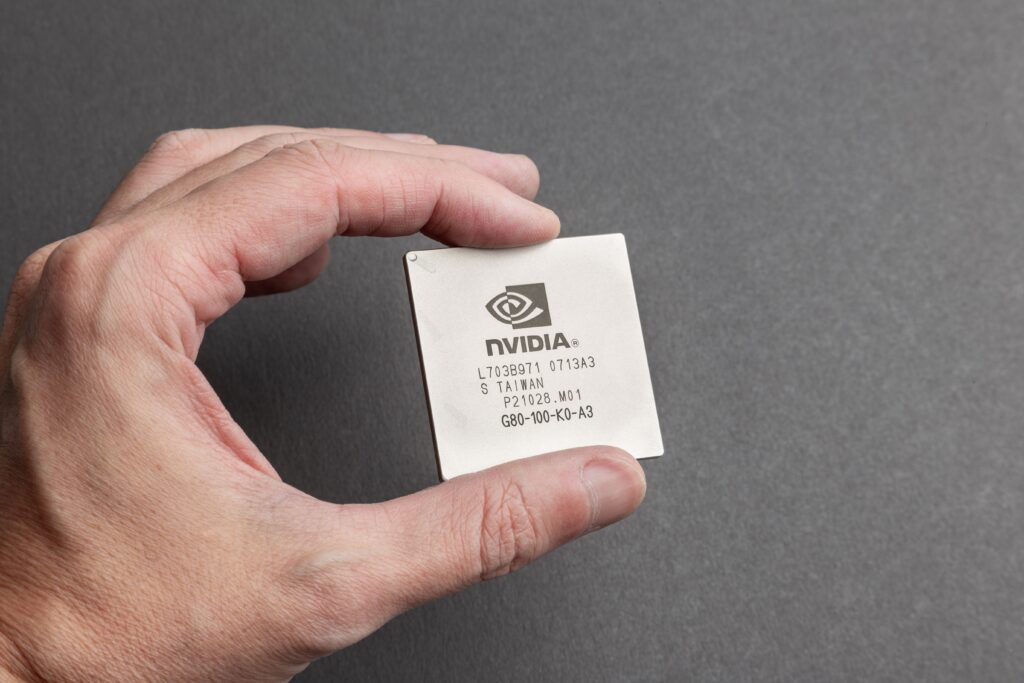
Nvidia announced RTX Spark at Computex 2026 as its first consumer-facing CPU technically a GB10 Superchip combining a 20-core ARM-based Grace CPU with a Blackwell RTX GPU delivering up to 6,144 CUDA cores and up to 128GB of unified memory. It’s aimed at thin laptops, compact desktops, and mini PCs not the traditional discrete GPU gaming market that SpecClear’s build guides and GPU comparisons address. We cover what it means for builders in our Nvidia RTX Spark explainer.
The platform is genuinely capable for AI workloads and content creation. Gaming is where it faces a structural challenge. nvidia sega rtx spark uses ARM CPU cores, which means games built for x86 Windows essentially every PC game released in the last three decades run through an emulation translation layer rather than natively. Translation layers work but they introduce performance overhead and compatibility quirks that native x86 execution avoids.
Nvidia’s answer to this is developer partnerships. If major publishers commit to building native ARM64 Windows versions of their games specifically for RTX Spark, the translation overhead disappears and the platform performs as its silicon suggests it should. Qualcomm has been pursuing the same strategy with Snapdragon X Elite laptops, with mixed success.
SEGA’s partnership is the most significant gaming commitment RTX Spark has received since Computex. Nvidia VP Deepu Talla confirmed the partnership covers “all of SEGA’s games” coming to RTX Spark a statement that sounds expansive but currently has only one confirmed title attached to it.
Virtua Fighter Crossroads: what’s confirmed
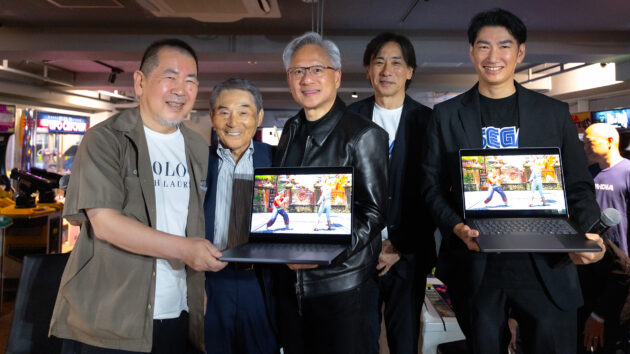
Virtua Fighter Crossroads is the first original entry in the Virtua Fighter series in over 20 years. It’s confirmed for 2027 with RTX Spark support including ray tracing and DLSS. Whether RTX Spark will receive a launch-day release alongside other platforms hasn’t been confirmed. Whether Crossroads will be a native ARM64 build or rely on translation hasn’t been confirmed either which is the question that actually determines the quality of the experience.
Beyond Crossroads, the specific SEGA titles in the broader partnership haven’t been published. SEGA’s library includes Yakuza and Like a Dragon, the Persona series through Atlus, Total War through Creative Assembly, Football Manager, Sonic, and the classic arcade catalogue. Speculation runs toward all of them. Confirmation exists for none of them beyond the “all of SEGA’s games” statement.
The ARM gaming compatibility question: the real story underneath
The Nvidia-SEGA announcement is significant partly because it signals that Nvidia is serious about RTX Spark as a gaming platform, not just an AI compute device with gaming capability as a secondary feature. Major publisher commitments change the calculus for developers considering the investment of a native ARM64 port.
But the ARM gaming situation on Windows remains genuinely complicated in 2026. Microsoft’s ARM translation layer Prism handles most x86 games adequately, but demanding titles at the edge of current hardware capability show meaningful performance gaps between translated and native execution. For a fighting game like Virtua Fighter Crossroads built specifically for the platform, native execution is achievable and the platform’s unified memory architecture is an advantage. For an open-world RPG originally built for x86 and subsequently ported, the situation is more variable.
Anti-cheat is the other complication. Kernel-level anti-cheat systems the same ones that prevent games like Valorant and Call of Duty from running on SteamOS face similar challenges on ARM Windows. Nvidia confirmed that popular anti-cheat software will be supported natively on RTX Spark, which is a meaningful technical achievement if it delivers as described.
What this means for desktop PC builders

Directly, very little right now. RTX Spark is a laptop and compact desktop platform. It doesn’t replace or compete with a discrete GPU gaming build. A Ryzen 7 9800X3D paired with an RTX 5070 in a mid-tower handles gaming workloads that RTX Spark’s integrated GPU approach can’t match in raw performance.
What it signals is where Nvidia wants the PC gaming market to go thinner, lighter, more AI-integrated, and less dependent on a discrete GPU tier. Whether that vision succeeds depends on developer adoption that the SEGA partnership is one step toward building.
For SEGA fans specifically, the partnership is genuinely exciting news. A new Virtua Fighter with DLSS and ray tracing, confirmed for a modern PC platform, is a better outcome than the franchise’s decade-plus dormancy suggested was likely. The RTX Spark context is the detail; the new Virtua Fighter is the headline for most people reading this.