
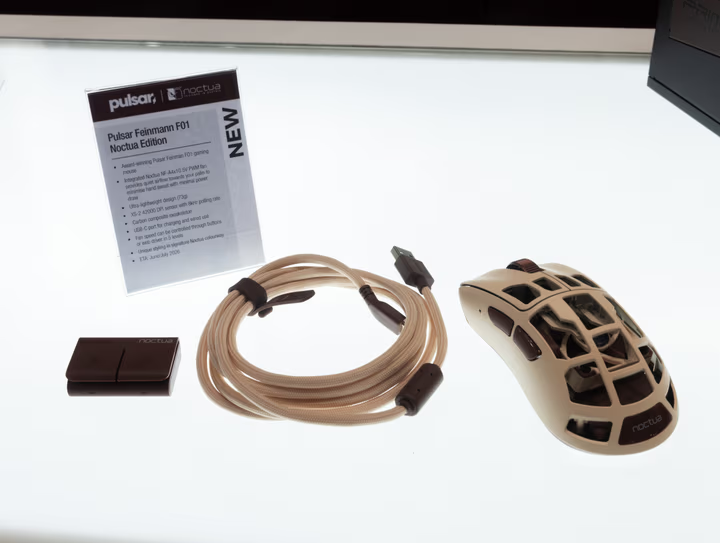
Gaming mice have chased lower weight, better sensors, and faster polling rates for years. The Pulsar Feinmann F01 Noctua Edition is doing something different. It has a fan inside it. A Noctua fan. Blowing air at your palm.
That sentence either makes you want one immediately or raises a significant number of questions. Both reactions are reasonable. Here’s the full picture on what this mouse is, why it exists, and whether a fan in a gaming mouse is a gimmick or a genuine solution to a real problem.
The problem it’s solving
Sweaty palms during intense gaming sessions are more than a comfort issue. Moisture on your palm changes the friction coefficient between your hand and the mouse surface the mouse moves differently when your hand is dry versus when it’s damp after an hour of ranked matches. For players who use a palm grip, where a large surface area of the hand contacts the mouse body, this effect is more pronounced than for claw or fingertip grippers.
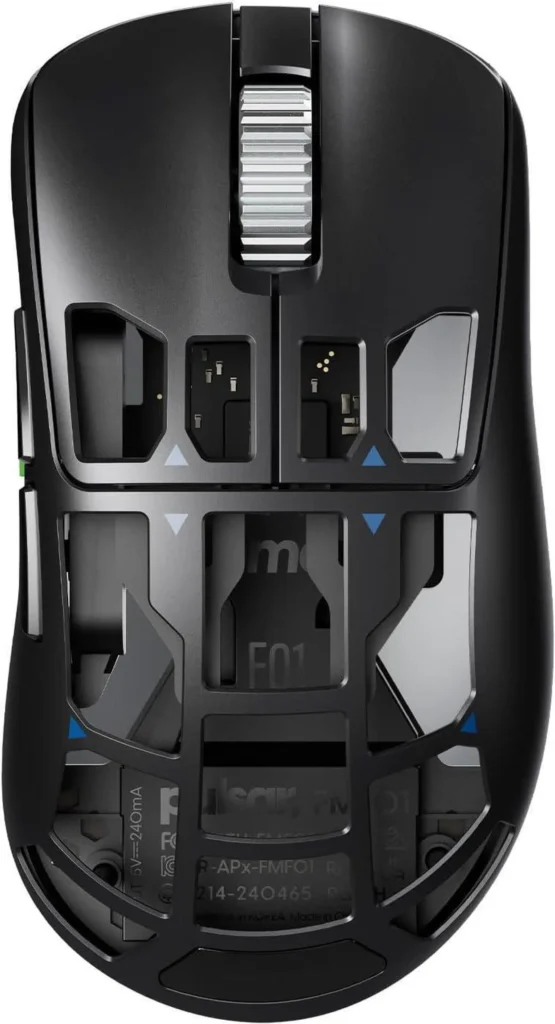
The standard solutions are perforated mouse shells large holes in the casing that improve airflow passively and textured grip surfaces that maintain friction even when damp. The Feinmann’s existing perforated magnesium alloy shell already does both. Pulsar and Noctua decided that wasn’t enough and embedded a 40mm fan directly in the mouse body. For more conventional options, see our best gaming mouse guide.
What the Noctua NF-A4x10 inside the mouse actually does
The fan sits in the upper panel of the mouse body, visible through the perforated shell. It uses the same NF-A4x10 unit that Noctua sells standalone for tight-clearance PC cooling applications a 40x40x10mm fan rated at 17.9dB noise level at full speed.
17.9dB is practically inaudible in a gaming environment. The fan is not cooling the mouse’s electronics there’s nothing inside that generates meaningful heat. It’s pushing a gentle stream of air toward your palm during use, creating enough airflow to prevent moisture accumulation without the aggressive sensation of a desk fan pointed at your hand. A motion sensor integrated with the fan controller stops it spinning when you lift the mouse conserving battery and preventing unnecessary noise when the mouse is idle.
The fan runs off the same battery that powers the mouse’s wireless connection and sensor. Pulsar’s figures put battery life at 10 to 11 hours with the fan active. That’s shorter than the 70-80 hour figures that define flagship wireless mice without fans the NF-A4x10 draws continuous power throughout a session. For a competitive gaming mouse used in sessions of one to four hours, 10-11 hours is manageable. For marathon gaming, charging overnight is a daily requirement.
The underlying hardware: this is a flagship gaming mouse regardless of the fan
The fan is the headline but the specs underneath it are what you’d expect from a serious competitive mouse. The XS-1 sensor is Pulsar’s flagship optical engine based on the PixArt PAW3950 32,000 DPI maximum, 750 IPS tracking speed, 50G acceleration, 8,000Hz polling rate support. These figures match or exceed the sensors in every mouse reviewed in the best gaming mouse guide on SpecClear.
The shell is magnesium alloy rather than the polycarbonate or ABS plastic used in most gaming mice. Magnesium alloy is lighter per cubic centimetre than aluminium, more rigid than plastic, and significantly more durable. The perforated structure that enables airflow also reduces weight to 46 grams for the base Feinmann F01 the Noctua edition adds the fan assembly and is heavier at approximately 73 grams according to Pulsar’s prototype figures. 73 grams is heavier than ultralight competitors like the Razer Viper V4 Pro at 47 grams but well within the range of capable competitive mice.
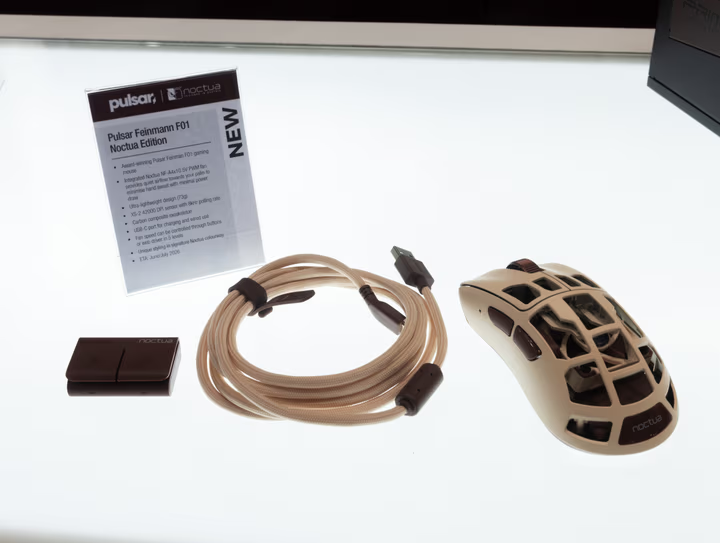
Optical Kailh switches rated to 80 million clicks. Wireless via 2.4GHz dongle with a USB-C charging dock included. Right-handed ergonomic design based on Pulsar’s Xlite geometry palm grip optimised with a pronounced rear hump.
The Noctua colourway: signature beige and brown on a gaming mouse
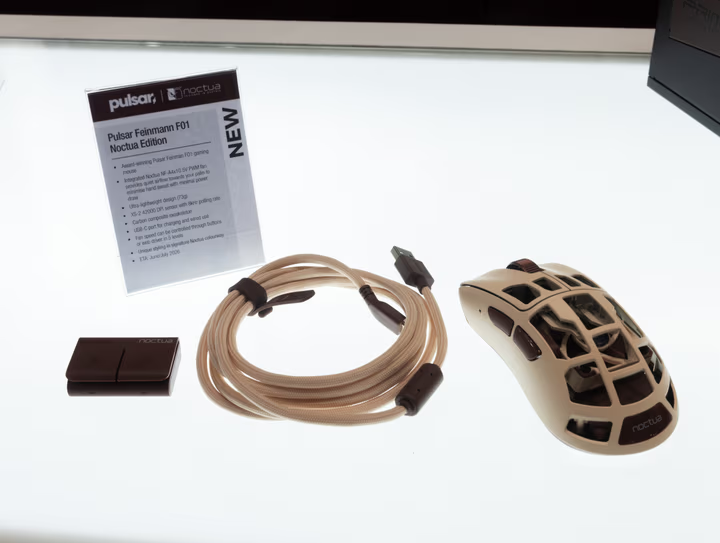
Noctua’s iconic colour scheme what PC Gamer once called a “khaki-and-mud colour scheme straight out of the ’70s” appears on the Feinmann in its full expression. The fan is Noctua beige through the perforated shell. The mouse body carries Noctua’s brown-and-cream accents rather than the black or white of the standard Feinmann.
This is either the best or worst aesthetic decision in gaming peripheral history depending on your perspective. Noctua fans have accumulated a dedicated following who appreciate the brand’s commitment to building outstanding products in colours nobody else uses. A gaming mouse wearing that same livery is either a collector’s item or a curiosity, and the gaming community’s response since the Computex 2025 prototype has been largely the former.
Availability and pricing: what’s confirmed
The Feinmann F01 Noctua Edition was shown as a production-ready unit at Computex 2026 with a June or July 2026 release window confirmed. As of this writing, precise retail availability and pricing haven’t been officially confirmed on Pulsar’s website or major retailers.
The standard Feinmann F01 retails at $324.98 on Newegg already a premium-tier mouse. The Noctua edition adds manufacturing complexity, a premium fan unit, and the Noctua licensing relationship to the BOM. Expect pricing above the standard model, likely in the $350-$400 range, though this is inference rather than confirmed pricing. Pulsar has not published an MSRP as of September 17, 2026.
Watch Pulsar’s official website and Newegg for availability announcements. Given the Noctua edition is described as a limited production run rather than a mainline product, stock will likely be constrained at launch.
Who should actually buy it
The Feinmann F01 Noctua Edition solves a specific problem for a specific type of player. If sweaty palms during competitive gaming are a genuine issue for you if you’ve noticed your grip slipping in clutch moments, if you’ve tried grip tape and wrist bands and still notice moisture affecting your performance this mouse is the most technically considered answer to that problem currently available.
If your hands run dry and comfortable through hours of gaming, the fan is an engineering curiosity that adds weight, reduces battery life, and costs more than the already-premium standard model for a benefit you don’t need. Buy the standard Feinmann F01 or the Razer Viper V4 Pro instead.
The Noctua edition is genuinely interesting as a product concept and a collector’s item for people who appreciate both brands. Whether the fan-in-a-mouse concept expands beyond this limited collaboration to become a mainstream gaming peripheral category depends on whether buyers respond to the practical benefit or treat it as a novelty. That answer will come from launch sales data, not spec sheets.