
The RTX 5090 launched in January 2025 at $1,999 MSRP, as of July 10, 2026, there is no way to buy one at that price. Most models are casually retailing for over ~$5,200. Some premium AIB models are pushing past $6,000, the Founders Edition Nvidia’s own card at its own suggested price is effectively unobtainable through normal retail channels.
rtx 5090 price 2026 this topic is becoming the new normal This is not scalper activity in the traditional sense. It’s not a GPU launch day where bots sweep inventory before buyers can get there. Eighteen months after launch, the RTX 5090 market looks like this because of a specific set of forces that are worth understanding both for what they mean for the 5090 specifically and for what they signal about the GPU market more broadly in 2026.
What’s causing it the supply side
The same AI-driven DRAM shortage that pushed DDR5 kit prices up 300% and NVMe SSD prices up 55–60% in 2026 is the root cause here too. Samsung, SK Hynix, and Micron the three companies producing virtually all the world’s GDDR7 memory prioritised High Bandwidth Memory production for AI accelerators throughout 2025 and into 2026. HBM pays more per wafer than consumer GDDR7. When capacity is constrained, manufacturers follow the margin. Our RAM prices explainer covers the same shortage from the memory side.
The RTX 5090 uses 32GB of GDDR7 on a 512-bit bus the widest and most memory-intensive configuration in any consumer GPU. It’s the card most exposed to GDDR7 supply constraints because it requires more high-density memory chips per unit than any other card in the lineup. When supply tightened, the RTX 5090 was the first card to feel it and the one that felt it hardest.
Nvidia reportedly considered cutting RTX 5090 production entirely during the worst of the shortage. Whether that happened isn’t confirmed, but the result is visible in retail availability stock replenishment comes in small batches, sells immediately, and doesn’t return for weeks.
What’s causing it the demand side
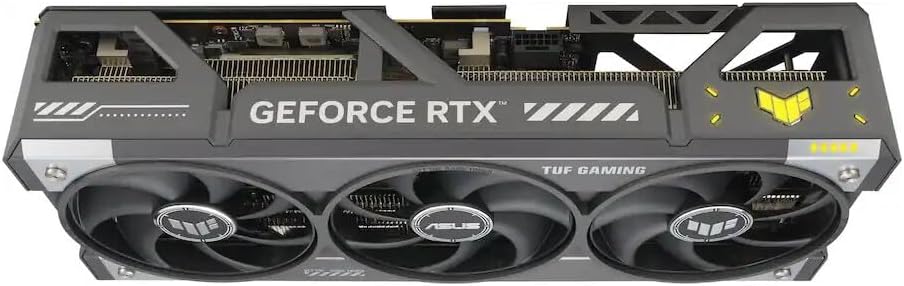
The RTX 5090 is being bought by two distinct groups and only one of them is gaming.
The gaming buyer wants the fastest consumer GPU available. The RTX 5090 is that GPU by a significant margin 45–55% faster than the RTX 5080 at 4K in most benchmarks. For buyers who want the absolute best regardless of price, the RTX 5090 is the only answer.
The second group is local AI compute buyers. the RTX 5090’s 32GB of GDDR7 and 1,792 GB/s memory bandwidth make it the most capable consumer GPU for running large language models locally. Generating images with Stable Diffusion at full precision, and fine-tuning models that won’t fit on 16GB cards. Professionals, researchers, and enthusiasts who want to run 27B–34B parameter models without cloud costs are buying RTX 5090s in quantity. This demand exists independently of gaming and doesn’t respond to gaming GPU market cycles the way gaming buyers do.
These two demand pools competing for the same constrained supply is what drives sustained pricing at multiples of MSRP eighteen months after launch.
How this compares to previous GPU shortages
The 2020–2021 GPU shortage during the COVID era is the obvious comparison point. RTX 3080s sold for $400–$700 against a $699 MSRP. The causes then were different cryptocurrency mining demand, manufacturing disruption, and pandemic supply chain failures but the retail experience was similar. For what is known so far about the next 5090 variant, see our RTX 5090 SE roundup.
The difference in 2026 is duration and specificity, the 2020–2021 shortage affected the entire GPU market broadly and resolved as mining became less profitable and supply chains normalised. The 2026 situation is narrower it primarily affects the top end of the market where GDDR7 density requirements are highes and the resolution timeline depends on AI accelerator demand softening, which shows no sign of happening.
The RTX 5080 at $1,100 street is still findable at prices close to MSRP. The RTX 5070 Ti, RTX 5070, and RTX 5060 Ti are all more available than the 5090, the shortage genuinely concentrates at the top.
What this means for buyers right now
Don’t buy an RTX 5090 at current street prices unless the use case genuinely requires it.
At ~$5,200 the RTX 5090 is not a value proposition in any meaningful sense. The RTX 5080 at ~$1,500–$1,600 delivers 65–70% of the 5090’s gaming performance at 22% of the current street price. Even for buyers who specifically want the best consumer GPU available, paying ~$5,200 for a card that launched at $1,999 eighteen months ago is a decision that deserves very careful scrutiny. We compare the two cards in detail in our RTX 5080 vs RTX 5090 guide.
The specific scenarios where paying current RTX 5090 street prices might still make sense: professional AI workloads where 32GB VRAM is a hard requirement and cloud GPU costs exceed the hardware purchase price over a short time horizon; professional rendering or visual effects work where the performance premium over the 5080 directly reduces billable compute hours; and buyers who genuinely have no alternative and need the capability today.
For gaming alone even at 4K with heavy ray tracing the RTX 5080 at $1,100 is the correct purchase at current pricing. The performance gap doesn’t justify a $3,900 premium for gaming use cases. If you are not sure you need a new card at all, read should I upgrade my GPU in 2026.
The RTX 5090 SE changes the calculation
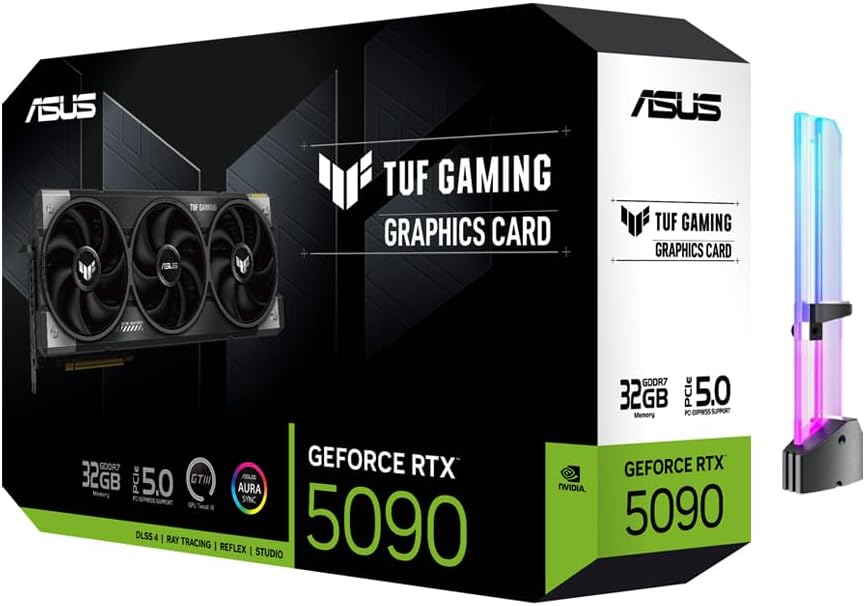
The RTX 5090 SE, reported to be in preparation at an approximately $1,500 street price, directly addresses the gap between the RTX 5080 and the effectively unobtainable RTX 5090. With 32GB GDDR7 on a 384-bit bus and roughly 25–31% more gaming performance than the RTX 5080, the SE delivers most of what the full 5090 offers for buyers who want more than the 5080 without paying ~$5,200 for the flagship.
If the RTX 5090 SE launches at or near its rumoured $1,500 price point, the full RTX 5090’s already difficult value case at ~$5,200 street collapses almost entirely for gaming buyers. The SE becomes the correct high-end purchase and the full 5090 at current street pricing is justifiable only for the professional compute use cases where 32GB at maximum bandwidth on the full 512-bit bus is specifically necessary.
When will the price come down?
The honest answer is that nobody knows with precision, and most projections have been wrong.
TrendForce projected some relief in GDDR7 supply in late 2026 as new manufacturing capacity comes online. “Some relief” means prices moderating from extreme levels rather than returning to MSRP. A return to $1,999 for a new RTX 5090 in the near term is unlikely the combination of sustained demand from AI buyers, constrained GDDR7 supply, and the card’s status as Nvidia’s flagship means that even normalised market conditions won’t bring it back to launch pricing.
The more likely scenario is the RTX 5090 gradually becoming more available at $2,200–$2,500 as supply improves and demand is partially absorbed by the RTX 5090 SE. That’s still a significant premium over MSRP but a dramatically different proposition than ~$5,200.
If you’re waiting for an RTX 5090 at MSRP: set a price alert and check back in late 2026 or early 2027. Don’t hold your build for it.
The broader lesson
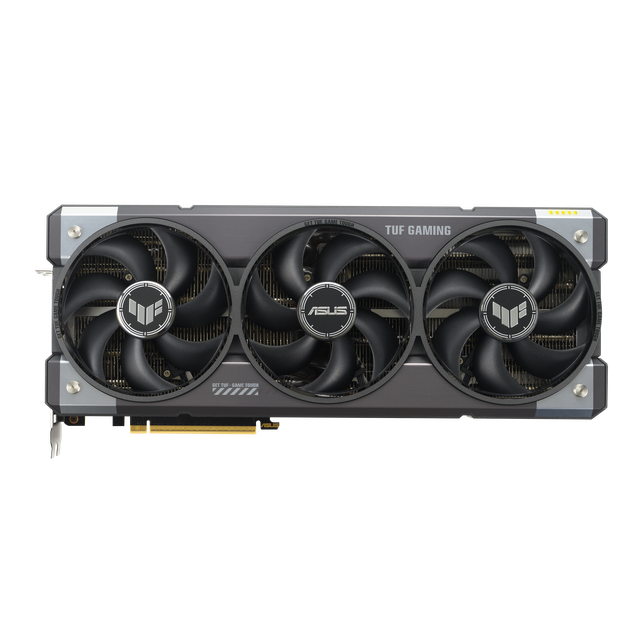
The RTX 5090’s pricing situation is a useful illustration of how GPU pricing in 2026 works differently than it did in 2021 or 2022. The GPU market is no longer shaped primarily by gaming demand. AI compute buyers, professional users, and the broader semiconductor supply chain dynamics driven by AI infrastructure spending all apply pressure to consumer GPU availability in ways that didn’t exist at scale before 2023. For cards that make more sense at today’s prices, see our best GPU picks for 2026.
Understanding that context helps set realistic expectations. The GPU you see at $1,999 MSRP on Nvidia’s website is the price Nvidia would like to sell it at. The price you’ll actually pay depends on forces that have nothing to do with how many people want to play games at 4K.