

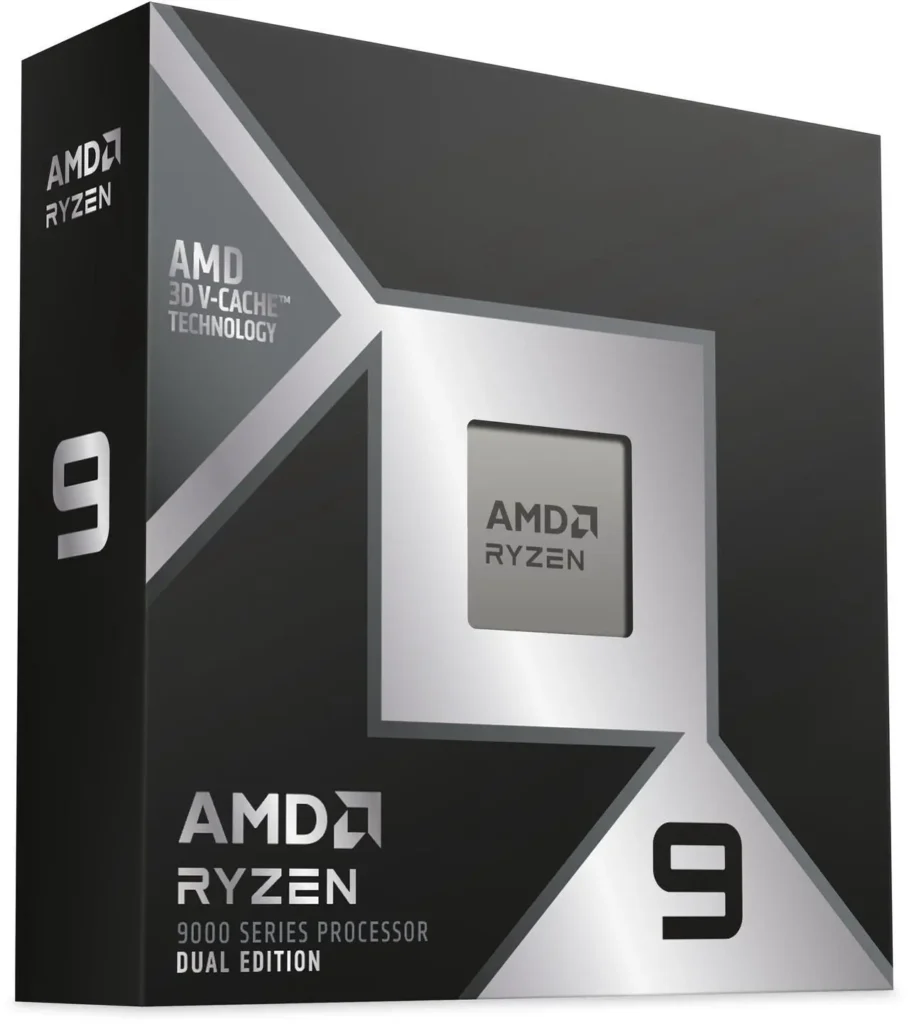
The idea behind the 9950X3D2 is genuinely interesting. If one 3D V-Cache die is good, two should be better. The original X3D chips only stack cache on one of the two CCDs, the asymmetry means some games schedule threads on the cache-starved CCD and performance suffers. The 9950X3D2 puts V-Cache on both chiplets, solving that problem at the architectural level. 192MB of L3 cache total. No more cache lottery. A true 16-core flagship with every core having equal cache access.
The benchmarks landed around the April 22, 2026 launch. The dual-cache idea held up. The value proposition still doesn’t.
The 9950X3D2 is $899. The Ryzen 7 9800X3D is $350-$464. In gaming, the 9800X3D wins. That’s the full story in two sentences, but understanding why requires understanding what $900 actually bought and who it’s genuinely designed for.AMD Ryzen 9 9950X3D Review
What the 9950X3D2 Actually Is
Sixteen Zen 5 cores across two CCDs. Each CCD carries its own 3D V-Cache stack, 48MB of conventional L3 plus 64MB of stacked cache per CCD, for a total of 192MB of L3 cache (208MB counting L2). It runs at a 200W TDP. It uses AM5, your existing X870, B850, or X670 motherboard accepts it via BIOS update.Ryzen 9 9950X3D2

The dual-V-Cache design solves the architectural problem that plagued the 9950X3D in specific scenarios. The standard 9950X3D has V-Cache on only the first CCD. Games that schedule threads well and keep them on the cache-equipped CCD perform excellently. Games with less precise thread scheduling can end up with work on the plain CCD, and performance drops toward non-X3D levels. The 9950X3D2 eliminates that inconsistency. Every core, every CCD, maximum cache.Best Gaming PC Build Under $1500 2026
That’s the engineering case for the chip. It’s a real improvement in design. The problem is that modern games don’t need it.
The Gaming Reality: Numbers That Don’t Justify $899
The benchmark results from Gamers Nexus, Tom’s Hardware, TechSpot, WccfTech, and The Register all reached the same conclusion independently within days of the April launch. In gaming, the 9950X3D2 is essentially identical to the 9950X3D, the 9850X3D, and the 9800X3D.
Tom’s Hardware found the 9950X3D2 runs 0.7% ahead of the 9950X3D and 1.7% behind the 9850X3D in their gaming geomean. Gamers Nexus reported 0-6% improvement across their test suite versus the 9950X3D with no meaningful pattern, some titles showed marginal gains, some showed marginal losses, most showed no difference. WccfTech summarised it as a 0% boost in gaming and a 3-4% gain in productivity over the 9950X3D.

The cause is straightforward once you understand it. Gaming performance on X3D chips is limited by cache latency and hit rates, not cache capacity. The 9800X3D’s 96MB of cache is already more than enough for the working set of virtually every current game. Adding more cache on top of 96MB doesn’t increase the number of cache hits, the working set was already fitting inside the existing cache. You’ve doubled the cache and seen almost nothing change, because doubling something that was already sufficient produces no additional benefit.AMD Zen 7 and Zen 8 Confirmed
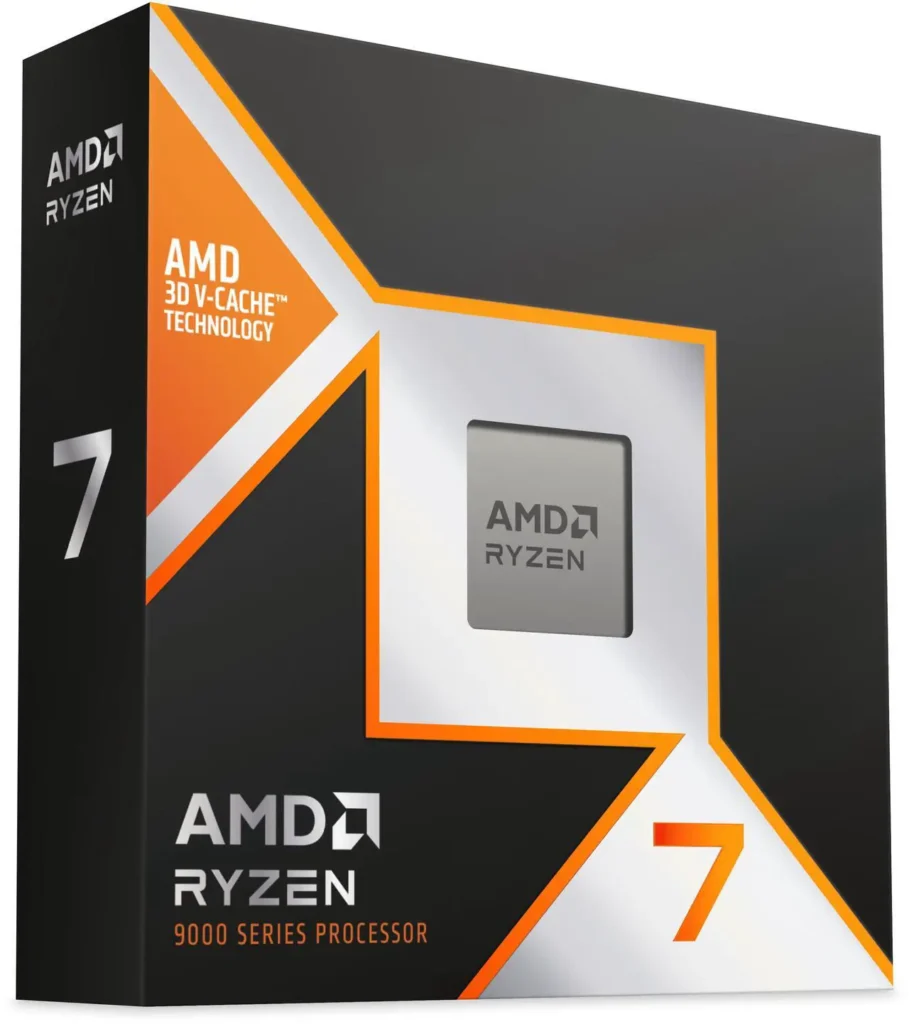
The 9800X3D at $459 beats the 9950X3D2 at $899 in gaming. That’s not a marginal gap that might close with future titles. It’s an architectural reality: the 9800X3D’s eight cores access 96MB of cache with lower inter-CCD latency overhead than the 9950X3D2’s dual-CCD design. Single-CCD designs have lower latency. Lower latency wins in gaming over higher capacity.Ryzen 7 9850X3D vs 9800X3D
Where the 9950X3D2 Actually Earns Its Existence

The productivity picture is more nuanced. Gamers Nexus found 3-6% improvement over the 9950X3D in scientific workloads, OpenFOAM computational fluid dynamics showed the largest single-workload improvement at well above average. Tom’s Hardware saw similar results in heavily threaded production applications.9950X3D2
The use cases where the 9950X3D2 makes sense are specific: machine learning inference running locally on large model files, molecular dynamics simulation, computational fluid dynamics, and similar scientific workloads that genuinely benefit from both the 16-core count and the expanded cache pool. In these workloads the dual V-Cache design does what the architecture promises, threads across both CCDs each have cache access without cross-CCD latency penalties, and the expanded L3 pool reduces memory controller pressure in cache-intensive simulations.
That’s not the average PC builder’s workload. That’s a research scientist, a ML engineer running local inference, a professional using CPU-heavy simulation software alongside gaming. The Register called it AMD’s “true halo CPU”, a no-compromises option for a specific type of user who runs both demanding professional workloads and games. That person exists. They’re not most buyers of gaming CPUs.
For video editing in DaVinci Resolve and 3D rendering in Blender (the productivity workloads most gaming enthusiasts also run), the 9950X3D2’s gains over the 9950X3D are 3-4%. The 9950X (non-X3D) at $549 performs within a few percent of the 9950X3D2 in these workloads and costs $380 less. The non-X3D version of the chip makes more sense for most content creators.
The Price Problem
$899 MSRP. At launch, some retailers listed it above $950. The nearest competitor in AMD’s own lineup, the 9950X3D, runs $699. The 9950X3D2 costs $200 more (a 29% premium) for 3-6% better productivity performance and statistically identical gaming performance. Ryzen 9 9950X3D

The 9800X3D sits at $459. It beats the 9950X3D2 in most gaming scenarios and costs less than half the price.
AMD’s pricing logic assumes there’s a market for a premium “best of everything” chip regardless of practical value. That market exists in server and workstation computing where specific workload requirements justify specific pricing. In consumer desktop computing, buyers have always been able to identify when a premium chip costs more than the performance justifies. The 9950X3D2’s launch reviews made that calculation immediately clear.
As of early September 2026, street pricing is still worth checking, the 9950X3D2 still sits near the $899 SEP, with occasional dips toward the high $850s (Micro Center has shown ~$860). If it sustains under $750, the productivity case strengthens meaningfully. At current September pricing, it’s hard to justify.
Who Should and Shouldn’t Buy It
Buy it if: you run scientific simulation, ML inference, or computational workloads that specifically benefit from the large cache pool on both CCDs, you also game, and budget is not a constraint. This is the use case the chip was designed for. It delivers well there.
Don’t buy it if: you primarily game. The 9800X3D at $459 is faster in more games and costs half the price. This isn’t close. Ryzen 7 9800X3D
Don’t buy it if: you do video editing, 3D rendering, or productivity alongside gaming. The 9950X at $549 performs within 3-4% in production workloads and costs $380 less. The V-Cache premium doesn’t earn its price in standard creative workloads. Ryzen 9 9950X

Don’t buy it if: you’re building on a budget. The $550 you save buying a 9800X3D instead buys an RTX 5060 Ti or gets you most of the way to an RX 9070. That GPU money moves frame rates dramatically more than any CPU upgrade in this price range.Should You Build a PC Now or Wait Until 2027
The Honest Verdict
The 9950X3D2 is a technically impressive chip that solves a real architectural problem and does it well. The dual V-Cache design is genuinely novel and the engineering behind it is serious. In the specific workloads it was designed for, it performs as AMD intended.
It’s also $899 for 0% better gaming performance than a chip half its price. No amount of technical sophistication changes that maths for the majority of buyers who want the best gaming CPU on AM5. The 9800X3D is still that chip. It costs $459. The gap isn’t closing.
The 9950X3D2 will find its audience among the small number of buyers who genuinely need both 16-core professional performance and gaming capability in one chip with no compromises. For everyone else, the correct chips are the 9800X3D for gaming, the 9950X for productivity, or the 9950X3D if you genuinely need both in reasonable measure.
AMD’s own pricing department made this chip hard to recommend. That’s not the engineering team’s fault.