
If you bought an RTX 5060 Ti, RTX 5070, or any other Blackwell card, you’ve probably seen DLSS mentioned in every review, every spec sheet, and every game launch announcement. What’s harder to find is a clear explanation of what you actually have access to today versus what’s still coming.
Here’s the honest breakdown including why DLSS 4.5 and DLSS 5 are fundamentally different technologies, and why one of them has generated significant controversy in the gaming community.
DLSS 4.5 on RTX 50 Series: What’s Live Right Now
DLSS 4.5 was announced at CES 2026 and introduces a 2nd generation transformer model for Super Resolution and a new 6X Multi Frame Generation mode. This is the version of DLSS running in games today.
It has four components. Understanding which cards support which components is where most people get confused.
Super Resolution Available on all RTX GPUs this is the upscaling component that renders your game at a lower internal resolution and reconstructs a higher-resolution image using an AI model. The 2nd-gen transformer model in DLSS 4.5 delivers significantly better image quality than DLSS 4, with improved temporal stability, less ghosting, and better edge reconstruction. All GeForce RTX owners can enable it through the NVIDIA App by selecting DLSS Override Model Presets and choosing Recommended.
Frame Generation RTX 40 and RTX 50 series only. Generates one additional frame between each rendered frame. RTX 30 and 20 series are excluded entirely.
Multi Frame Generation (MFG) RTX 50 series exclusive multi Frame Generation requires hardware flip-metering introduced with Blackwell’s display controllers, making 6X MFG exclusive to RTX 50 series. This is the feature that generates up to five additional frames per rendered frame for a maximum 6X output multiplier. On GeForce RTX 50 Series GPUs, the shift from 4X to 6X Multi Frame Generation increases 4K frame rates in path-traced titles by up to 35%.
Dynamic Multi Frame Generation RTX 50 series exclusive automatically adjusts the MFG multiplier between 1X and 6X to hit a target frame rate based on display refresh rate, input frame rate, and scene motion. NVIDIA described this as an “automatic transmission” for frame generation. Instead of generating a fixed number of extra frames regardless of the situation, it varies the multiplier dynamically to keep output smooth without unnecessary latency.
DLSS 4.5 support now covers over 400 games, with the broader RTX ecosystem reaching 1,000 supported games and apps as of May 2026.
What Multi Frame Generation Actually Means in Practice
Frame generation whether 4X or 6X is not the same, as rendering those frames That distinction matters.
When DLSS generates frames, the GPU analyses motion vectors and temporal data from adjacent rendered frames to synthesise new in-between frames. It doesn’t render new game state it interpolates between states it already has. The result is a visually smoother experience at higher displayed frame rates, but the input latency doesn’t drop proportionally because new game logic isn’t being processed.
NVIDIA Reflex low latency technology works alongside MFG to reduce the perceptible latency impact, so DLSS 4.5 can generate these additional frames with minimal impact to responsiveness.
For competitive gaming at 1080p or 1440p where latency is the priority, MFG isn’t what you enable that scenario benefits more from the raw frame rate of your GPU at lower quality settings. For high-fidelity 4K path-traced gaming where the GPU is genuinely working at its limit, MFG unlocks frame rates that the hardware couldn’t achieve through rendering alone.
The clearest use case: an RTX 5070 rendering Cyberpunk 2077 with full path tracing at 4K at 40fps natively can use 6X MFG to display at 240fps. That’s the target audience for this feature. Not 1080p esports.
Ray Reconstruction 2nd Generation — Available (Aug/Sep 2026)
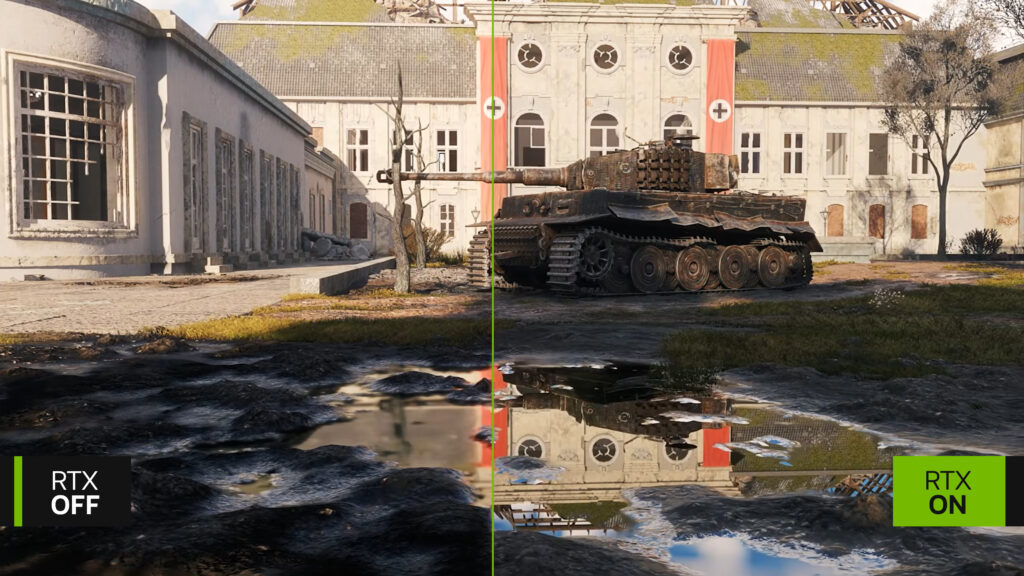
DLSS 4.5 Ray Reconstruction is available now (NVIDIA app early access as of late August / early September 2026), introducing a 2nd-gen transformer model with 35% more compute capability and 20% more parameters while maintaining similar performance to the previous model.
Ray Reconstruction replaces traditional ray tracing denoisers with an AI model. Standard ray tracing fires rays into a scene and produces a noisy result that requires multiple passes and denoising algorithms to clean up. Ray Reconstruction does this in a single AI pass cleaner output, better temporal stability, less shimmer on reflective surfaces.
This update arrives for all RTX GPUs in August, not just RTX 50. If you have an RTX 40 or RTX 30 series card and play ray-traced games, this is a free image quality improvement coming your way this summer.
DLSS 5: The Controversial One That Isn’t Shipping Yet
NVIDIA announced DLSS 5 at GTC 2026, with support planned for fall 2026. It’s important to distinguish it clearly from DLSS 4.5 because it’s a fundamentally different kind of technology.
DLSS 4.5 is a performance and image reconstruction technology. It takes a lower-resolution rendered frame and makes it look better. DLSS 5 is not that.
DLSS 5 uses AI to draw 23 out of every 24 pixels seen on screen it takes a game’s colour and motion vectors for each frame as input, and uses an AI model to infuse the scene with photoreal lighting and materials that are anchored to source 3D content and consistent from frame to frame.
The practical result, as shown in GTC demos: dramatically improved material rendering more realistic skin, fabric, hair, subsurface scattering effects running in real time at 4K. The AI model understands scene semantics well enough to know what a character’s skin should look like in specific lighting conditions and enhances accordingly.
DLSS 5 received significant backlash from both gamers and game developers on social media after its announcement. Critics argued the technology altered games’ art direction in ways not intended by developers, with some comparing its output to AI slop. A specific example highlighted a Liverpool football player’s facial features being noticeably distorted in an EA Sports FC demo.
Nvidia’s response: developers have full artistic control over the effect’s intensity, masking, and colour grading. Whether that holds in practice across a wide range of game implementations remains to be seen. Independent testing on launch will be the real verdict.
Early GTC demonstrations ran on a dual-RTX 5090 setup, with one GPU dedicated to rendering and one running the neural model. NVIDIA has confirmed this will be optimised to a single GPU by launch. What that looks like on an RTX 5070 at 1440p rather than two RTX 5090s at 4K is the question nobody can answer until fall 2026.
Confirmed DLSS 5 game support announced so far: Assassin’s Creed Shadows, Hogwarts Legacy, Phantom Blade Zero, Delta Force, Naraka: Bladepoint, Starfield, and future Resident Evil titles. DLSS 5 is expected to roll out in fall 2026, and will be distinct from DLSS 4.5 rather than replacing it. If you play Ubisoft games, our Assassin’s Creed Black Flag Resynced PC settings guide covers that game’s upscaling options and requirements.
Which RTX 50 Cards Get What
| Feature | RTX 20/30 | RTX 40 | RTX 50 |
|---|---|---|---|
| DLSS 4.5 Super Resolution | ✓ (slower) | ✓ | ✓ |
| Frame Generation (1X) | ✗ | ✓ | ✓ |
| Multi Frame Generation (up to 6X) | ✗ | ✗ | ✓ |
| Dynamic MFG | ✗ | ✗ | ✓ |
| Ray Reconstruction (Aug 2026) | ✓ | ✓ | ✓ |
| DLSS 5 Neural Rendering (Fall 2026) | TBC | TBC | Most likely ✓ |
The RTX 40 series exclusion from Multi Frame Generation is the key hardware boundary. An RTX 4070 or RTX 4080 gets DLSS 4.5 Super Resolution and standard Frame Generation (1X). It does not get 4X or 6X Multi Frame Generation. The Blackwell display controller hardware required for MFG is a physical feature that can’t be patched into previous architectures.
What This Means If You’re Buying an RTX 50 Card
If you bought an RTX 5060 Ti, RTX 5070, or RTX 5070 Ti, you have access to the full DLSS 4.5 suite right now: Super Resolution, 6X MFG, Dynamic MFG, and Ray Reconstruction when that arrives in August.
Enable it in the NVIDIA App first Go to DLSS Override, set Model Presets to Recommended. Per-game overrides are available if you want finer control. The Super Resolution upgrade alone is meaningful the 2nd-gen transformer model visibly reduces ghosting compared to DLSS 4 in titles that have adopted it.
For DLSS 5, the honest position is: wait for launch in fall 2026 and independent testing before factoring it into buying decisions, The GTC demo was impressive. It also used dual RTX 5090s. The real question is what it delivers on a single RTX 5070 at 1440p, and that answer doesn’t exist yet.
SpecClear participates in affiliate programmes. When you purchase through links on this site we may earn a commission at no additional cost to you.