
SpecClear earns a commission if you buy through Newegg links on this page, at no extra cost to you.
Most new PC case brands disappear before their products reach shelves. FormulaV Line is different. The Taiwanese company launched quietly in 2024, two of their existing Crystal series cases have been independently reviewed by TechPowerUp, and the Crystal U9 PA received two editorial awards from that outlet. They’re not a first-product startup. They’re a company that has proven its products work and is now making a serious push into the North American market.
As of mid-September 2026, Formula V Line already has a Newegg brand store with other chassis (Crystal Z4M Plus, Air Power G1, and related SKUs), but the Air Power G10 and Crystal Z3 are still not confirmed as live listings. The Z3 was targeting August 2026 and that window looks slipped or not yet stocked; the G10 was aimed at September. Pricing remains estimated rather than confirmed MSRP: about $150 for the G10 and about $80 for the Z3.
Here’s what still makes these cases worth tracking before they hit confirmed Newegg stock.
The Air Power G10: Tilting Front Fans That Actually Make Sense
The Air Power G10 is FormulaV Line’s flagship case at Computex 2026, and its biggest innovation is the addition of three tilting front fans that allow you to change their angles by up to 10 degrees up or down. For other options, see our guide to the best PC cases for airflow.
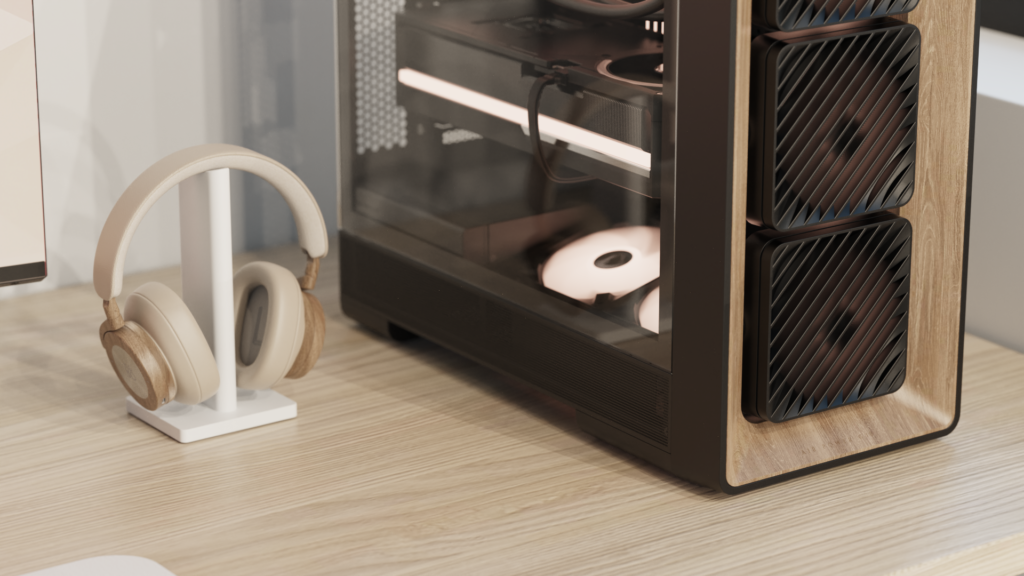
That sounds like a marketing gimmick. It isn’t, if the adjustable angles actually move measurable air onto the GPU instead of the empty front of the case.
Standard PC case design puts front intake fans in fixed positions facing straight into the case. All three fans push air in the same direction regardless of where your components sit. The GPU typically sits in the lower half of the case. The CPU sits higher, toward the rear. A standard three-fan front intake sends equal airflow toward both, which is fine, but not optimal for either.
This would allow you to focus the airflow exactly where it’s needed, if you run an AIO cooler for your CPU, you could focus all the front fans towards your GPU to ensure that it gets the maximum amount of fresh air from outside your case.
With the G10’s tilting system, you angle all three fans downward to maximise airflow directly over the GPU if you’re running a GPU-heavy build with an AIO handling the CPU. You split the angle, two fans angled toward the GPU, one toward the CPU area, if both components are running hot. You angle all three fans upward if you’re running a large air cooler and the CPU is the thermal priority.
Each fan has a quick-release and a nylon dust filter, enabling easy cleaning and fan replacement. The quick-release mechanism means maintenance doesn’t require tools, pull the fan, clean the filter, reinstall. On a standard case with fan screws, this process takes ten minutes per fan. With quick-release mounts, it takes sixty seconds for all three.
The tilting mechanism is genuinely novel. Fixed-angle approaches have dominated case design for over a decade not because nobody thought of tilting fans but because the mechanism adds manufacturing complexity and cost. FormulaV Line has prioritised it at an estimated $150 price point, which, if it holds at retail, undercuts the InfiniRail-equipped Corsair FRAME 5000D RS at $159.99 while offering a different kind of airflow flexibility.
What’s not yet confirmed: exact GPU clearance, CPU cooler height limit, radiator support specifications, and whether the tilting mechanism produces any measurable acoustic difference from vibration at various angles. TechPowerUp’s track record with FormulaV Line’s other products suggests a proper review will surface before launch, that’s when the full thermal picture becomes clear.
The Crystal Z3: Bottom Intake From Four Sides
The Crystal Z3 features a panoramic design. This PC case has two bottom-mounted fans that intake air from an open chamber, ensuring that it will never be starved for air, no matter what surface you plant your desktop computer on.

The bottom-intake approach solves a problem that standard front-intake cases don’t. Most mesh-front cases still require adequate clearance at the bottom of the case for airflow to reach front fans, place them on carpet or a low desk without clearance and airflow drops significantly. The Z3’s chamber design elevates the intake above whatever surface the case sits on, creating a guaranteed air gap regardless of placement.
Now, because the chamber is quite small, it would likely be difficult to reach inside for cleaning. So, FormulaV Line made the two bottom fans easily detachable, making maintenance and cleaning so much easier.
That’s the right engineering decision. Detachable fans solve the cleaning problem that would otherwise make the design inconvenient over time, the one situation where a clever intake approach typically creates a new problem. For fans worth adding to any case, see our best PC case fans.
The panoramic glass design means the build is visible through the side panel without the usual trade-off between airflow and aesthetics. Bottom-intake cases historically used solid side panels because glass interrupted the airflow path, the Z3’s approach keeps glass on the side while moving intake to the bottom, decoupling the two design priorities.
At an estimated $80, the Crystal Z3 sits in the same bracket as the Cooler Master Q300L V3 ($49) and the Corsair 3200D RS ($79.99). It offers a fundamentally different airflow approach than either, bottom intake versus front mesh intake, which makes it genuinely worth comparing if placement flexibility matters for your build.
Who FormulaV Line Is
The Taiwan-based brand is poised to expand globally through 2026 and into 2027, with North American availability beginning through Newegg and its retail partners in September 2026 and European distribution continuing to build out.
FormulaV Line was founded in 2024 by engineers with significant backgrounds in the PC hardware industry. Their existing Crystal series, specifically the Crystal U9 PA, earned independent editorial recognition from TechPowerUp, which is one of the more thorough hardware testing outlets for PC cases. That track record matters when evaluating an unfamiliar brand. They’ve shipped products that independent reviewers consider good. They’re not asking you to trust marketing. For an established brand’s take on a modern mid-tower, read our Corsair FRAME 5000D RS review.
The G10 is the lead product in a 2026 lineup of 22 new products spanning computer cases, air coolers, cooling fans, power supplies, and gaming chairs. The cooling fans in that lineup include a model with integrated displays, competing directly with the fan display concepts that larger brands have been exploring. The power supplies are built on a CWT platform, Component Works Taiwan, the OEM behind many quality-tier PSUs from established brands including be quiet! and Fractal Design. That’s a legitimate platform choice, not a budget compromise.
The North American launch exclusively through Newegg is a strategic decision that makes the brand easier to evaluate from an affiliate and purchase perspective, single point of sale, standard Newegg buyer protection, straightforward returns if there are issues.
Should You Buy One When They Actually Launch?
The honest answer: wait for independent reviews from TechPowerUp, Tom’s Hardware, or Hardware Busters before buying either case. The engineering concepts behind both are sound and differentiated from what established brands offer, but thermal performance, build quality, and acoustic data under controlled test conditions are what confirm whether the designs work as well in practice as they look on paper. Until then, our Corsair 3200D RS ARGB review covers a tested option.
TechPowerUp’s existing positive reviews of the Crystal U9 PA are encouraging. They don’t review brands generously, their scoring methodology is thorough and comparative. If their existing product scored editorial awards there, the new products from the same engineering team have a reasonable prior probability of performing well.
If the G10 lands near the estimated $150 in the September 2026 window, it competes directly with the Corsair FRAME 5000D RS around $169.99–$189 street and the Phanteks EX5 at a similar tier. If thermal testing shows the tilting fans provide measurable benefit over fixed-fan alternatives, the G10 at $20-30 less than the FRAME 5000D represents genuinely competitive value. If the tilting mechanism is primarily aesthetic, the established brands have deeper track records at similar prices. Corsair FRAME 5000D RS ($189)
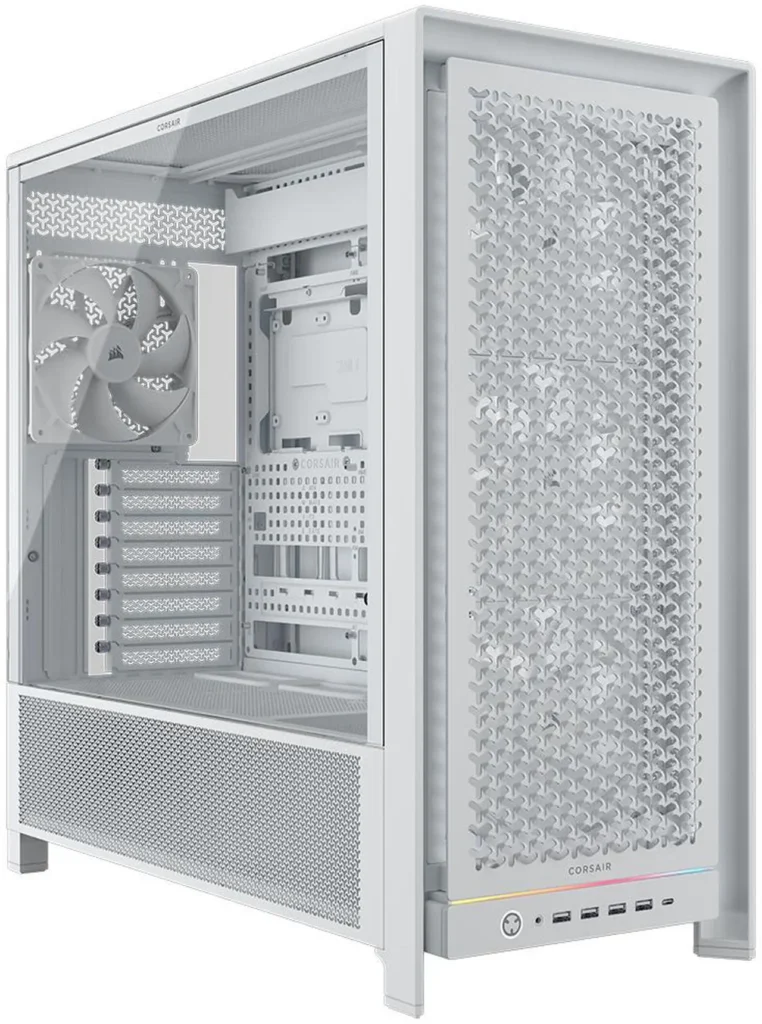
The Z3 at $80 is a more straightforward proposition. If the bottom-intake design delivers clean air to the build on any surface without the placement restrictions of front-intake cases, and the panoramic glass looks as good at retail as the Computex showcase suggested, it’s a legitimate competitor to the Corsair 3200D at $79.99 with a meaningfully different architectural approach. Newegg lists the Corsair 3200D RS ARGB (about $80). For a cheaper case, see our Cooler Master Q300L V3 review.

Watch for independent reviews once either case shows confirmed Newegg stock and review units land at outlets. This is still the kind of brand worth tracking: genuinely novel ideas, existing products that already work, and estimated pricing that challenges established players rather than premiering above them.